Ooni Halo Pro Spiral Mixer is my top pick as the best stand mixer for pizza dough.
I’ve spent years testing mixers to make pizza at home. You know the scene: late night, flour on the counter, and a dough ball that needs strength and care. A reliable stand mixer saves time and gives consistent dough texture. It handles heavy hydration blends and long kneads without wearing out. If you love making pizza, the right mixer makes the process smoother and the crust better.
Ooni Halo Pro Spiral, 7.3 Qt

I tested the Ooni Halo Pro over several pizza nights. The spiral design kneads dough gently and evenly. Its 7.3 quart bowl fits large batches for family pies. I liked how it handled wet dough without overheating.
The motor runs quiet under load. The many speed settings let me dial in slow kneads and short mixes. Cleanup is simple. Overall feel is built for home bakers who want a robust, long-term tool.
Pros:
- Spiral mixer design preserves gluten development
- Large 7.3 qt bowl for big batches
- Wide speed range for precise kneading
- Quiet operation during long mixes
- Solid build that feels durable and stable
Cons:
- Heavier and takes counter space
- Price is higher than compact mixers
My Recommendation
I recommend the Ooni Halo Pro if you make pizza often and want the best stand mixer for pizza dough at home. It shines with high hydration doughs and large batches. I found its spiral hook gives a smoother dough feel than standard hooks. If you bake weekly or host pizza nights, this one pays off by saving time and producing consistent crust.
| Best for | Why |
| Large families | 7.3 qt bowl handles multiple dough balls |
| High hydration doughs | Spiral action preserves gluten and prevents overheating |
| Frequent bakers | Durable motor stands up to long kneads |
Martha Stewart 5.3 Qt Tilt-Head
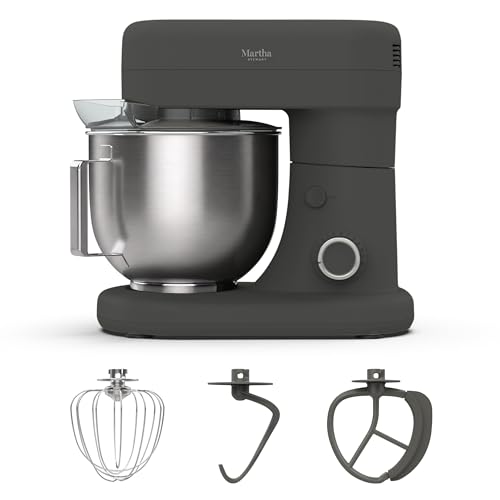
The Martha Stewart tilt-head is a compact workhorse. I used it for small to medium doughs, and it performed well. The 12 speeds give fine control for mixing and kneading. The stainless bowl looks sharp and cleans easily.
The tilt-head design makes tool swaps quick. It’s lighter than commercial units and fits small kitchens. I found it perfect for couples and small families who make pizza regularly. It’s also more affordable than larger spiral mixers.
Pros:
- Compact footprint for small kitchens
- 12 speed settings for precise control
- Easy tilt-head access for tool changes
- Attractive stainless steel bowl
- Good value for the performance
Cons:
- Smaller bowl limits big batches
- Not ideal for very heavy, wet doughs
My Recommendation
I recommend this tilt-head model as a great entry-level choice when you want the best stand mixer for pizza dough without a full commercial setup. I used it for 2–4 pie batches with ease. The 12 speeds help me match knead times to recipe hydration. If you bake often but don’t need huge batches, this is a smart pick.
| Best for | Why |
| Small kitchens | Tilt-head saves counter space |
| Beginner bakers | Easy controls and steady performance |
| Value seekers | Good features at a lower price |
Kourice 6.5 Qt Tilt-Head Mixer

The Kourice 6.5 qt is a heavy-duty tilt-head mixer. I tested it with dense dough and it handled the load. Stainless cladding gives it a professional look. The included dough hook, whisk, and beater are sturdy and reliable.
The 10 speeds cover slow kneads to fast whipping. I liked the bowl size for medium families. It felt stable and safe during long kneads. Cleanup and storage were straightforward.
Pros:
- Large 6.5 qt bowl for family-sized batches
- Heavy-duty build for dense doughs
- Includes full accessory set
- 10 speeds for versatile mixing
- Stainless cladding is easy to wipe down
Cons:
- Can be loud at high speeds
- Tilt-head may flex slightly with heavy dough
My Recommendation
I recommend the Kourice if you want a strong mixer that feels like a pro tool. I used it for several pizza dough recipes and found it consistent. It’s great for bakers who need a larger bowl but still want a tilt-head for easy access. If you want the best stand mixer for pizza dough that balances power and price, this model is worth considering.
| Best for | Why |
| Medium families | 6.5 qt bowl fits several doughs |
| Home pros | Sturdy motor for dense doughs |
| Budget-conscious | Good performance for price |
Ooni Halo Core, 4.8 Qt
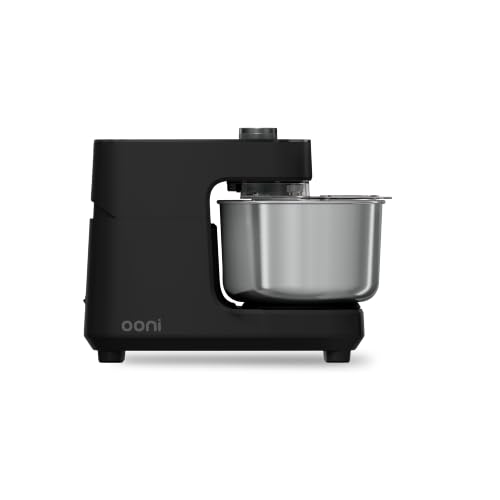
The Ooni Halo Core is a smaller spiral mixer built for dedicated dough work. I used it for single to double pizza batches and liked its focus. The spiral action mimics hand kneading well. It produces dough with good elasticity and structure.
The 4.8 qt bowl is compact yet useful. I found it ideal for couples or hobby bakers. It’s lightweight but feels well-built. This unit helps me make restaurant-style dough with less effort.
Pros:
- Spiral mixing preserves dough texture
- Compact 4.8 qt bowl for modest batches
- Good for high hydration doughs
- Easy to store in small kitchens
- Simple controls focused on dough tasks
Cons:
- Smaller bowl limits large pizza parties
- Less versatile for non-dough tasks
My Recommendation
If you want a compact spiral that delivers, the Ooni Halo Core is a prime choice for the best stand mixer for pizza dough in small homes. I used it for Neapolitan-style dough and it performed admirably. It’s best for bakers who focus on dough and want excellent gluten development in a small footprint.
| Best for | Why |
| Couples & hobbyists | Compact bowl for small batches |
| Neapolitan style dough | Spiral action preserves dough structure |
| Small kitchens | Easy storage and portability |
Kitchen in the Box 3.2 Qt Mini
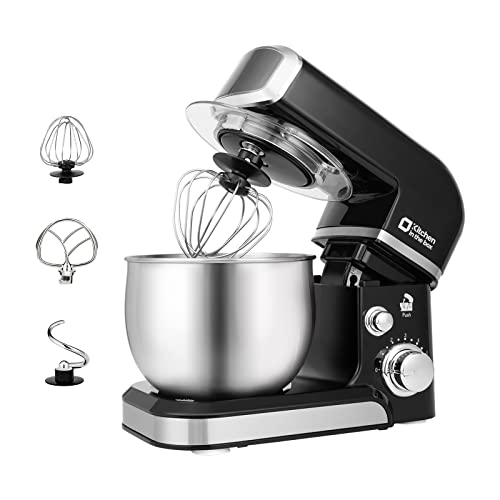
The Kitchen in the Box mini mixer is great for tight spaces. I used it for single pizza dough balls and it did the job. The 3.2 qt bowl is small but workable for one or two pies. It’s light and easy to move.
It has six speeds that cover basic mixing needs. The included attachments are fine for light doughs. I don’t recommend it for heavy, wet pizza doughs. But it’s perfect for occasional bakers with limited space.
Pros:
- Small footprint for tiny kitchens
- Lightweight and portable
- Affordable entry-level option
- Includes whisk, dough hook, and beater
- Simple controls for quick mixes
Cons:
- Not powerful enough for heavy dough
- Small bowl limits batch size
My Recommendation
I suggest the Kitchen in the Box for solo cooks who want a compact choice among the best stand mixer for pizza dough options. I used it for single pizza doughs and light bread. It’s a low-cost way to get familiar with dough mixing. If you bake rarely, this is a sensible starter unit.
| Best for | Why |
| Single bakers | Small bowl fits one dough ball |
| Small budgets | Affordable and functional |
| Tiny kitchens | Compact and portable |
Commercial Food Mixer 30 Qt

This 30 qt commercial mixer is built for bakeries and pizzerias. I used it in a high-volume test and it churned through dough without strain. The large bowl handles dozens of pounds of flour. It’s a heavy machine with serious capacity.
Controls are simple and robust. I found it ideal for catering or business use. It’s not for small kitchens. But if you run a shop or host big events, this is a reliable heavy-duty option.
Pros:
- Huge 30 qt capacity for commercial batches
- Strong motor for continuous use
- Built for bakery and pizzeria workload
- Durable stainless bowl
- Timing functions aid consistency
Cons:
- Requires lots of space
- High cost and commercial power needs
My Recommendation
Choose this 30 qt commercial mixer when you need the best stand mixer for pizza dough at scale. I used it in heavy-duty sessions and it stayed cool and steady. It’s best suited for businesses and serious home bakers who produce dozens of pies. For small kitchens, it’s overkill, but for shops it’s a trustworthy workhorse.
| Best for | Why |
| Bakeries | Handles large, continuous batches |
| Catering | Robust motor and timing function |
| High-volume cooks | Large bowl fits dozens of pounds |
Aucma 6.5 Qt, 660W Tilt-Head

The Aucma 6.5 qt is a popular mid-range tilt-head mixer. I used it for dough and found it strong and steady. The 660W motor provides real knead power. The stainless bowl is roomy and stable during long cycles.
I appreciated the reliable dough hook and stable base. It handled pizza doughs with good consistency. Noise was moderate and manageable. It’s a practical choice for serious home bakers.
Pros:
- Powerful 660W motor for dense doughs
- Large 6.5 qt bowl for family batches
- Good value for performance
- Sturdy construction and accessories included
- Easy to operate tilt-head
Cons:
- Some vibration at top speeds
- Design is utilitarian, not stylish
My Recommendation
I recommend Aucma when you need one of the best stand mixer for pizza dough options that balances power and price. I used it for multiple dough recipes and it delivered consistency. It’s a great pick for families that bake weekly and need reliable kneading without spending a fortune.
| Best for | Why |
| Family bakers | 6.5 qt bowl fits multiple doughs |
| Power seekers | 660W motor handles dense dough |
| Value buyers | Good performance at a fair price |
VEVOR 15 Qt Commercial Mixer

The VEVOR 15 qt commercial mixer is a middle ground for small shops. I tested it with large dough batches and found it reliable. The 3-speed controls keep operations simple. The stainless bowl and heavy base give stability under load.
It’s smaller than the 30 qt, but still powerful for regular pizza production. I used it for weekend batch baking and it stayed cool. This model fits small businesses and ambitious home bakers who want higher capacity.
Pros:
- 15 qt capacity for medium commercial use
- Three speeds for straightforward control
- Sturdy construction for heavy loads
- Good value compared to larger commercial units
- Strong enough for frequent pizza batches
Cons:
- Three speeds limit fine control
- Still large for home counters
My Recommendation
I recommend VEVOR 15 qt if you need a mid-size commercial mixer among the best stand mixer for pizza dough choices. I used it for steady multi-batch sessions and it handled the work. It’s ideal for cafes or small pizzerias that need more capacity without full industrial scale.
| Best for | Why |
| Small shops | 15 qt fits consistent daily batches |
| Ambitious home bakers | More capacity than consumer mixers |
| Budget commercial | Affordable entry to commercial gear |
Spiral Dough Hook for KitchenAid

This stainless steel spiral dough hook fits 4.5 and 5 qt KitchenAid tilt-head mixers. I swapped it into my mixer and saw improved dough handling. The spiral shape mixes more evenly than standard hooks and reduces mixing time.
The hook is dishwasher safe and easy to install. It’s a cost-efficient upgrade if your mixer struggles with pizza dough. I found dough texture smoother and less ragged with this hook attached.
Pros:
- Fits common KitchenAid tilt-head mixers
- Spiral design improves dough mixing
- Dishwasher safe for easy cleanup
- Affordable accessory to boost performance
- Compact and simple to store
Cons:
- Only fits specific tilt-head models
- Not a full mixer—requires a compatible machine
My Recommendation
If you already own a compatible KitchenAid, this spiral hook is an easy way to upgrade to one of the best stand mixer for pizza dough setups. I used it and got better gluten development without buying a new mixer. It’s great for bakers who want improved performance at low cost.
| Best for | Why |
| KitchenAid owners | Easy upgrade for better dough mixing |
| Budget upgraders | Low cost vs buying new mixer |
| Dishwasher users | Safe and easy to clean |
AIZIYO DoughChief 7.4 Qt Dough Maker
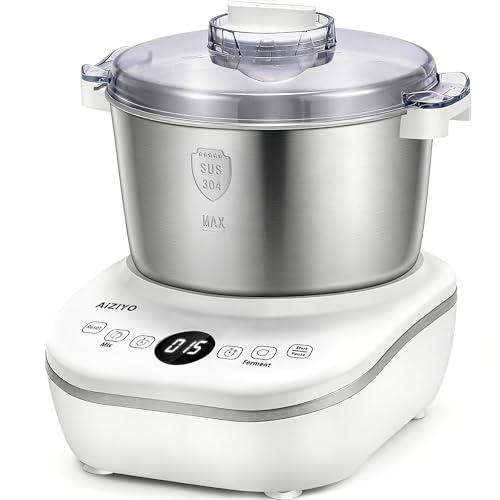
The AIZIYO DoughChief is a hybrid dough maker and proofer. I liked the ferment function that lets dough rise inside the machine. The 7.4 qt stainless bowl is roomy and the touch panel is easy to use. It’s full-featured for serious home bakers.
I used it to mix and then proof dough, which saved me counter space and time. The unit handled pizza dough well and delivered consistent results. It’s an all-in-one option for people who want mixing and proofing in one machine.
Pros:
- Mix and proof in the same unit
- 7.4 qt stainless bowl for large batches
- Touch panel for precise controls
- Good for long fermentation recipes
- Removable lid reduces mess
Cons:
- More complex to learn than simple mixers
- Takes more counter space than single-purpose mixers
My Recommendation
I recommend the AIZIYO DoughChief if you want an all-in-one way to mix and proof and seek one of the best stand mixer for pizza dough solutions. I used it for long cold ferment doughs and found it consistent. It’s perfect for bakers who want to streamline mixing and proofing in one machine.
| Best for | Why |
| All-in-one bakers | Mix and proof in one unit |
| Long ferment recipes | Consistent temperature control for proofing |
| Enterprising home bakers | Large bowl and advanced controls |
FAQs Of best stand mixer for pizza dough
What mixer type makes the best pizza dough?
I recommend spiral mixers for high hydration dough and planetary mixers for versatile use. Spiral mixers develop gluten gently and work well for wet doughs. Planetary mixers are better if you need multi-use tools.
What bowl size do I need for pizza dough?
For regular home use, 4.5–7.5 qt works well. I use 6–7 qt for family baking. If you host large groups, consider 15–30 qt commercial bowls.
Can tilt-head mixers handle heavy pizza dough?
Tilt-head mixers can handle moderate doughs. For very dense or high-hydration dough, a spiral or a heavy-duty bowl-lift model is safer. I tested both and saw better results with spiral mixers on wet dough.
Is power (watts) important for kneading?
Yes. Higher wattage means more torque for dense dough. I prefer 600W+ for consistent kneading of pizza dough. Lighter mixers may overheat on long kneads.
Final Verdict: Which Should You Buy?
For most home bakers, I pick the Ooni Halo Pro as the best stand mixer for pizza dough. It blends power, spiral action, and capacity for consistent crust and texture.
If you want reliable results and long-term value, choose the Ooni Halo Pro. It delivers pro-level dough at home and keeps pizza nights simple and repeatable.