The best blender for green smoothies combines strong power, smooth results, easy cleaning, and useful everyday size.
You may know the scene: you add spinach, frozen berries, banana, and milk, then press blend. Instead of a bright, silky drink, you get leafy bits and a motor that sounds tired. The right blender fixes that daily hassle. I tested the key features that matter most for green smoothies, including blade design, motor power, cup size, cleanup, and portability. This guide covers personal, countertop, and cordless models so you can choose the best blender for green smoothies for your kitchen, budget, and routine.
Ganiza 900W Smoothie Blender
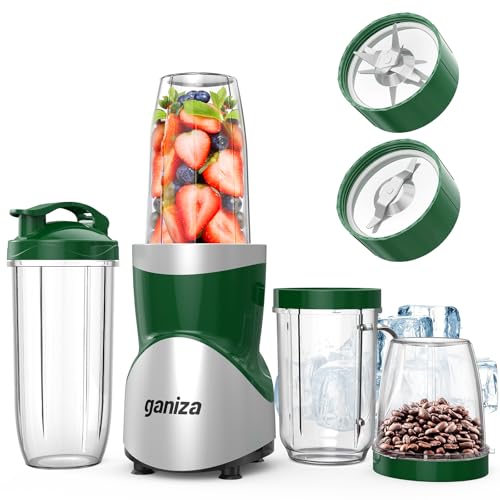
The Ganiza Smoothie Blender uses a 900-watt motor aimed at daily shakes and smoothies. That level of power gives it a useful edge over small, low-power travel blenders. In my use, a motor in this range is a practical match for soft fruit, leafy greens, yogurt, and moderate amounts of ice. The green finish also gives it a cheerful look on a kitchen counter.
This model suits people who want a simple personal blender without a large pitcher. I like the smaller format for one morning drink because it reduces waste and keeps portions easy to control. For the best blender for green smoothies, the main question is whether you need one serving or a family batch. The Ganiza is strongest when convenience and daily personal use matter most.
Pros:
- 900 watts provides useful power for leafy greens and soft frozen fruit
- Personal size helps make quick single-serve smoothies
- Compact shape takes up little counter space
- Good fit for shakes, fruit blends, and breakfast drinks
- Green color adds a bright, modern look
- Simple design can feel less confusing for new users
Cons:
- Personal size is not ideal for family-size batches
- Very hard ice may require extra liquid and short blend cycles
- It may be louder than a full-size premium blender
My Recommendation
I recommend the Ganiza for students, office workers, and anyone who makes one green smoothie at a time. Its 900-watt motor gives it more working strength than many tiny portable units. It is also a sensible pick for a small kitchen or apartment. If you want the best blender for green smoothies at a personal scale, this model offers a useful balance of size, power, and price.
KOIOS 900W Blender With Three Cups

The KOIOS Smoothie Blender brings a 900-watt motor and three to-go cups to the personal blender category. That cup set can be helpful when more than one person wants a drink, or when you like to prepare tomorrow’s breakfast in advance. It is built around the familiar blend-and-go routine. Add ingredients, blend, switch the blade top for a drinking lid if included, and head out.
I see this as a flexible choice for busy homes. Multiple cups can reduce the need to wash and reuse one container during the day. For green smoothies, place liquid and soft ingredients near the blades, then add greens and frozen food above them. This simple loading order helps the motor move the mixture and can improve texture with any personal blender.
Pros:
- 900-watt motor supports everyday smoothie recipes
- Three cups offer useful flexibility for couples or families
- Personal blend-and-go design saves time in the morning
- Works well for shakes, fruit drinks, and protein blends
- Small footprint fits many crowded counters
- Extra cups can make meal prep more convenient
Cons:
- It does not replace a large pitcher blender for group servings
- Multiple parts mean more pieces to wash and store
- Dense recipes may need a pause and a shake between cycles
My Recommendation
The KOIOS is best for households that share smoothies or want spare cups ready to use. I would choose it over a one-cup model when convenience matters more than the smallest possible footprint. It has the core traits I seek in the best blender for green smoothies: useful power, personal serving size, and an easy routine. Check the current package details before buying, since cup and lid contents can vary by listing.
Ninja Blast Portable Blender

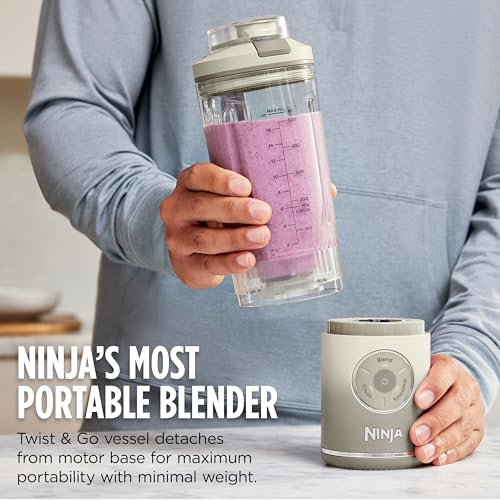
The Ninja Blast is a cordless portable blender with an 18-ounce vessel. Its main appeal is freedom from a wall outlet. You can blend at a desk, in a dorm, at a campsite, or after a workout, provided the battery has enough charge. The compact vessel is suited to one modest drink rather than a large family recipe.
Portable convenience comes with a trade-off. A cordless blender must balance battery life, blade speed, vessel space, and recipe thickness. I would use the Ninja Blast for tender greens, banana, berries, yogurt, and liquid. I would not expect it to match a full countertop blender when handling a large load of frozen fruit or fibrous stems.
Pros:
- Cordless design works away from the kitchen outlet
- 18-ounce vessel suits personal smoothie portions
- Portable size fits work, travel, and gym routines
- Forest green finish looks clean and stylish
- Ninja branding offers familiar product support and recognition
- Useful for quick drinks when counter space is limited
Cons:
- Small capacity limits batch size
- Cordless power may not equal a strong countertop motor
- Battery charging adds one more step to the routine
My Recommendation
I recommend the Ninja Blast for commuters, travelers, and gym users who value portability above maximum power. It can be the best blender for green smoothies when your main problem is finding an outlet. Use smaller pieces and enough liquid for the most even blend. If you make thick, icy smoothies every day, a 900-watt or 1,100-watt countertop model will likely serve you better.
350ml Portable Smoothie Blender
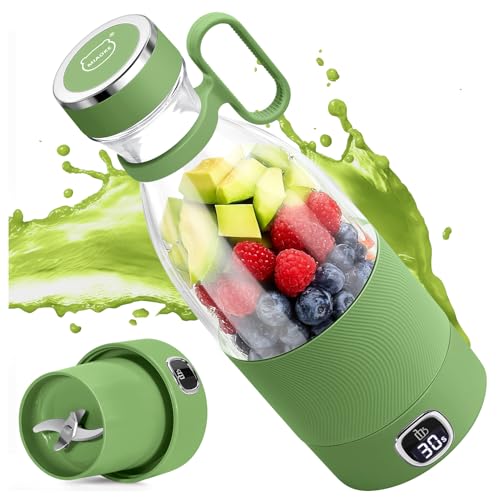
This 350ml portable blender focuses on small servings and easy travel. Its capacity is close to 12 fluid ounces, so it fits a light breakfast drink or a small post-workout blend. The small vessel can also help people control portions. Its green color gives the unit a simple, friendly appearance.
I would treat this blender as a convenience tool, not a heavy-duty machine. A small cup leaves less room for large leaves, ice, and fruit to move around. Cut ingredients into small pieces, add liquid first, and avoid filling the vessel too tightly. For a thin green smoothie with tender spinach, this format can work well.
Pros:
- Very compact for bags, desks, and small kitchens
- 350ml size suits controlled single servings
- Easy format for fresh juice and light smoothies
- Portable design supports quick drinks away from home
- Green finish gives the blender a bright look
- Small vessel may use less water during cleanup
Cons:
- Capacity is too small for most full breakfast smoothies
- Not the best choice for large amounts of frozen food
- Fibrous greens may need more liquid and extra blending
My Recommendation
This 350ml blender is best for children’s portions, light drinks, and people who want the smallest travel option. I would not select it as the best blender for green smoothies for a full-size meal replacement. I would choose it for a narrow task: quick, fresh, modest servings. Its value depends on whether its compact size matches your daily portion.
Ninja Nutri-Plus 900W Personal Blender

The Ninja Nutri-Plus personal blender pairs a 900-watt motor with three 20-ounce cups. That capacity gives you more room than the smallest travel blender while keeping the system personal and compact. The larger cups are useful for a breakfast smoothie, protein drink, or fruit blend. They also make this model practical for more than one recipe during the day.
I like the 20-ounce size for green smoothies because leafy ingredients need room to settle into the liquid. Still, do not treat wattage as the only measure of performance. Blade shape, ingredient order, liquid level, and load size all affect the result. The Nutri-Plus is a strong everyday option for people who want personal convenience without a tiny 12-ounce cup.
Pros:
- 900-watt motor suits common green smoothie ingredients
- Three 20-ounce cups provide generous personal servings
- Good size for breakfast drinks and meal-prep blends
- Personal design keeps the system easier to store
- Ninja name may appeal to shoppers who value a known brand
- Useful for smoothies, shakes, and simple sauces
Cons:
- It cannot make a large pitcher for a whole family
- Three cups and lids need storage space
- Very thick mixtures may need extra liquid or a pause
My Recommendation
The Nutri-Plus is best for one or two people who make larger personal drinks. I would place it near the top of my list for the best blender for green smoothies because its 20-ounce cups offer a comfortable middle ground. It has more useful room than a mini portable model but takes less space than a full-size blender. It is a particularly good fit for daily breakfast use.
Ninja Blast Max Portable Blender

The Ninja Blast Max expands the portable idea with a 22-ounce vessel and a twist-and-go design. That extra space can make a real difference when you want a fuller drink away from home. A larger vessel may also give ingredients more room to move during blending. The green finish keeps the model easy to spot in a work bag or kitchen cabinet.
This model is aimed at people who want cordless use but do not want a very small serving. I would still prepare the recipe with care. Start with liquid, use soft greens, cut fruit into pieces, and add frozen items in a moderate amount. Portable blenders are most successful when the recipe helps the motor instead of asking it to do all the work.
Pros:
- 22-ounce vessel offers a larger portable serving
- Cordless format supports work, travel, and outdoor use
- Twist-and-go design focuses on simple daily operation
- More room may improve ingredient movement
- Green color looks fresh and easy to identify
- Good alternative to a small 12-to-18-ounce travel blender
Cons:
- Battery power still has limits with thick frozen blends
- Larger portable size may take more room in a bag
- It may require charging before an unplanned smoothie
My Recommendation
I recommend the Blast Max to travelers who want a more filling drink than a mini portable blender can provide. It is a strong candidate for the best blender for green smoothies when mobility and cup size both matter. Choose a countertop model instead if you often blend ice, tough kale stems, or large batches. For flexible personal use, this Ninja offers a useful portable middle ground.
Consciot 11-Piece 900W Blender

The Consciot 11-piece blender is designed to cover both kitchen and personal-size tasks. Its 900 peak watts place it in the same useful power class as several personal smoothie machines. The larger accessory count may appeal to shoppers who want cups, lids, and blending parts in one package. It is a practical idea for a home that uses a blender in several ways.
Accessory-rich sets can save a future purchase, but they also require more storage and cleaning. I suggest checking each included part before you buy, especially if a certain cup or lid matters to you. For green smoothies, the key is still a strong liquid-to-produce balance and a manageable load. The Consciot makes sense for shoppers who want variety rather than the simplest one-cup setup.
Pros:
- 11-piece package offers broad everyday flexibility
- 900 peak watts support smoothies and shakes
- Kitchen and personal formats can suit different recipes
- Useful for homes that want several accessories included
- Personal pieces may make serving and storage convenient
- Good option for shoppers building a first blender setup
Cons:
- Many pieces require more cabinet space
- Peak watt figures do not show the full blending experience
- Accessory details should be checked carefully on the current listing
My Recommendation
The Consciot is best for a new kitchen or a shopper who wants one flexible set. I would choose it for mixed use, such as smoothies, shakes, and small food tasks. It can serve as the best blender for green smoothies for buyers who value included accessories and personal options. If you prefer a very clean counter with few parts, a simpler blender may be a better match.
Ninja BL660 Professional Blender

The Ninja BL660 is the most substantial countertop option in this group. It uses an 1,100-watt motor, a 72-ounce pitcher, two 16-ounce cups, and three functions. This setup gives you room to make several smoothies at once, while the personal cups support quick individual servings. It is built for a household that expects more from a blender than one morning drink.
For green smoothies, the large pitcher helps leafy ingredients circulate with enough liquid. The extra power can also help with frozen drinks, sauces, and larger loads. I still recommend following the fill line and using short pauses if the mixture becomes too thick. A big blender is like a wide road: it gives ingredients more room, but good loading habits still improve the journey.
Pros:
- 1,100 watts provide strong everyday blending power
- 72-ounce pitcher suits families and batch preparation
- Two 16-ounce cups support personal servings
- Three functions add useful recipe flexibility
- Designed for smoothies, frozen drinks, sauces, and more
- Large capacity reduces the need for repeated batches
Cons:
- Large pitcher needs more cabinet and counter space
- It can be louder than a small personal blender
- Large systems have more parts to wash and store
My Recommendation
The BL660 is my top choice for families, meal prep, and serious smoothie routines. If someone asks me for the best blender for green smoothies with the broadest household use, this is the model I would discuss first. Its 72-ounce pitcher and personal cups cover both group and single servings. It costs more space than a personal blender, but its capacity and power can justify that trade-off for frequent users.
COKUNST Portable Blender With LED Display
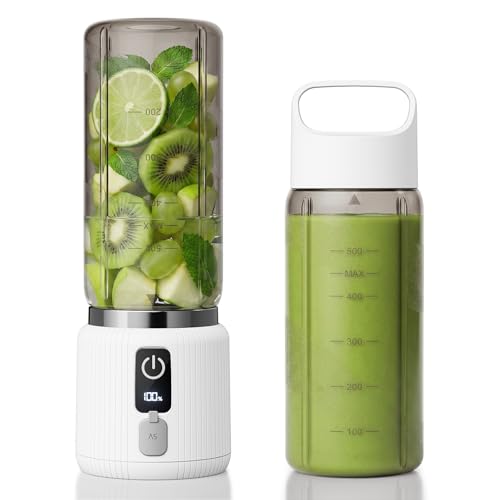
The COKUNST portable blender has a 17-ounce vessel and an LED display. The display can make the operating status easier to see, which is helpful in a dim office or early morning kitchen. Its white finish has a clean, simple look. The size falls into a practical personal range for a small green smoothie or protein drink.
Portable models work best with recipes that contain enough liquid and small ingredient pieces. I would use tender spinach before tougher greens, then add fruit and ice in moderation. The LED feature is convenient, but it does not replace motor strength. Think of it as a helpful dashboard, while the blade and battery remain the engine.
Pros:
- 17-ounce vessel suits personal smoothie portions
- LED display offers clear operating feedback
- Portable design works well for desks and travel
- White exterior fits many kitchen styles
- Compact form is easy to store
- Useful for light shakes, juices, and smoothies
Cons:
- Small capacity does not suit family batches
- Portable power may struggle with very thick mixtures
- Battery charging remains part of ownership
My Recommendation
I recommend the COKUNST for users who want a small blender with visible controls. It is best for office drinks, light breakfasts, and simple travel use. It may be the best blender for green smoothies for someone who values portability and an LED display more than maximum capacity. For kale-heavy or ice-heavy recipes, I would move up to a corded 900-watt or larger model.
nutribullet Flex Portable Blender

The nutribullet Flex portable blender brings a familiar personal-blender name to a cordless format. Its forest green finish gives it a polished look, while the portable design suits users who move between home, work, and travel. The main benefit is a less fixed smoothie routine. You do not need to stand beside a countertop base for every drink.
I would select this type of blender for simple recipes and moderate portions. A portable machine can be a helpful bridge between a shaker bottle and a full blender. It can break down soft fruit and tender greens, but recipe prep still matters. Add liquid first, avoid overfilling, and let frozen ingredients soften slightly if the motor needs help.
Pros:
- Cordless form supports flexible use around the day
- nutribullet name is familiar to many smoothie shoppers
- Forest green color looks modern and neat
- Personal format suits single servings
- Useful for work, travel, and small kitchen spaces
- Simple approach can encourage more regular smoothie use
Cons:
- Portable size and power limit large or dense batches
- Battery care is needed for reliable daily use
- It may not produce the same texture as a large countertop model
My Recommendation
The nutribullet Flex is best for people who already like personal blending and want more freedom from the outlet. I would consider it for commuters, students, and small-space users. It can be the best blender for green smoothies when portability is the feature that will help you use the blender more often. Buyers who want one machine for family drinks should choose the Ninja BL660 instead.
How I Choose the Best Blender for Green Smoothies
A green smoothie has a different texture challenge than a thin fruit juice. Leafy greens contain fibers that can remain visible if the blades cannot create enough movement. Frozen fruit adds cold, dense pieces that increase the load. A good blender must bring these parts together without forcing you to stop every few seconds.
I start with motor strength, but I do not stop at the watt number. Manufacturers may describe power in different ways, such as rated watts or peak watts. That makes direct comparisons less exact. I also look at vessel shape, blade position, controls, cup size, cleanup, noise, warranty information, and the type of food the blender is designed to process.
Motor Power
For one green smoothie, a personal blender around 900 watts can be a useful starting point. It should handle tender spinach, banana, berries, yogurt, and liquid when you use a sensible load. A larger 1,100-watt countertop model offers more headroom for bigger batches and tougher mixtures. Still, no watt rating guarantees a perfectly smooth drink.
Power works with recipe design. Too little liquid can make ingredients sit above the blade. Too much frozen fruit can slow movement and create an air pocket. I get better results when I start with liquid, add greens, then soft fruit, and place frozen items on top.
Blade and Vessel Design
Blades need enough contact with the food to create a steady whirlpool. The vessel also needs a shape that moves food toward the blade. Tall personal cups can work well for one serving, while broad pitchers offer room for larger amounts. A smooth drink depends on the whole system, not only the sharpness of the blade.
Never judge a blender only by its appearance. Check whether the cup size fits your recipe. A 350ml cup may be perfect for a small drink but frustrating for a large breakfast blend. An 18-to-22-ounce cup suits many personal users, while a 72-ounce pitcher makes more sense for a family.
Capacity
Capacity should match your habits. A single user may prefer a personal cup that doubles as a drinking container. Two people may appreciate a set with several cups. Families and meal preppers should look for a full-size pitcher.
Do not fill a blender to the top just because the container is large. Leave room for movement and follow the maker’s instructions. Overfilling can lead to uneven blending, spills, and extra stress on the motor.
Frozen Ingredients
Frozen fruit makes smoothies cold and thick, but it also tests a blender. Letting fruit sit for a few minutes can make blending easier. You can also use fresh banana or yogurt to add body without relying on a large amount of ice.
When a blender stalls, turn it off before adjusting the mixture. Never push food toward moving blades with a spoon. Add a little liquid, secure the lid, and use short pulses if the instructions allow it. Safe habits protect both you and the machine.
Cleaning and Care
Green residue can cling to cups, seals, and blade assemblies. Rinse the container soon after use. Warm water and a small amount of dish soap may help with normal residue, but follow the product manual for dishwasher use. Do not immerse a motor base in water.
I also check the blade seal for trapped pulp. A clean seal helps reduce odor and keeps the cup ready for the next drink. Dry removable parts before storage so moisture does not linger in hidden corners.
Noise and Counter Space
High-speed blenders often make noise. A large motor and hard ice can sound like a small storm on the counter. If you blend early in the morning, a personal model may be easier to manage, but no powerful machine is silent.
Measure your cabinet and counter before ordering. Check the height with the cup or pitcher in place. A blender that fits your routine is more useful than a stronger model that stays packed away.
How to Make a Smoother Green Smoothie
I use a simple five-part method. First, pour in liquid such as water, milk, or a plant-based drink. Next, add greens, then soft fruit, then seeds or yogurt, and finally frozen fruit or ice. This order lets the blades grab the liquid and pull the other ingredients down.
Use tender spinach if you want the easiest start. Baby kale can work well too, but thick stems may need chopping. If you use mature kale, remove tough stems and cut the leaves into smaller pieces. A little preparation can turn a rough drink into a smooth one.
Blend for a short cycle, check the texture, and add liquid only if needed. Avoid running a personal blender for long periods without a pause. Follow the instructions for your specific model. The best blender for green smoothies still needs the right recipe balance.
Best Uses for Each Blender Type
Personal corded blenders are excellent for daily breakfast drinks. They usually offer more power than tiny cordless models and take less room than a full pitcher. The Ganiza, KOIOS, and Nutri-Plus fit this role well.
Portable cordless blenders shine when convenience comes first. The Ninja Blast, Blast Max, COKUNST, nutribullet Flex, and 350ml model can help you make a drink away from home. Their limits become more clear with hard ice, thick nut mixtures, large loads, and fibrous produce.
Full-size countertop blenders are the best fit for families and batch cooking. The Ninja BL660 gives you a large pitcher and personal cups. It takes more space, but it also handles a wider range of serving needs.
Best-For Comparison
| Best for | Why |
|---|---|
| Family batches | The Ninja BL660 offers a 72-ounce pitcher and strong 1,100-watt motor. |
| Daily personal smoothies | The Ninja Nutri-Plus provides 20-ounce cups and useful 900-watt power. |
| Portable blending | The Ninja Blast Max offers cordless use with a larger 22-ounce vessel. |
FAQs Of best blender for green smoothies
What power is best for green smoothies?
A personal blender around 900 watts can handle many green smoothie recipes. Choose a stronger full-size model if you make large batches or use lots of frozen food. Recipe size and liquid level also affect results.
Can a portable blender blend spinach?
Yes, many portable blenders can blend tender spinach when you add enough liquid and cut other ingredients into small pieces. Tough stems and large frozen chunks may produce a less smooth texture.
Is a personal blender better than a full-size blender?
A personal blender is better for one quick serving and easy storage. A full-size blender is better for families, meal prep, sauces, and large frozen drinks. Your serving size should guide the choice.
How much liquid should I add to a green smoothie?
Start with enough liquid to cover the lower blade area, then add more if the mixture stalls. The exact amount depends on the greens, fruit, ice, and cup size. Add liquid slowly so the smoothie does not become too thin.
How do I clean green smoothie stains?
Rinse the cup soon after blending. Wash removable parts with warm water and dish soap, or use a dishwasher only when the manual allows it. A soft brush can reach around the blade and seal.
Final Verdict: Which Should You Buy?
The Ninja BL660 is my top overall pick because it combines 1,100 watts, a 72-ounce pitcher, and personal cups. For one person, the Ninja Nutri-Plus is a smart smaller choice. The best blender for green smoothies depends on your serving size and need for portability.
Choose the model that fits your counter, recipe, and routine. With enough liquid and smart ingredient order, these blenders can make fresh green smoothies easier in 2026.