The best can opener for restaurants is durable, easy to clean, fast, and built for heavy daily use.
A busy kitchen can go through dozens of cans before the lunch rush ends. A weak opener can slip, leave sharp edges, or slow every order. I look for strong gears, a comfortable crank, stable handling, and simple cleaning when I review commercial kitchen tools. The right opener should feel like a steady extra hand, not another task for your staff. Below, I compare nine popular manual models for restaurants, food trucks, bars, prep kitchens, and home cooks who use large cans.
Heavy-Duty Crank Opener With Long Handles

This heavy-duty manual crank opener uses long, rubber-coated handles to give the user a firm grip. Long handles can help spread hand pressure over a wider area, which is useful when opening large food cans. The manual design does not need batteries, a power cord, or a motor. For many kitchens, that simple build is a real advantage.
I like this style for prep work where staff need steady control more than speed. The rubber coating may also help reduce slipping when hands are wet or oily. As with any manual opener, the cutting wheel and gear should stay clean and dry for smooth work. It is a practical candidate for the best can opener for restaurants when comfort and basic durability matter.
Pros:
- Long handles provide useful leverage
- Rubber coating can improve grip
- Manual design works without batteries
- Suitable for many standard and larger cans
- Simple construction is easy to understand
- Good fit for prep stations and small restaurants
Cons:
- Manual cranking takes more time than an electric opener
- May need extra care with very large or thick cans
- Long handles need more drawer or wall storage space
My Recommendation
I recommend this model for cooks who want a comfortable hand tool for regular can opening. It suits restaurants, catering teams, and food trucks that need a dependable backup without relying on electricity. The long handles are especially helpful for users with less hand strength. It offers good everyday value if the kitchen follows a regular cleaning routine.
| Best for | Why |
|---|---|
| Daily prep work | Long handles make repeated cranking easier |
| Small restaurants | It needs no power and takes a simple setup |
| Users who need grip | Rubber-coated handles help reduce hand slip |
Commercial Black Swing-Grip Can Opener

This commercial can opener focuses on a large black swing grip that may feel natural during repeated use. A broad handle gives the hand more surface area than a thin metal knob. That can make a difference when cooks open canned tomatoes, beans, fruit, sauce, or stock each day. Its manual format keeps operation quiet and easy to control.
I would place this opener in a prep area where several employees share the same tool. The grip design looks aimed at comfort, but every user should still test the crank with the can sizes used most often. Good technique matters: keep the can level, turn the handle at a steady pace, and inspect the rim after cutting. This model may suit buyers seeking the best can opener for restaurants on a sensible budget.
Pros:
- Large swing grip may feel comfortable in the hand
- Manual operation avoids cord and battery issues
- Useful for routine commercial food preparation
- Quiet compared with powered openers
- Easy for staff to learn
- Black exterior can look neat in a busy kitchen
Cons:
- Cranking can still tire the hand during long shifts
- It may not replace a mounted opener for very high volume
- Users must clean the cutting area after each work period
My Recommendation
This swing-grip opener is best for a small restaurant, café, bar, or food truck that wants a basic commercial tool. It works well as a shared prep opener or a backup beside a larger mounted unit. I especially like the broad grip for cooks who dislike narrow handles. If your team opens a moderate number of cans each day, this can be a useful value choice.
| Best for | Why |
|---|---|
| Small food businesses | It offers a simple manual setup |
| Shared prep stations | The large grip is easy for many users to hold |
| Quiet kitchens | Manual use creates little operating noise |
UHIYEE Heavy-Duty Opener for Large Cans

The UHIYEE commercial opener is designed around a hand crank and large-can use. That makes it more relevant to restaurants that buy food in bulk rather than small household cans. A hand crank gives the cook direct control over the cutting process. The black finish also fits easily into most prep areas.
Large cans can place more strain on a light kitchen opener, so a commercial-style frame is important. I would use this unit on a stable counter and avoid forcing the crank if the blade meets resistance. Staff should confirm the can sits securely before turning. For a restaurant that handles bulk ingredients, this is a strong option to consider among the best can opener for restaurants.
Pros:
- Designed with large cans in mind
- Hand crank gives direct control
- Useful for bulk food preparation
- Does not require electricity
- Simple black finish suits many work areas
- Can serve as a practical backup tool
Cons:
- Large cans may require slower, careful cranking
- It needs counter space during use
- Manual operation may not suit extremely high-volume kitchens
My Recommendation
I recommend the UHIYEE model for cooks who often open large cans of sauce, vegetables, fruit, or other food-service ingredients. It is a good match for diners, catering kitchens, school kitchens, and food trucks with limited power access. It may also help a small team avoid buying a costly powered machine. Overall, it offers useful commercial features at a practical level.
| Best for | Why |
|---|---|
| Large food cans | The design targets bulk can preparation |
| Food trucks | It works without a power outlet |
| Backup use | A manual crank remains ready during equipment faults |
Chef Master 90056 Commercial Can Opener

The Chef Master 90056 is a commercial manual opener with a stainless steel body and an anti-slip grip. Stainless steel is a familiar choice in food-service kitchens because it is strong and easy to wipe down when cared for correctly. The product is marketed for large cans and professional settings such as restaurants, bars, kitchens, and food trucks. Its hand-crank design keeps the tool independent from electricity.
I find this type of opener useful when a kitchen needs one dependable tool for many shifts. The anti-slip grip can help the operator keep control while turning the crank. It is still important to wash or sanitize food-contact parts according to the kitchen’s food safety plan, then dry them fully. The Chef Master is one of the more recognizable choices for anyone comparing the best can opener for restaurants.
Pros:
- Stainless steel construction suits food-service use
- Anti-slip grip supports controlled operation
- Designed for large cans
- Works well in restaurants and food trucks
- No batteries or electrical outlet needed
- Professional style fits a commercial prep area
Cons:
- Manual turning takes longer than powered equipment
- Stainless steel still needs prompt drying
- It may be larger than needed for a home kitchen
My Recommendation
The Chef Master 90056 is best for small and medium food businesses that want a well-known commercial-style hand opener. I would choose it for a bar kitchen, café, food truck, or restaurant prep line that opens large cans but does not need a fully mounted machine. The stainless steel body and anti-slip grip are useful touches. It is a balanced choice when durability, control, and easy ownership matter.
| Best for | Why |
|---|---|
| Food trucks | Manual use works in compact spaces without power |
| Restaurant prep lines | It handles regular large-can tasks |
| Grip and control | The anti-slip handle helps steady the crank |
Edlund Old Reliable #1 Can Opener

The Edlund 11100 Old Reliable #1 is a classic-style manual opener with a plated steel base. Its listed capacity reaches cans up to 11 inches tall, which places it in a different class from small handheld openers. A tall can rating is useful for commercial kitchens that use bulk ingredients. The base also gives the tool a more stable working platform than a small handheld design.
This is the type of opener I would consider for a kitchen that values stability and long-term service. It can reduce the need to hold a heavy can in one hand while turning a small tool with the other. The operator should place it on a solid surface and keep the blade area clean. For heavy prep, the Edlund is a serious contender for the best can opener for restaurants.
Pros:
- Listed for cans up to 11 inches tall
- Plated steel base supports stable use
- Commercial design suits busy prep work
- Good choice for bulk ingredients
- Manual operation avoids power failure problems
- Classic format is familiar to many kitchen teams
Cons:
- It needs more permanent counter space
- Heavier construction may be less portable
- Careful cleaning is needed around the cutting parts
My Recommendation
I recommend the Edlund Old Reliable #1 for restaurants that open tall cans on a regular basis. It is especially suitable for institutional kitchens, caterers, diners, and high-prep operations. The stable base is a major benefit when the team works with heavy containers. If your priority is a commercial opener for large cans rather than portability, this model deserves close attention.
| Best for | Why |
|---|---|
| Tall cans | Its listed capacity reaches cans up to 11 inches tall |
| High-volume prep | The base supports steady repeated work |
| Permanent stations | Its larger form suits a fixed counter location |
Roryimke Heavy-Duty Manual Can Opener

The Roryimke manual opener is presented as a heavy-duty kitchen tool for seniors and commercial use. Its manual format makes the controls easy to understand. There is no switch, charging time, or motor noise to manage. That can help in a small kitchen where staff want a tool they can pick up and use at once.
For older cooks or anyone with reduced hand strength, handle shape matters as much as blade quality. I would use a stable counter and turn the crank in smooth motions rather than pushing hard. The opener should be checked after use for food residue, especially around the wheel and gear. It may be a comfortable candidate for the best can opener for restaurants where several people share the prep work.
Pros:
- Simple manual operation is easy to learn
- Designed with seniors in mind
- Useful for commercial and home kitchens
- No cord or batteries to maintain
- Can work as a dependable backup
- Suitable for shared kitchen use
Cons:
- Hand cranking may still challenge some users
- It may be slower than a mounted commercial opener
- Capacity should be checked before using very tall cans
My Recommendation
This Roryimke opener is best for small restaurants, family kitchens, senior users, and prep teams that want a straightforward tool. I would not make it the only opener in a very busy institutional kitchen without checking its workload limits. It makes more sense as an accessible daily tool or a useful second opener. Its overall value comes from simple use and broad user appeal.
| Best for | Why |
|---|---|
| Senior cooks | The design aims to make hand use more comfortable |
| Shared kitchens | Simple controls suit users with different skill levels |
| Backup service | It works without power or batteries |
RayStead Ergonomic Long-Handle Opener

The RayStead opener uses a long ergonomic handle for large cans. A longer handle can give the user more leverage and may reduce the need for a tight grip. That feature is helpful when a prep cook opens several cans in one shift. The manual build also keeps the tool ready when no outlet is nearby.
I see this style as a bridge between a small household opener and a fixed commercial unit. It offers more reach and leverage but remains easy to move between stations. The cook should hold the can firmly and stop if the blade begins to drag. For kitchens that want a portable best can opener for restaurants, this model has a practical shape.
Pros:
- Long handle can improve leverage
- Designed for large-can use
- Portable between prep stations
- Works without electricity
- May reduce wrist strain for some users
- Easy to store compared with a mounted opener
Cons:
- It may need two-handed control with heavy cans
- Not as stable as a fixed-base model
- Large handles can take extra drawer space
My Recommendation
I recommend RayStead for food trucks, mobile caterers, and small restaurant kitchens that need portability. It is also a sensible option for cooks who prefer a long handle over a short knob. The ergonomic shape may help during repeated tasks, though comfort always depends on hand size and grip. It offers strong everyday value when a permanent can opener is not practical.
| Best for | Why |
|---|---|
| Mobile kitchens | The portable design moves easily between work areas |
| Large cans | The long handle can add useful leverage |
| Limited counter space | It does not need a fixed mount |
Bellemain Ergonomic Safe-Cut Opener

The Bellemain ergonomic opener is designed around easy use and a safe-cut approach. Its product name makes it appealing for seniors, restaurants, and kitchens that care about comfortable handling. A safe-cut design typically aims to leave a smoother rim than a traditional sharp-edge cut, but staff should still inspect every lid. Its compact form may also suit smaller work spaces.
I would choose this type of opener when user comfort and rim safety matter more than maximum capacity. It may be helpful for a café, assisted-living kitchen, or restaurant that uses mostly standard cans. No opener should replace proper hand washing and safe food handling. In the right setting, Bellemain can compete for the best can opener for restaurants because it focuses on ease and control.
Pros:
- Ergonomic design may feel easier to hold
- Safe-cut style can help reduce sharp lid edges
- Good fit for seniors and users with hand concerns
- Compact for small kitchens
- Useful for standard can sizes
- Simple manual operation needs no power
Cons:
- May not be ideal for very tall food-service cans
- Safe-cut results still require a rim check
- Small form may not suit heavy commercial workloads
My Recommendation
Bellemain is best for cafés, small restaurants, senior-care kitchens, and home cooks who want a more comfortable opener. I would select it for standard cans and moderate use rather than a large institutional prep line. The safe-cut concept may add peace of mind when staff handle lids often. It is a useful choice when accessibility and compact storage lead the buying decision.
| Best for | Why |
|---|---|
| Senior users | The ergonomic shape may reduce grip effort |
| Standard cans | Its compact design suits normal daily prep |
| Safety-minded kitchens | The safe-cut style aims to reduce sharp edges |
Aazai Counter-Mounted Opener for #10 Cans

The Aazai opener is a counter-mounted model made for #10 cans. These large cans are common in food-service work because they hold bulk amounts of vegetables, sauces, fruit, and other ingredients. A mounted opener can give the operator a stable point of contact. That stability may be more useful than portability during a busy prep shift.
I would place this unit on a strong counter at a dedicated opening station. The team should check the mounting method, available clearance, and cleaning access before installation. A fixed opener can save repeated lifting, but it needs a suitable location. For kitchens that open #10 cans often, this may be the best can opener for restaurants in terms of task fit.
Pros:
- Designed for #10 cans
- Counter mount can improve stability
- Good choice for bulk food preparation
- Reduces the need to hold large cans in the air
- Manual design works during power outages
- Dedicated placement can speed routine prep
Cons:
- Requires counter space and proper installation
- Less portable than a handheld model
- Staff must clean the mounted cutting area carefully
My Recommendation
Aazai is best for commercial kitchens that open #10 cans several times a day. I would consider it for schools, diners, catering operations, banquet kitchens, and restaurants with a fixed prep line. It is not the right pick for a food truck or a tiny counter. If you have the space, the mount may offer better control and less awkward handling than a small handheld opener.
| Best for | Why |
|---|---|
| #10 cans | The product is designed for this large food-service size |
| Fixed prep stations | The counter mount keeps the tool in one place |
| Bulk production | Stable handling helps with repeated large-can work |
Heavy-Duty Crank Opener for Arthritis
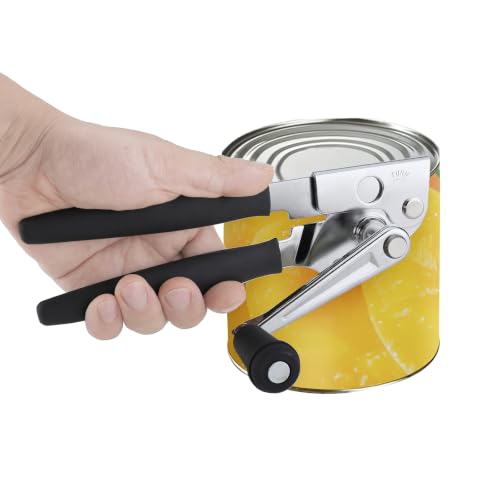
This heavy-duty manual crank opener is marketed for seniors and people with arthritis. Its design aims to make can opening easier through a larger, more manageable crank. That can matter in a restaurant with staff who have different hand strengths. The tool also avoids the noise, charging, and upkeep linked with electric openers.
I would treat the arthritis-friendly label as a helpful starting point, not a guarantee for every user. Hands differ, so each cook should test the grip and turning force before assigning the tool to long shifts. A stable surface and smooth motion can make the task easier. For accessible food preparation, this model is worth comparing with other options for the best can opener for restaurants.
Pros:
- Designed with seniors and arthritis in mind
- Manual crank avoids small electric controls
- Heavy-duty format suits regular kitchen work
- May offer a more comfortable grip
- Works without batteries or an outlet
- Useful for shared or assisted kitchens
Cons:
- Some users may still find manual turning difficult
- It may not handle the volume of a fixed opener
- Capacity should be confirmed for oversized cans
My Recommendation
I recommend this opener for restaurants that want to support staff with limited grip strength. It also fits senior centers, assisted kitchens, cafés, and home cooks who open cans often. I would keep a second commercial opener nearby if the kitchen has a very fast service line. Its best value comes from giving more users a chance to work with confidence.
| Best for | Why |
|---|---|
| Arthritis concerns | The larger crank may be easier to manage |
| Accessible kitchens | Simple manual controls suit varied users |
| Regular prep | The heavy-duty format supports routine work |
How to Choose the Best Can Opener for Restaurants
The best can opener for restaurants depends on can size, daily volume, counter space, and staff comfort. A small café may need a portable hand opener. A banquet kitchen may need a mounted tool for #10 cans. Buying the strongest-looking model is not enough if it does not fit the work station.
Match the Opener to Can Size
Start by checking the cans your kitchen uses most. Standard cans need less reach and force than tall food-service cans. If your menu uses large tomato, fruit, bean, or sauce cans, choose a model made for that size. Never assume a household opener can safely handle every commercial can.
Consider Daily Volume
Volume changes the best choice. A restaurant that opens five cans a day may be happy with a handheld model. A prep kitchen that opens dozens may benefit from a stable commercial or mounted design. Manual openers are useful, but repeated cranking can slow work and tire hands during a long shift.
Look for a Stable Grip
A good grip helps the cook keep the blade aligned. Rubber or anti-slip handles can help when hands are damp. Long handles may add leverage. A mounted base can reduce can movement. These small details can turn a frustrating task into a smooth one.
Check Cleaning Access
Can openers touch food residue and metal rims, so cleaning matters. The FDA Food Code stresses clean food-contact equipment and proper sanitation practices in food operations. Follow your local health department rules and the manufacturer’s care directions. Remove residue, sanitize suitable parts, and dry the tool before storage.
Think About Sharp Edges
A traditional opener may leave a sharp lid and rim. A safe-cut model may reduce that risk, but staff should still inspect the can. Discard damaged cans and do not use a tool with a loose wheel or bent cutting part. A smooth cut supports safer food prep and easier lid removal.
Manual Versus Electric Openers
Manual openers cost less to run and work during power failures. They are often quiet and easy to move. Electric openers can save time in high-volume settings, but they need power and more complex cleaning. Many professional kitchens keep a manual model as a backup even when they use powered equipment.
Materials and Corrosion
Stainless steel and plated metal are common in commercial tools. These materials can resist wear, but no metal is damage-proof. Do not leave the opener wet overnight. Avoid harsh cleaners unless the maker approves them. Dry storage helps protect the blade, gear, and frame.
Ease of Training
Restaurant tools should be easy for new staff to use. Show cooks how to seat the blade, turn the crank, remove the lid, and clean the tool. A short training step can prevent bent lids and loose metal pieces. It can also protect hands from sharp edges.
Safety and Care Tips for Restaurant Can Openers
I always treat a can opener as a food-contact tool, not just a metal gadget. Wipe or wash it after use based on the product instructions. Pay close attention to the wheel, gear, shaft, and areas where food can collect. A clean tool protects both food quality and equipment life.
Place the can on a steady surface before cutting. Keep fingers away from the lid and cutting wheel. If the opener slips, stop and reset it instead of forcing the handle. Cooks should use a clean utensil or approved method to remove the lid.
Inspect the opener often. A dull wheel may crush the rim and create metal flakes. A loose handle may reduce control. Replace a damaged tool before it becomes a safety problem.
For mounted models, check screws, clamps, and counter stability. The mount should not rock while a cook turns the handle. Give staff enough room to work without bumping another person. Good placement is as important as the opener itself.
What I Look For in Commercial Can Opener Reviews
When I review kitchen tools, I focus on the work they must do, not just the product photo. I compare the claimed can capacity, grip design, construction, cleaning needs, and likely storage space. I also ask who will use the opener and how often. A tool can be excellent for one kitchen and wrong for another.
I avoid promising an exact lifespan because use varies. Thick cans, fast cranking, poor cleaning, and drops can wear any opener. Product listings may change, so buyers should confirm the current specifications, price, size, and seller details before ordering. This matters even more when a restaurant is buying several units.
I also value simple backup planning. A manual opener can keep prep moving during a power cut or equipment repair. Keeping one near the main station and one in dry storage can prevent a small tool failure from becoming a service delay. In a busy kitchen, that peace of mind has real value.
Which Type Is Right for Your Kitchen?
Choose a handheld long-handle opener if your team needs mobility and moderate power. This type works well in cafés, bars, food trucks, and small prep areas. It is also easy to lend to another station.
Choose a large-can commercial opener if your menu relies on bulk ingredients. Models such as the Chef Master and UHIYEE focus on the needs of larger cans. They make more sense when staff use food-service cans but still need a movable tool.
Choose a mounted opener if the kitchen opens tall cans all day. The Edlund and Aazai designs fit a fixed station better than a compact handheld unit. They need more planning, but stability can improve repeated work.
Choose an ergonomic or safe-cut model if comfort and rim safety lead your decision. Bellemain, Roryimke, and the arthritis-focused crank opener may suit senior users or teams with hand concerns. Always test the grip and read the care instructions before putting a tool into full service.
FAQs Of best can opener for restaurants
What is the best can opener for restaurants?
The best choice depends on can size and daily volume. For large, repeated prep, a mounted commercial model such as the Edlund or Aazai may be the better fit. For portable use, the Chef Master, UHIYEE, or a long-handle model can work well.
Are manual can openers good for busy restaurants?
Yes, manual openers can be useful in busy kitchens, especially as backup tools. They do not need electricity and are often simple to clean and store. Very high-volume kitchens may prefer a mounted or electric opener for speed.
Can these openers handle #10 cans?
The Aazai model is specifically listed for #10 cans. Other commercial models may handle large cans, but buyers should confirm the stated capacity before use. Do not force a tool beyond its listed size.
How should a restaurant clean a can opener?
Remove visible food residue, wash or sanitize suitable parts, and dry the opener fully. Follow the manufacturer’s instructions and local health rules. Pay special attention to the cutting wheel and gear.
Is a safe-cut can opener safer?
A safe-cut design may reduce sharp edges, but it does not remove all risk. Staff should inspect the rim and lid after every cut. Store removed lids safely and train workers to keep fingers away from the edge.
Final Verdict: Which Should You Buy?
For large, repeated prep, I would choose the Edlund Old Reliable #1. For portability, the Chef Master 90056 is a strong all-around pick. The best can opener for restaurants is the one that matches your can size, volume, space, and staff comfort.
Choose a stable commercial opener, clean it after use, and keep a manual backup ready. With the right fit, restaurant can opening becomes faster, safer, and far less stressful.