The best can opener for disabled users combines low effort, a safe grip, smooth cutting, and simple one-touch control.
Opening a can should not feel like a test of strength. Yet stiff pull tabs, small knobs, and sharp metal edges can frustrate people with arthritis, Parkinson’s disease, weak hands, tremors, or limited reach. I reviewed manual, ring-pull, and electric models with these needs in mind. The right tool can make soup, pet food, vegetables, and drinks easier to reach while helping the user stay independent in the kitchen.
Dext Ring Pull Can Opener

The Dext ring pull opener is made for cans with metal tabs. Instead of forcing a finger under the tab, the user slides the tool into place and lifts with a broad handle. This design can help reduce strain for people with arthritis or weak finger joints.
In my view, the large grip is the main benefit. It gives the hand more room and reduces the need for a tight pinch. It does not replace a standard cutter for sealed cans, but it is a useful aid for canned drinks, pet food, and tab-top foods.
Pros:
- Large handle is easier to hold
- Helps lift stiff ring tabs
- Useful for arthritis and weak hands
- Light and easy to store
- Works without batteries or charging
- Helpful for soda, pet food, and other tab cans
Cons:
- Only works with ring-pull tabs
- May need two hands on very stiff tabs
- Does not open fully sealed cans
My Recommendation
This Dext tool is best for a person who can use a simple lift motion but cannot get a finger under a tight tab. It is also a good backup for caregivers who want a small aid near the pantry. If you need the best can opener for disabled users who mainly open pull-tab cans, this is an affordable and simple choice. Check the current listing for color and availability before ordering.
Zoomsnail Rechargeable Electric Can Opener
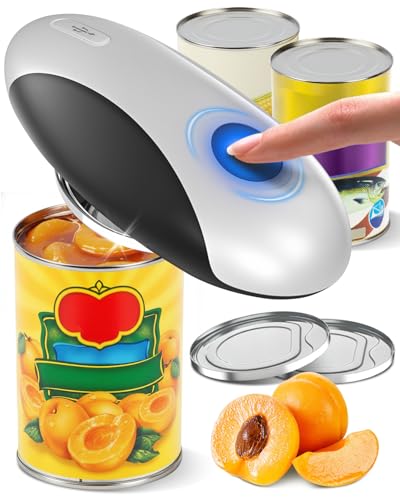
The Zoomsnail electric can opener uses one-touch operation. The user places it on the rim, presses the control, and lets the motor travel around the can. That hands-free action can be helpful when gripping and turning a manual opener feels painful.
The smooth-edge design aims to leave a safer cut than a classic sharp wheel. A magnetic feature can help hold the lid after cutting, which may reduce the need to pick up a sharp lid. Users should still watch the first few uses and keep the opener charged.
Pros:
- Requires little hand strength
- One-touch operation is easy to learn
- Rechargeable design avoids constant battery changes
- Smooth-edge cutting helps reduce sharp rims
- Magnetic lid support can improve handling
- Good match for arthritis and limited grip
Cons:
- Needs charging before use
- May not fit every unusual can shape
- Costs more than a basic manual opener
My Recommendation
I recommend the Zoomsnail for users with low grip strength, painful joints, or limited hand control. It is especially useful when the user wants to open standard cans without holding and turning a tool. As a candidate for the best can opener for disabled adults, it offers the strongest mix of low effort and simple controls. A caregiver should test the cutting path and charging routine before regular use.
Mudder Ring Pull Tab Opener Set
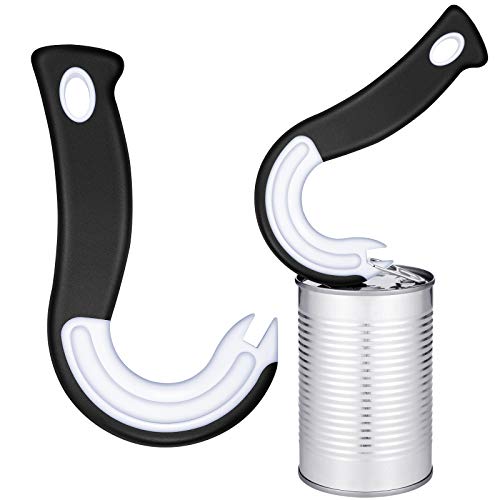
The Mudder set includes two manual ring-pull helpers. These small tools give the user a longer handle and more leverage than a bare metal tab. That extra reach may make a stubborn pull tab less frustrating.
A two-pack is handy for keeping one in the kitchen and one in a travel bag or emergency kit. The tool needs no motor, cord, or battery. It is best viewed as a tab lifter, not as a replacement for a cutting-wheel can opener.
Pros:
- Two pieces offer useful backup
- Creates leverage over a small tab
- Simple manual design has few parts to fail
- No charging or batteries are needed
- Small size suits drawers and travel bags
- Helpful for people who cannot pinch a tab well
Cons:
- Only suits pull-tab cans
- Small size may still challenge some users
- Requires a lift motion and some control
My Recommendation
The Mudder set is best for someone who has enough arm movement but struggles with small tabs. It can also help a family keep a spare tool in more than one room. It is not the best can opener for disabled users who need fully automatic cutting, but it gives excellent value for a narrow task. Its low cost makes it a sensible first step.
Bellemain Ergonomic Safe-Cut Opener

The Bellemain opener uses an ergonomic shape to make manual cutting more comfortable. Its safe-cut style is designed to cut near the lid edge rather than leave a razor-like rim. The wide handle can give the user a more stable hold.
This model still needs the user to position the opener and turn its mechanism. That makes it a better fit for mild to moderate hand weakness than for very limited strength. I like it for people who want a manual tool but place safety above speed.
Pros:
- Ergonomic form supports a steadier grip
- Safe-cut design helps reduce sharp lid edges
- Manual operation needs no power source
- Useful for homes that open many cans
- More comfortable than narrow traditional handles
- Suitable for users who want a durable basic tool
Cons:
- Still requires turning by hand
- Positioning may take practice
- May be too demanding for severe grip loss
My Recommendation
Choose the Bellemain if you have some hand strength and want a safer manual can opener. It is a strong option for seniors who dislike sharp cut edges but do not want an electric appliance. For the best can opener for disabled users with mild arthritis, this design offers a useful balance of control, safety, and value. A user with severe tremors may prefer a one-touch model.
KitchenAid Classic Manual Can Opener

The KitchenAid Classic combines a can opener with a bottle opener. It has soft ergonomic handles and a stainless steel cutting wheel. The handles give more comfort than thin metal grips found on many low-cost openers.
This is a familiar manual style, so most users can learn it quickly. It requires a firm squeeze and repeated turning, which may not suit every disability. For someone with good wrist motion and mild hand pain, it remains a practical kitchen tool.
Pros:
- Soft handles feel comfortable in the palm
- Stainless steel wheel is made for regular use
- Includes a bottle opener
- Simple design needs no batteries
- Easy to find and store
- Works well for standard household cans
Cons:
- Needs squeezing and turning
- Traditional cutting may leave a sharp lid
- Less suitable for severe arthritis or tremors
My Recommendation
The KitchenAid Classic is best for a user who wants a trusted manual opener and still has moderate grip strength. It is a good choice for occasional can use and for people who also need a bottle opener. I would not call it the best can opener for disabled users with very weak hands, but it is a solid value for mild mobility limits. Use care around the cut lid and wash the tool after use.
Cuisinart One-Touch Electric Can Opener

The Cuisinart electric opener is designed for one-touch use. Its nonslip base helps keep the appliance steady on the counter while it cuts. This setup can reduce the need to hold a can and turn a handle at the same time.
A countertop electric opener works well for frequent use. It needs access to an outlet, and the user must place the can correctly before starting. The controls are simple, which can help older adults who prefer a familiar appliance over a small handheld device.
Pros:
- One-touch operation reduces hand effort
- Nonslip base supports counter stability
- Good for frequent can opening
- Large countertop form is easy to locate
- Helpful for arthritis and weak wrists
- Does not require repeated manual turning
Cons:
- Requires counter space
- Needs an electrical outlet
- Cleaning around the cutting area takes care
My Recommendation
The Cuisinart is best for a person who opens cans often and has a permanent kitchen setup. It suits users who can place a can on the base but cannot turn a manual handle with ease. If you are comparing the best can opener for disabled seniors, this model is worth considering when corded countertop use is acceptable. Keep the cord away from water and follow the care instructions.
OXO Good Grips Smooth Edge Opener

The OXO Good Grips opener focuses on comfort and smooth-edge cutting. Its soft grip gives the hand a broad contact area, while the cutting method is designed to avoid a sharp exposed rim. This can make food preparation feel less stressful for people who worry about cuts.
Like other manual openers, the OXO needs the user to turn a knob. Its handle is more comfortable than many small plastic models, but comfort does not remove all effort. I see it as a strong choice for users with moderate ability who want a safer edge.
Pros:
- Soft grip is comfortable for longer use
- Smooth-edge cut helps reduce sharp metal
- Broad handle is easier to hold
- Manual design works without power
- Useful for home meal preparation
- Well suited to users who value safety
Cons:
- Still needs wrist rotation
- May not suit severe hand weakness
- Manual positioning takes a little practice
My Recommendation
I recommend the OXO for users with arthritis who can turn a knob but dislike narrow, hard handles. It is also a thoughtful pick for anyone who wants no sharp edges around family meals. Among manual options for the best can opener for disabled users, the OXO stands out for comfort and safe-edge design. Choose an electric model instead if turning remains painful.
GoodCook Safe-Cut Can Opener

The GoodCook Safe-Cut opener uses an easy-turn knob and a side-cut style. The design aims to create a smoother lid edge than a top-cut opener. Its black finish and compact shape fit easily in a normal kitchen drawer.
This opener is a good match for users who want a lower-cost manual tool. It still calls for some hand pressure and turning, so expectations matter. I would pair it with a ring-pull helper if the household uses many tab-top cans.
Pros:
- Easy-turn knob supports better control
- Safe-cut style helps limit sharp edges
- Compact shape saves drawer space
- No batteries or outlet are needed
- Affordable for a basic kitchen tool
- Works with many common cans
Cons:
- Manual turning still takes effort
- May feel small for very large hands
- Not ideal for severe grip limitations
My Recommendation
The GoodCook is best for a budget-minded user with mild hand weakness. It gives useful safety features without the cost or storage needs of an electric appliance. It can be the best can opener for disabled shoppers who need a simple backup tool and can still rotate a knob. For advanced arthritis, I would move up to a one-touch electric model.
Dext Apricot Ring Pull Opener
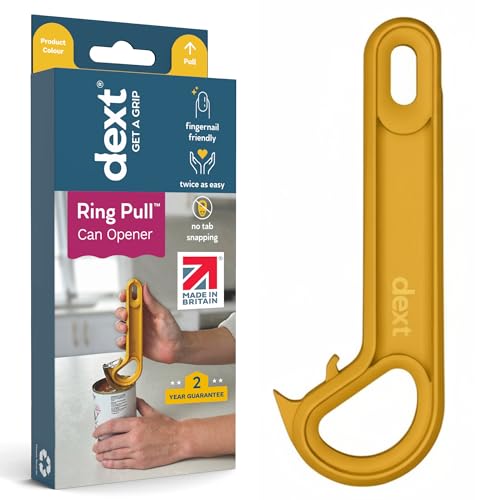
This apricot Dext opener uses the same helpful ring-pull concept as the teal version. Its broad handle gives the user a more comfortable place to press and lift. That can be useful when a tab is flat, tight, or difficult to reach.
The tool is small enough to keep beside canned food. It works best with drinks, pet food, and other cans that already have a pull tab. Since it does not cut metal, it cannot open a sealed can with no tab.
Pros:
- Large grip reduces finger pinch
- Simple lifting action is easy to understand
- Lightweight and easy to carry
- Needs no power or setup
- Useful for people with stiff finger joints
- Bright color can be easier to spot
Cons:
- Limited to ring-pull containers
- Needs some arm strength to lift
- Does not replace a standard can cutter
My Recommendation
This Dext version is best for a user who needs a dedicated pull-tab aid, not a full can opener. The bright color may help users with low vision find it in a drawer, though lighting and contrast still matter. It is a useful part of a broader best can opener for disabled kitchen setup. Buy it with an electric or ergonomic cutter if the user opens both tabbed and sealed cans.
Yakbins One-Touch Electric Opener

The Yakbins electric opener is built around one-touch operation and smooth-edge cutting. The motor does the turning, so the user does not need to squeeze a handle around the can. This can help people with weak grip, painful wrists, or reduced hand endurance.
Its automatic format may also help a caregiver prepare food more quickly. The user must still place the appliance on the rim and remove it after the cut. As with any small electric tool, I suggest checking the fit, cleaning method, and power needs before making it a daily appliance.
Pros:
- Automatic action needs little strength
- One-touch control is simple
- Smooth-edge cutting supports safer handling
- Useful for seniors with weak hands
- Reduces repeated wrist movement
- Compact form is easier to store than a large countertop unit
Cons:
- Requires batteries or its stated power source
- May need careful rim placement
- Not every can shape may work equally well
My Recommendation
The Yakbins is best for a user who wants automatic help in a small, uncluttered tool. It is a strong option for seniors and adults with arthritis who find a manual opener tiring. If you are seeking the best can opener for disabled users with limited wrist strength, its one-touch design deserves attention. Confirm power and maintenance details on the current product page before purchase.
Best Features at a Glance
| Best for | Why |
|---|---|
| Severe grip weakness | Choose a one-touch electric model because the motor does the turning. |
| Stiff pull tabs | Choose a Dext or Mudder ring-pull helper for extra leverage and reach. |
| Manual safe-edge cutting | Choose OXO, Bellemain, or GoodCook for comfort and smoother lid edges. |
How I Choose the Best Can Opener for Disabled Users
A can opener is a small tool, but it affects safety, comfort, and independence. I do not judge these products by speed alone. I look at the force needed, the size of the grip, the motion required, the cut edge, and how easy the tool is to clean.
I also consider the user’s condition. Arthritis may make squeezing painful. Parkinson’s disease may affect control and steadiness. A stroke, injury, or muscle weakness may limit reach. The best can opener for disabled users should match the person’s actual movement, not just the product label.
Grip and Handle Design
A wide handle spreads pressure across the palm. That is often kinder than a thin handle that presses into the fingers. Soft, nonslip material can also help the user keep control with less force.
Still, a large handle does not make every manual opener effortless. The user must usually grip, turn, or squeeze. If those actions cause pain, an electric opener may be the safer choice.
Manual Versus Electric Operation
Manual openers are light, quiet, and ready at any time. They do not need a cord, charger, or battery. Models such as OXO, Bellemain, KitchenAid, and GoodCook suit users who still have useful hand and wrist movement.
Electric openers reduce the main source of strain: repeated turning. One-touch models suit people with limited grip or painful joints. They need more care with placement, charging, storage, and cleaning, but that trade-off can be worthwhile.
Pull-Tab Helpers Versus Can Cutters
Ring-pull helpers solve one clear problem. They lift a tab that the user cannot easily grasp. They do not cut a sealed lid, so they cannot replace a full can opener.
If the home uses both tabbed and sealed cans, I suggest keeping two tools. A pull-tab helper can sit in the pantry, while an electric or ergonomic cutter handles standard cans. This simple pair can create a more flexible kitchen routine.
Safe-Edge Cutting
A freshly cut metal lid can have a sharp rim. Safe-cut openers aim to cut along the side or in a way that leaves fewer exposed sharp edges. That feature can lower the risk of a finger cut, but it does not make the lid harmless.
I still recommend removing the lid with care and keeping it away from children, pets, and anyone with poor sensation in the hands. Rinse the cutting area as directed. Never touch a moving blade or cutting wheel.
Stability and Counter Use
A nonslip base can make a countertop electric opener easier to use. The user can place the can on the appliance instead of holding the can in one hand. This may help people with tremors or limited balance.
However, counter space matters. A large appliance can become an obstacle in a small kitchen. Place it where the user can reach it without stretching, twisting, or lifting a heavy can above shoulder level.
Tips for Using a Can Opener Safely
Start with a clean, dry can and a stable surface. Read the instructions before the first use. If the user has weak vision, add good light and use a high-contrast mat under the can.
For a manual model, let the opener do the cutting. Do not force the knob if the wheel slips. For an electric model, stop the motor if the can tilts, jams, or makes an unusual sound.
After opening, check the lid and rim. A smooth cut can still have a rough spot. Use a spoon or other safe tool to lift a loose lid when possible, and wash the opener according to the manufacturer’s care directions.
What People With Arthritis Should Look For
Arthritis often makes pinch force and twisting hard. A user may be able to lift a pan but still struggle with a small ring tab. In that case, a broad pull-tab handle can make a surprising difference.
For sealed cans, look for a large grip and an easy-turn mechanism. If turning hurts after one can, do not rely on a manual opener simply because it costs less. An electric model may protect comfort and help the user remain independent.
The Arthritis Foundation often stresses ease of use and reduced joint strain when assessing daily tools. That principle applies here. The best can opener for disabled users should make the task feel calm, not like a contest against the lid.
What People With Parkinson’s Disease Should Consider
Tremors and changes in hand control can make a moving cutting wheel harder to manage. A stable countertop model may be easier than a small handheld tool. One-touch operation can also reduce the number of movements needed.
Use a clear work area with no loose towels near the appliance. A caregiver can help test the opener and mark the power button with a high-contrast sticker if needed. Never rush the user during setup or removal.
Cleaning and Maintenance
Food residue can collect near a cutting wheel, magnet, or lid holder. Wipe the tool after use and follow the care instructions for removable parts. Do not place an electric unit under running water unless the maker clearly allows it.
Check a manual opener for rust, a loose wheel, or a slipping grip. Replace it if the cut becomes rough or the tool needs unusual force. On electric models, inspect the charger, battery area, and motor sound from time to time.
How to Match the Opener to the User
First, ask what the user can do without pain. Can they lift a tab? Can they press a button? Can they turn a knob? Can they hold a can steady? These answers matter more than age or diagnosis.
Next, think about the cans used most often. A ring-pull helper is ideal for tabbed cans. A manual safe-cut model handles sealed cans without power. An electric opener is usually the easiest choice when hand strength is very low.
Finally, consider the kitchen. A countertop model needs a stable place near an outlet. A handheld model needs storage that is easy to reach. Small details can decide whether the tool becomes a daily help or stays forgotten in a drawer.
FAQs Of best can opener for disabled
What is the best can opener for disabled users with arthritis?
A one-touch electric opener is often the easiest choice because it reduces gripping and turning. For mild arthritis, an OXO, Bellemain, or GoodCook manual model may work well. The right choice depends on the user’s pain level and hand strength.
Are electric can openers safer than manual openers?
Electric openers can reduce hand strain and may create a smooth edge. They are not risk-free, though. Users should place the can correctly, keep fingers away from the cutting area, and handle the lid with care.
Can a ring-pull opener open regular cans?
No. A ring-pull helper lifts tabs that are already attached to a can. It cannot cut through a sealed metal lid. Use it with a standard manual or electric can opener when the kitchen has both types of cans.
What is best for someone with very weak hands?
Choose a one-touch electric model with a stable base or simple automatic action. The Zoomsnail, Cuisinart, and Yakbins models are designed to reduce manual turning. A caregiver should test the controls and placement first.
Should I choose a smooth-edge can opener?
A smooth-edge design is a smart choice when sharp lids are a concern. It may lower the chance of a cut, but users must still handle the lid carefully. Good lighting and a stable counter add more safety.
Final Verdict: Which Should You Buy?
The Zoomsnail is my top pick for the best can opener for disabled users because its one-touch, rechargeable design needs very little hand strength. Choose OXO or Bellemain for manual comfort, and Dext for stubborn pull tabs.
Match the opener to the user’s motion, grip, and kitchen space. A safe, easy can opener can turn a frustrating chore into a small daily win.