Finding the best hand mixer for bread dough means balancing motor power, dough hooks, comfort, and safe mixing time.
If you enjoy fresh bread but dread kneading, a hand mixer with dough hooks can save your hands and your time. The right tool turns a sticky bowl of flour into a smooth dough with less effort. Still, not every hand mixer can handle heavy bread dough well. Some are best for light dough, while others suit small pizza or dinner-roll batches. I compared power, speed control, hook design, handling, cleanup, and value to help you choose with confidence.
Hamilton Beach 6-Speed Easy Clean Mixer

The Hamilton Beach 6-Speed Easy Clean Mixer is a useful pick for bakers who want one small tool for daily mixing. Its six speeds help you start slowly, blend wet and dry ingredients, and finish light dough with better control. The included dough hooks make it more useful for dinner rolls, soft pizza dough, and small bread batches. I also like the simple shape because it feels familiar from the first use.
For bread dough, I would use this mixer in short sessions and avoid forcing it through a very stiff dough. The easy-clean beaters help with cakes, eggs, and cookie batter, while the hooks handle lighter kneading jobs. A low speed helps reduce flour clouds and keeps the dough from climbing too quickly. This makes it a practical choice for a small kitchen, a new baker, or anyone who does not want a large stand mixer.
Pros:
- Six speeds give useful control for mixing and dough work
- Dough hooks support small bread and pizza batches
- Easy-clean beaters simplify daily baking
- Compact design stores well in a drawer or cabinet
- Slow starting speed helps limit flour splashes
- Good fit for cakes, cookies, eggs, and light dough
Cons:
- May struggle with very stiff or large bread dough
- Hand mixing can feel tiring during longer kneading jobs
- Hook performance depends on dough hydration and batch size
My Recommendation
I recommend this Hamilton Beach for home bakers who make small loaves, rolls, or pizza dough once in a while. It is also a strong value pick for people who need a general mixer more than a dedicated bread machine. If you keep the dough soft and work in short bursts, it can serve as a helpful bread-making partner. For shoppers seeking the best hand mixer for bread dough on a modest budget, this model offers a sensible mix of control, size, and everyday use.
Hamilton Beach 6-Speed QuickBurst Mixer
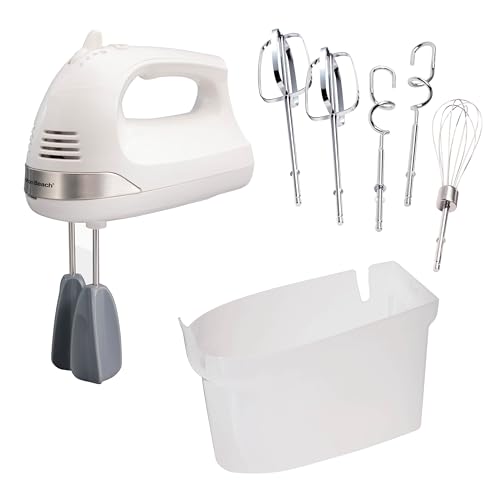
This Hamilton Beach mixer adds a QuickBurst function to a familiar six-speed hand mixer design. That extra burst can help when a mixture needs a short push through thick spots. The included dough hooks make it more capable than a mixer built only for cake batter. Its bowl-rest feature is also handy when you need to pause and add flour or scrape the sides.
I find this style especially useful for cooks who move between several tasks. You can mix cookie dough, whip cream, beat egg whites, and then use the hooks for a small bread batch. The speed range lets you begin gently before moving up as the ingredients come together. However, the QuickBurst button should support the main mixing process, not replace a powerful stand mixer for dense whole-wheat dough.
Pros:
- QuickBurst offers extra power for brief thick spots
- Six speeds suit both delicate and heavier mixtures
- Dough hooks help with rolls, buns, and soft pizza dough
- Bowl-rest design keeps the counter cleaner during pauses
- Useful all-purpose mixer for common baking tasks
- Simple controls are easy for beginners to learn
Cons:
- Not the best choice for large loaves or daily kneading
- QuickBurst is useful only for short bursts
- The motor may feel taxed by low-hydration dough
My Recommendation
This model suits a busy home baker who wants extra control without buying a stand mixer. It works well for small dough portions and gives you a helpful power boost when batter becomes thick. I would choose it for dinner rolls, cinnamon rolls, and soft sandwich bread rather than firm artisan dough. As a contender for the best hand mixer for bread dough, it stands out for its practical bowl rest and QuickBurst feature.
KitchenAid 9-Speed Hand Mixer, Red

The KitchenAid 9-Speed Hand Mixer gives you more speed choices than most basic electric mixers. That fine control matters when you move from delicate ingredients to thicker batter or dough. Its dough hooks can help with small bread projects, while the regular beaters cover cakes, mashed potatoes, and whipped mixtures. The Candy Apple Red finish also gives it a bright, classic look.
I like a nine-speed mixer when a recipe changes texture several times. You can start low, blend without a mess, and raise the speed only when the dough needs more movement. For bread, the hook attachment is best for modest amounts of soft dough, not a full bakery workload. The extra speed settings help, but speed alone cannot replace the torque and hands-free control of a stand mixer.
Pros:
- Nine speeds provide precise mixing control
- Dough hooks handle small bread and roll recipes
- Regular beaters support a wide range of kitchen tasks
- Low speeds help protect delicate mixtures
- Recognizable design feels balanced in the hand
- Bright red finish adds visual appeal
Cons:
- Premium pricing may not suit occasional bakers
- It still requires hand support during dough mixing
- Dense dough can place stress on a handheld motor
My Recommendation
I recommend this KitchenAid for bakers who value fine speed control and want one mixer for many recipes. It is a good choice for soft bread dough, enriched dough, and small batches where careful mixing matters. It also makes sense for a KitchenAid fan who wants a durable-feeling countertop tool in a bold color. If you want the best hand mixer for bread dough and also make cakes, whipped cream, and mashed potatoes, this is one of the most versatile options here.
COOKSURE 13-Inch Danish Dough Whisk
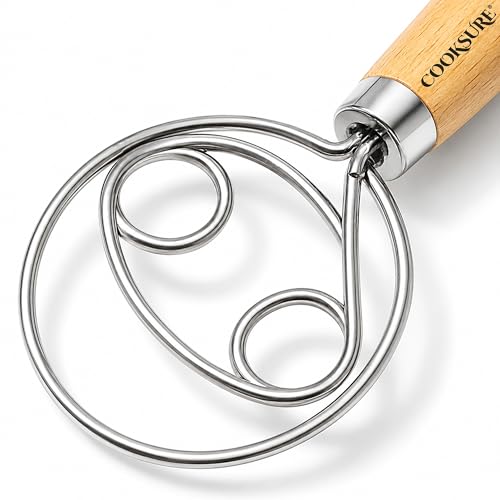
The COOKSURE Danish Dough Whisk is not an electric hand mixer, but it solves an important part of bread making. Its long handle and looped stainless steel head help combine flour, water, salt, and starter with less sticking. The tool is especially useful for sourdough and other wet doughs. It gives your hands more control than a spoon and makes the first mixing stage feel less messy.
I would pair this whisk with an electric mixer when a recipe needs more kneading power. It is quiet, simple, and ready whenever you need it, with no cord or motor to store. The wooden handle offers a warm, traditional feel, while the long shaft reaches deep bowls. It will not whip cream or knead dough by itself, but it is an excellent companion for bakers who prefer a hands-on process.
Pros:
- Works well for wet sourdough and starter mixtures
- Long handle keeps hands away from sticky dough
- Stainless steel head resists common kitchen wear
- No motor, cord, or noise to manage
- Easy to rinse soon after use
- Gives strong control during the first mixing stage
Cons:
- Does not knead or mix dough automatically
- Requires more hand effort than an electric mixer
- Not suitable for whipping or general cake mixing
My Recommendation
This dough whisk is best for sourdough fans, rustic bread bakers, and anyone who enjoys a slower hands-on method. I recommend it as an affordable companion rather than a replacement for the best hand mixer for bread dough. It shines before kneading begins, when dry flour and liquid need to come together. Its value is high because it is simple, durable, and useful even when your electric mixer is stored away.
Replacement Dough Hooks for KitchenAid KHM512

These replacement dough hooks are made for cooks who already own a compatible KitchenAid KHM512 hand mixer. A fresh pair can restore dough mixing when the original hooks are lost, damaged, or worn. The hook shape helps gather dough and reduce the need for a spoon or spatula. This is a small accessory, but it can extend the useful life of a mixer you already trust.
Compatibility is the key point here. I would check the exact mixer model and attachment design before ordering, since replacement hooks are not universal. Once fitted correctly, they can help with small bread, roll, and pizza recipes. They do not add motor power, so the mixer still needs sensible batch sizes and short mixing periods when working with firm dough.
Pros:
- Restores dough function to a compatible hand mixer
- Useful for small bread, roll, and pizza batches
- Hook shape helps collect dough from the bowl
- Can cost less than replacing an entire mixer
- Helpful backup when original attachments go missing
- Reduces waste by extending existing equipment life
Cons:
- Only fits certain KitchenAid hand mixer models
- Does not improve the mixer’s motor strength
- Model checking is essential before purchase
My Recommendation
I recommend these hooks only to owners of a compatible KHM512 mixer who need a replacement set. They are a smart repair choice and may save money compared with buying another appliance. New shoppers should select a complete mixer instead. For the right owner, these hooks help turn an existing unit back into a useful tool for bread dough and everyday baking.
KitchenAid 9-Speed Hand Mixer, Silver

The Contour Silver version of the KitchenAid 9-Speed Hand Mixer offers the same useful speed range in a more neutral finish. It fits well in kitchens where bright colors are not your style. The nine settings provide steady control for mixing, beating, and light kneading. With dough hooks attached, it can manage small bread recipes with less manual work than a spoon and bowl.
This model is a good match for bakers who want a refined tool for many jobs. I find the lower settings helpful when adding flour, while the higher settings work well for whipping and aerating. For bread, I would let the hooks do the early mixing, then finish by hand if the dough becomes stiff. That approach protects the motor and often gives the baker a better feel for gluten development.
Pros:
- Nine speeds make gradual mixing easier
- Neutral silver finish suits many kitchen styles
- Dough hooks support small bread projects
- Useful for whipped cream, eggs, batter, and potatoes
- Slow settings help limit splashes and flour clouds
- Versatile choice for bakers with varied recipes
Cons:
- Not intended for large or very firm dough batches
- Handheld design requires attention during kneading
- Higher cost may exceed the needs of casual users
My Recommendation
I recommend the Contour Silver model for a baker who wants a polished, multipurpose mixer without a bold finish. It is best for small households, frequent cake bakers, and people who make soft bread dough now and then. The speed control is its main strength, while the hooks add useful dough support. If you are comparing the best hand mixer for bread dough options, this version delivers strong versatility in a calm, classic design.
Lord Eagle 5-Speed 300W Hand Mixer

The Lord Eagle 5-Speed Hand Mixer is a compact option for small kitchens and occasional baking. Its 300-watt motor gives it useful power for standard mixing tasks, and five speeds keep the controls simple. The small body is easy to hold and store. For bread, it can assist with light dough when you use a modest amount and avoid long, hard kneading sessions.
I see this as a practical starter mixer rather than a heavy-duty bread tool. It can help combine ingredients for rolls, muffins, cookies, and soft pizza dough. A low setting gives you a calm start, while higher settings help with eggs and cream. If storage space matters more than maximum dough strength, this compact black mixer is easy to keep ready for use.
Pros:
- Compact size works well in small kitchens
- 300-watt motor supports common mixing tasks
- Five speeds keep operation easy to understand
- Portable body is simple to move and store
- Good fit for beginners and occasional bakers
- Can assist with small soft dough batches
Cons:
- Limited speed range compared with nine-speed models
- Not suited to repeated heavy bread kneading
- Small design may feel less substantial in thick dough
My Recommendation
I recommend the Lord Eagle for students, renters, new bakers, and anyone with very limited storage. It is a sensible choice for light recipes and occasional dough work. I would not buy it for weekly whole-wheat loaves or large family batches. For the right user, it offers the basic features needed to explore baking without taking over the counter.
Hamilton Beach Stand and Hand Mixer
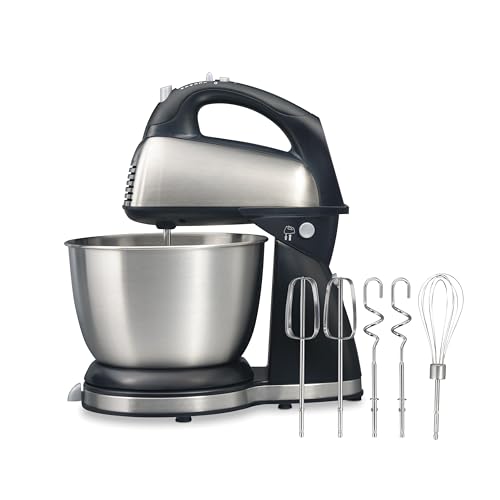
The Hamilton Beach Classic Stand and Hand Mixer gives you two ways to mix in one appliance. You can lift the mixer from its base for handheld control or leave it in place with the four-quart bowl. The six speeds and QuickBurst function help with many baking tasks. This design is especially useful when a recipe needs mixing time and your hands are busy measuring or preparing a pan.
The stand function gives this model an advantage over a basic hand mixer during longer jobs. It can help with soft bread dough, rolls, and enriched mixtures, though I would still respect the limits of a compact home appliance. The bowl rest and included bowl reduce countertop clutter. If you want more support than a handheld unit but do not have room for a full-size stand mixer, this hybrid design is a clever middle path.
Pros:
- Works as both a stand mixer and hand mixer
- Four-quart bowl supports useful family-size batches
- Six speeds plus QuickBurst provide flexible control
- Hands-free mixing helps during longer recipes
- Handheld mode lets you reach bowl edges
- Good space-saving alternative to two appliances
Cons:
- Heavier and larger than a simple hand mixer
- May need pauses with dense bread dough
- Compact stand design has less power than premium mixers
My Recommendation
This is my favorite choice for bakers who want hands-free support but lack space for a large stand mixer. It suits families who make cakes, cookies, frosting, and occasional bread. The removable hand mixer gives added flexibility, while the bowl and base make long mixing tasks easier. For many homes, this is a strong candidate for the best hand mixer for bread dough because it offers more stability than a handheld-only design.
Hamilton Beach 6-Speed Bowl Rest Mixer

This Hamilton Beach hand mixer focuses on useful features rather than a long list of extras. It offers six speeds, a QuickBurst button, dough hooks, and a bowl-rest feature. The bowl rest lets you set the mixer across the edge of a bowl during a short pause. That small detail can make baking feel less cluttered and more controlled.
For dough, the hooks work best with smaller, softer recipes. I would begin on low speed, add flour in stages, and stop when the dough becomes too firm for comfortable mixing. The QuickBurst button can help clear a stubborn patch, but it should not run continuously. This is a capable everyday mixer for people who want simple controls and a reasonable way to handle occasional bread dough.
Pros:
- Six speeds cover most home baking needs
- QuickBurst helps with brief thick mixtures
- Bowl rest makes pauses cleaner and easier
- Dough hooks support light kneading work
- Simple design is approachable for new users
- Useful for both baking and basic cooking
Cons:
- Heavy dough may slow or strain the mixer
- No hands-free base for extended mixing
- Basic design lacks advanced speed features
My Recommendation
I recommend this mixer for practical home use, especially if you want a reliable tool without a complicated setup. It is best for cookies, cakes, mashed potatoes, frosting, and occasional rolls or soft bread. The bowl rest is a real comfort during messy recipes. It is a good value pick for shoppers who want the best hand mixer for bread dough at a simple, everyday price.
KitchenAid 5-Speed Ultra Power Mixer

The KitchenAid 5-Speed Ultra Power Mixer is a compact model with a clean, cheerful Pistachio finish. Its five speeds keep operation simple, and its dough hooks add support for small bread recipes. The body is easier to store than a stand mixer and works well for cooks who want a familiar handheld tool. It also handles common tasks such as cake batter, eggs, whipped cream, and cookie dough.
I would choose this model when ease of use matters more than a wide speed range. The control layout is straightforward, and the lighter design can feel comfortable during short jobs. For bread, it is best with soft dough, small portions, and brief mixing cycles. It is not a substitute for a high-torque stand mixer, but it can make homemade rolls less tiring for a typical household.
Pros:
- Five speeds are simple and easy to manage
- Dough hooks assist with small bread batches
- Compact form stores easily in small spaces
- Useful for cakes, cookies, eggs, and cream
- Distinct Pistachio color adds a friendly look
- Good choice for short, everyday mixing tasks
Cons:
- Fewer speed choices than KitchenAid nine-speed models
- Not ideal for very dense or large dough batches
- Handheld use may tire you during long kneading
My Recommendation
This KitchenAid is best for a beginner or casual baker who wants an attractive, compact appliance from a known kitchen brand. Choose it for small loaves, dinner rolls, and soft pizza dough, along with normal baking jobs. Its simple controls make it less intimidating than a large mixer. If your search for the best hand mixer for bread dough also includes color, storage, and ease, this model is worth considering.
Best For Comparison
| Best for | Why |
|---|---|
| Small bread and roll batches | Hand mixers with dough hooks offer control without the size of a stand mixer. |
| Hands-free mixing | The Hamilton Beach stand-and-hand model includes a bowl and base for easier longer jobs. |
| Sourdough preparation | The COOKSURE Danish whisk blends wet starter and flour with simple hands-on control. |
How I Evaluate a Hand Mixer for Bread Dough
A hand mixer can help with bread, but it needs a fair test. Bread dough is much heavier than cake batter. It pulls on the hooks, slows the motor, and may heat the machine if you mix too long. I look first at motor strength, then at hook design, speed control, grip, and the maker’s care guidance.
I also consider the type of bread you make. Soft sandwich dough is kinder to a hand mixer than stiff whole-wheat dough. Wet sourdough may begin easily, but it can become sticky and hard to control. A good tool should make the first part of the job easier without asking you to push it past its safe limits.
Why Use a Hand Mixer for Bread Dough?
A hand mixer saves time during the early mixing stage. It can combine flour, water, yeast, salt, oil, and sugar faster than a spoon. Dough hooks also reduce the amount of sticky dough that clings to your fingers. For a small home batch, that convenience feels like a bridge between hand kneading and a full stand mixer.
It also costs less and takes less room than many stand mixers. You can use it in a deep bowl, then store it in a cabinet. This makes it useful in apartments, dorms, and small kitchens. Still, I always treat a hand mixer as a light-duty dough tool, not a commercial kneader.
How to Use a Hand Mixer Safely With Dough
Start with the dough hooks locked in place. Add the flour slowly and use the lowest speed until the mixture stops looking dry. Hold the bowl steady with one hand and guide the mixer with the other. If the dough climbs the hooks, stop the machine and pull it down with a scraper.
Use short cycles instead of one long run. A few minutes of mixing may be enough before you finish by hand. If the motor smells hot, the sound changes, or the hooks stop turning well, unplug the mixer and let it cool. Never pull trapped dough from moving hooks, and never place fingers near the attachments while the unit is plugged in.
What Type of Bread Dough Works Best?
Hand mixers work best with soft dough that contains enough water or fat. Dinner rolls, brioche-style dough, cinnamon rolls, and soft pizza dough are common examples. These mixtures can still be thick, but they usually do not fight the hooks as hard as dry dough does.
Stiff bagel dough and dense whole-wheat dough need more care. They may require hand kneading or a strong stand mixer. Large batches also create more load, even when the recipe seems simple. If you bake those breads often, a hand mixer may feel like a small boat in a rough sea.
Important Features to Check Before Buying
Motor power
Power ratings can help, but they do not tell the whole story. Motor design, gear quality, hook shape, and cooling also affect dough performance. A higher number does not guarantee that a mixer will knead a heavy loaf well. I prefer a model with steady speed control and clear care instructions over one that only advertises a large watt figure.
Dough hooks
Look for hooks that lock firmly and reach far enough into the bowl. Poorly shaped hooks may spin without gathering the dough. The best hook setup pulls the dough inward and reduces splashing. Always confirm that dough hooks are included, since some mixers focus only on beaters.
Speed control
Low speed matters more than many shoppers expect. It lets you combine flour without covering the counter. Several settings also help you adjust as the dough changes from wet and loose to smooth and elastic. A QuickBurst button can help for a moment, but it should not replace a proper low and medium speed.
Handle comfort
Dough creates resistance, so grip comfort matters. A handle that feels fine while whipping cream may feel tiring after two minutes of kneading. I look for a shape that keeps the hand relaxed and does not force the wrist into an awkward angle. A lighter mixer is easier to control, but a very light body may feel less stable in thick dough.
Cleanup and storage
Removable attachments make cleanup much easier. Smooth beaters and hooks collect less dried dough than complex parts. A compact body also matters if you bake in a small kitchen. Bowl-rest features can keep the counter tidy when you stop to add ingredients.
Hand Mixer or Stand Mixer for Bread?
A hand mixer wins on price, storage, and quick access. It is enough for many soft doughs and small batches. You can feel the dough change in the bowl and finish by hand when needed. That direct control can help new bakers learn how dough should feel.
A stand mixer wins on power and hands-free work. Its bowl stays in place, and its motor is built for longer mixing. It is the better tool for large loaves, stiff dough, and frequent bread baking. If bread is your main hobby, a stand mixer may be the wiser long-term purchase.
Tips for Better Dough Results
Measure flour with a scale when possible. Too much flour creates stiff dough and puts extra stress on the mixer. Add flour in small amounts rather than dumping it all into the bowl. Let the dough rest for a few minutes before kneading if it feels tight.
Keep the mixer moving around the bowl. One spot may pull the dough into a tight ball and make the motor work harder. Do not press the hooks down into the dough. Let them work at their own pace while you guide the mixer gently.
Stop before the dough reaches perfect smoothness if the mixer is working hard. A short hand-kneading finish can protect the motor and improve the dough. This method often gives better results than asking a small hand mixer to do every minute of the job.
Common Buying Mistakes to Avoid
The first mistake is choosing a mixer by wattage alone. A strong number looks good on a product page, but real dough performance depends on several parts. The second mistake is assuming that every attachment fits every model. Check the product details before buying replacement hooks.
Another mistake is using the fastest speed for heavy dough. High speed can make dough climb, splash, and stress the gears. Start low and increase only when needed. Finally, do not ignore batch size. Even the best hand mixer for bread dough has limits when the bowl is full of stiff dough.
Care and Storage Tips
Unplug the mixer before removing dough hooks. Wash attachments soon after use so flour paste does not dry hard. Wipe the main body with a damp cloth, but do not place the motor housing under running water. Dry every part before storage.
Keep the cord loose rather than wrapping it tightly around the body. Store dough hooks with the mixer so they do not disappear in a drawer. If the motor becomes hot, give it time to cool before the next batch. Small care habits can keep a hand mixer useful for years.
FAQs Of best hand mixer for bread dough
Can a hand mixer really knead bread dough?
Yes, a hand mixer with dough hooks can mix and knead small batches of soft bread dough. It is not ideal for large or very stiff dough. Use low speed, short cycles, and finish by hand when needed.
What is the best hand mixer for bread dough?
The Hamilton Beach Classic Stand and Hand Mixer is the strongest all-around choice here because it offers a bowl, base, handheld use, six speeds, and QuickBurst. The KitchenAid nine-speed models are better for shoppers who want detailed speed control.
Are dough hooks better than regular beaters?
Yes. Dough hooks are shaped to gather and stretch dough. Regular beaters are made for batter, eggs, cream, and softer mixtures. Do not use regular beaters for heavy bread dough unless the manufacturer clearly permits it.
How long should I run a hand mixer with bread dough?
Use short mixing periods and follow the product instructions. Stop if the motor sounds strained or becomes hot. Many doughs need only a brief mixer start before you finish kneading by hand.
Can I use a hand mixer for sourdough?
You can use dough hooks for small sourdough batches, especially during the first mix. A Danish dough whisk is also useful for combining wet starter and flour. Very wet dough may still need stretch-and-fold work by hand.
Final Verdict: Which Should You Buy?
For most homes, I would choose the Hamilton Beach Classic Stand and Hand Mixer. Its bowl and base add stability, while the removable mixer gives flexible control. For a handheld-only pick, the KitchenAid 9-Speed is a polished choice for small, soft dough batches.
The best hand mixer for bread dough depends on your batch size, dough type, and storage space. Choose a model with dough hooks, low speed, and sensible limits, then bake with patience.