Blend soups, sauces, and smoothies safely and quickly with a hand immersion blender.
I’ve used immersion blenders in busy home kitchens and small food tests for years, so I know what works. This guide explains how to use an immersion blender step by step, with safety tips, cleaning advice, recipe ideas, and simple troubleshooting. Read on to master how to use an immersion blender and make faster, smoother meals with confidence.

Why choose an immersion blender
An immersion blender is a handy, space-saving tool for blending right in the pot. It lets you puree hot soups, whip dressings, and make smoothies without moving food to a standing blender.
Using an immersion blender saves time and reduces cleanup. It gives more control over texture and lets you finish dishes at the last minute.

Understand your immersion blender: parts and types
Knowing the parts helps you use your tool safely and well.
- Motor body: The top part with the power switch and grip. This is the heavy part you hold.
- Shaft and blade guard: Long shaft connects to the motor. The blade sits inside a guard to reduce splatter.
- Blades: Sharp, small blades designed for quick purees and emulsions.
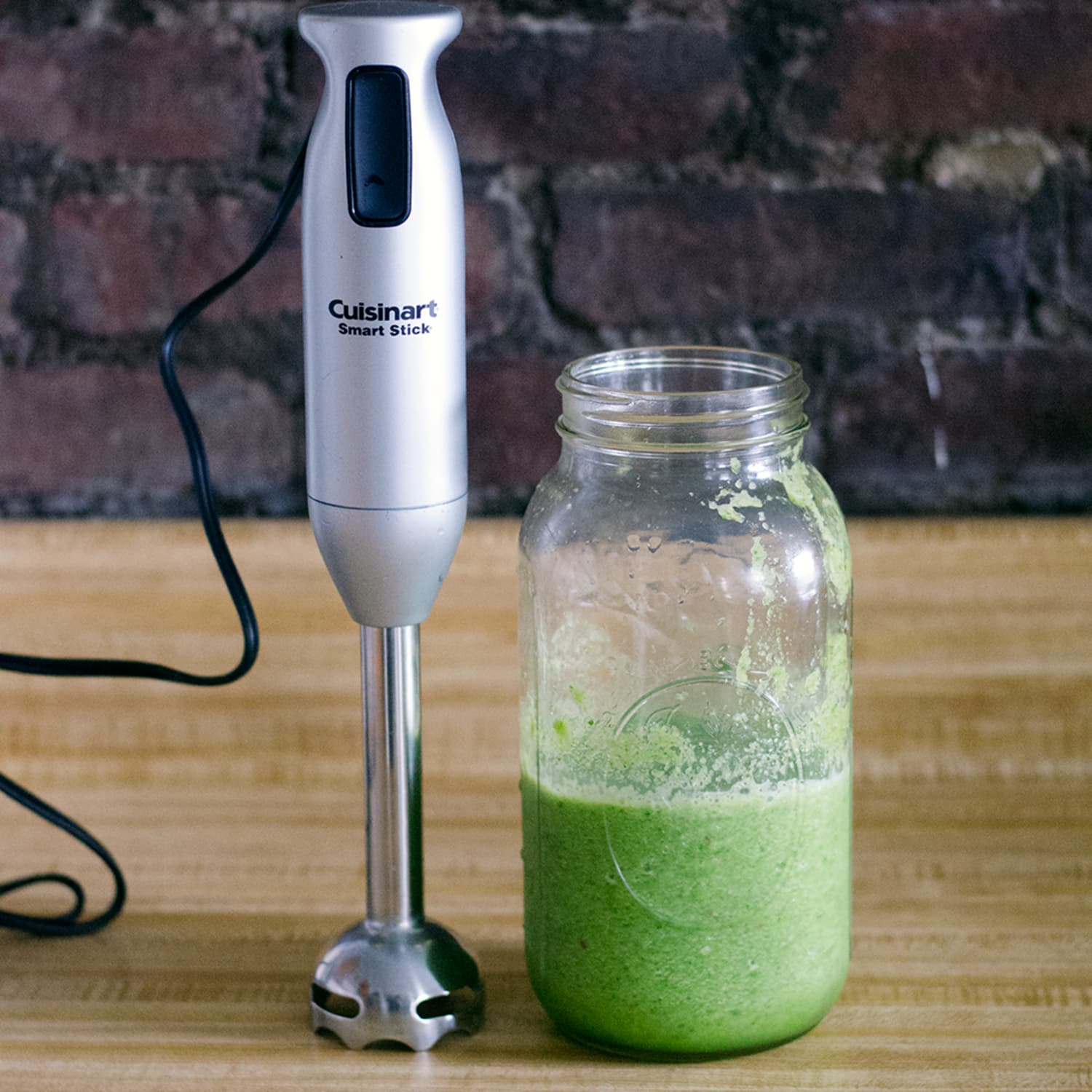
- Attachments: Whisk, chopper bowl, and blending beaker are common extras.
- Corded vs cordless: Corded models give steady power; cordless models offer freedom but need charging.
There are basic stick blenders, professional-grade immersion blenders, and mini cordless units. Choose based on how often you cook and what you blend.

Safety and prep before you start
Safety keeps your kitchen accident-free. Follow a short checklist before you blend.
- Read the manual: Learn warnings and recommended uses.
- Unplug when attaching parts: Always disconnect power before adding or removing attachments.
- Use the right container: Deep, narrow pots or high-sided beakers limit splatter.
- Keep hands and utensils away: Never touch blades while plugged in.
- Cool slightly if needed: For very hot liquids, remove from heat briefly to reduce splatter risk.
I once forgot to tilt a pot and got splashed by hot soup. A quick pause to check fit and depth avoids that.
:max_bytes(150000):strip_icc()/sea-primary-immersion-blenders-sep-24-rkilgore-0658-89167e1e4bd44afb93d9c847674b09e4.jpeg)
Step-by-step: how to use an immersion blender
This clear sequence shows how to use an immersion blender for best results.
- Prepare ingredients
- Chop large solids to uniform pieces so the blender can work easily.
- Add enough liquid to allow smooth flow; very dry mixes can stall the motor.
- Choose the right container
- Use a pot, tall beaker, or bowl with high sides.
- Avoid shallow plates or wide bowls unless you move the blade carefully.
- Attach and secure
- Attach the shaft firmly to the motor body until it clicks.
- Plug in or ensure battery is charged and seated.
- Start low, then increase speed
- Place the blade fully submerged before turning on.
- Start at low speed to avoid splatter and pull upward slightly while blending.
- Increase speed as needed for smooth texture.
- Move slowly and pulse
- Move the blender up and down gently to pull chunks into the blades.
- Use short pulses for chunky results and continuous blending for smooth purees.
- Finish and remove safely
- Turn off and unplug before lifting the shaft from food.
- Allow blades to stop spinning before setting the tool down.
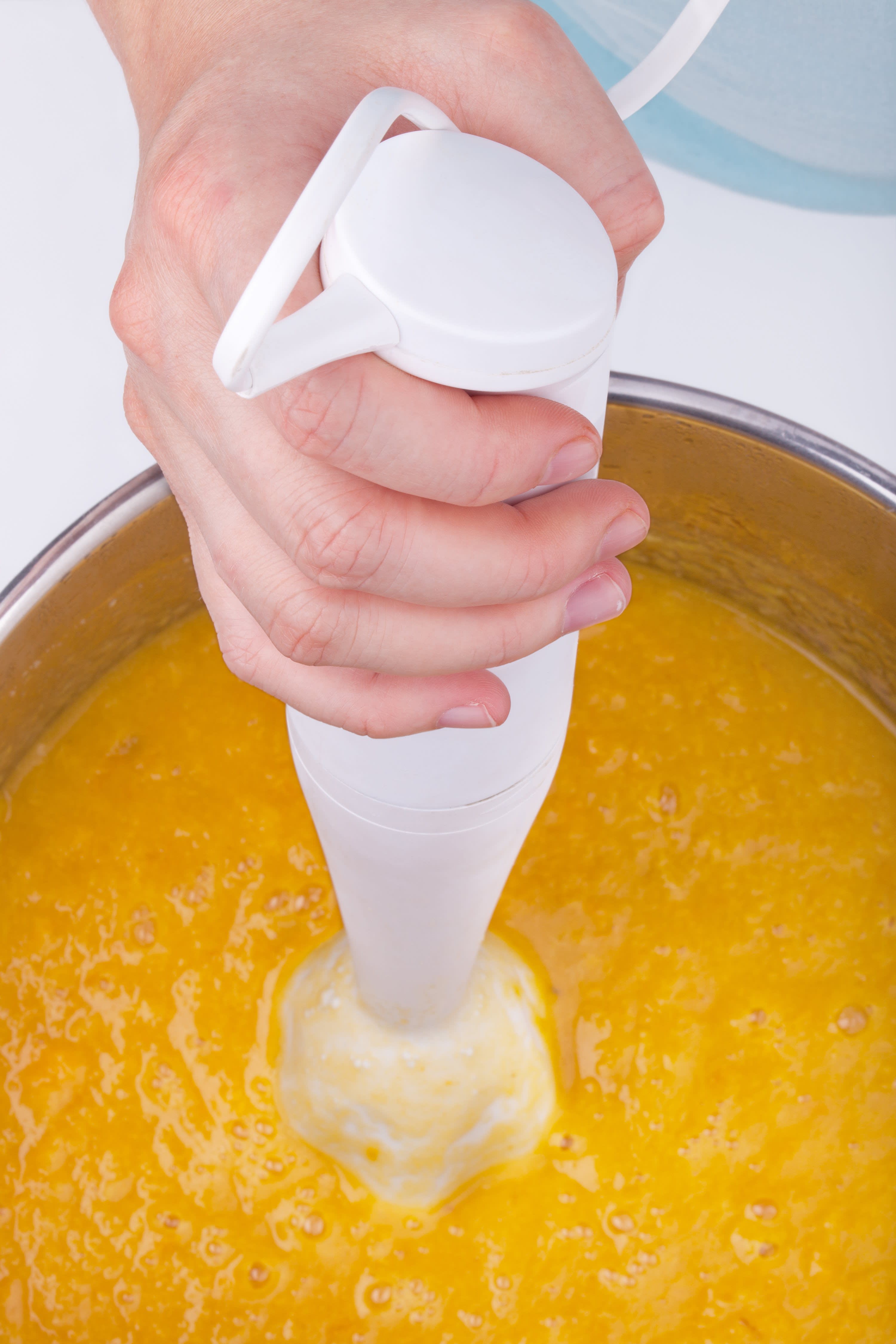
When making hot soup, I blend in bursts and tilt the pot away from my face. That small habit keeps me safe and gives a silky result.
Recipes and practical uses
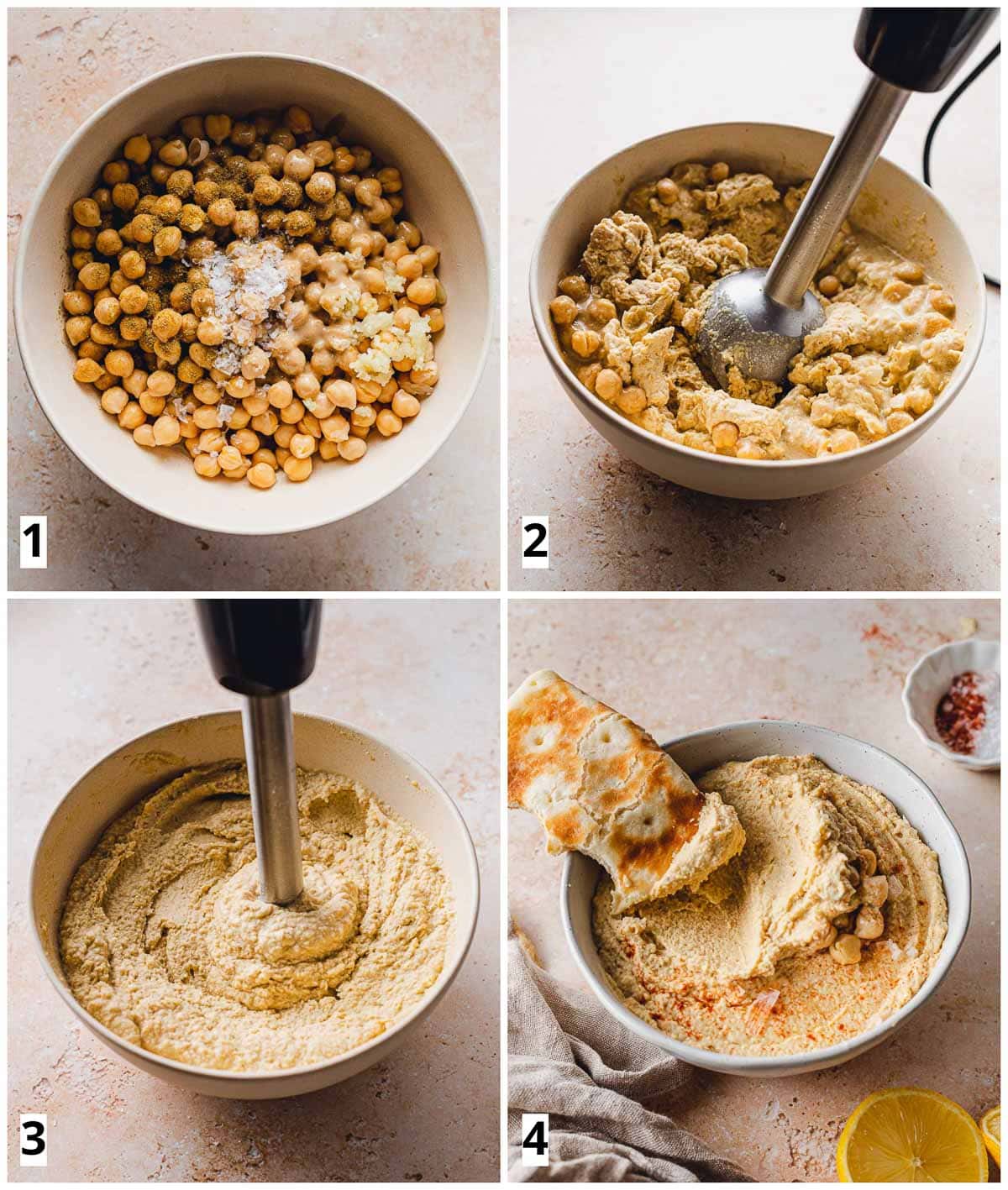
An immersion blender is versatile. Try these common uses and examples.
- Smooth soups: Blend cooked vegetables and broth until silky. For creamy texture, add a splash of milk or cream after blending.
- Sauces and dressings: Emulsify vinaigrettes or pan sauces directly in a jar or small beaker.
- Mayonnaise: Blend oil into an egg and vinegar mixture in seconds for fresh mayo.
- Smoothies and shakes: Use a high-sided cup to reduce splatter and get a quick morning drink.
- Baby food: Puree cooked vegetables or fruits to desired smoothness.
- Whipped cream: Use a whisk attachment to aerate cold cream for desserts.
Example quick recipe — simple blended tomato soup:
- Saute onion and garlic, add chopped tomatoes and broth, simmer until soft.
- Submerge the immersion blender and pulse until smooth.
- Season to taste and serve.
Using an immersion blender often replaces dirtying a large blender jar. It makes small-batch cooking fast and easy.
Cleaning and maintenance
Clean blades and shaft after each use to keep performance high.
- Unplug or remove battery: Safety first.
- Detach shaft and wash in warm, soapy water: Most shafts are dishwasher safe, but check the manual.
- Wipe motor body with a damp cloth: Never submerge the motor.
- Dry completely before storage: Prevent rust and electrical issues.
- Sharpen or replace blades when dull: Dull blades strain the motor.
I let parts soak when food stuck, then scrub gently with a brush. That keeps the blade spinning smoothly and reduces wear.
Troubleshooting and common mistakes
If problems come up, these quick checks fix most issues.
- Overheating motor: Give the motor a rest if it’s hot. Continuous heavy blending can trip protection.
- Chopping instead of blending: Add more liquid or move the blender slower to create better flow.
- Splatter and mess: Ensure blade is fully submerged before powering on and use a deeper container.
- Strange noises: Inspect for food stuck in the guard or bent blades; stop using until fixed.
Common mistakes I’ve made include blending while the blade poked above the surface and crowding the container. Those cause splashes and uneven texture. Learning to pulse and angle the blender fixed it.
:max_bytes(150000):strip_icc()/Immersionblender-GettyImages-104573671-59fcab2922fa3a00379a03ff.jpg)
Tips, tricks, and advanced techniques
Small habits level up your results fast.
- Use a tripod motion: Lift slightly as you blend to create a vortex and even texture.
- Blend in batches: For large amounts, do smaller batches to avoid motor strain.
- Chill for froth: Cold liquids whip better for airy results.
- Warm liquids gradually: For delicate emulsions, bring ingredients to room temperature first.
- Use the right attachment: Whisk for cream, chopper bowl for nuts, and blade shaft for soups.
A trick I use: blend part of the soup smooth and leave some chunks for texture. It’s fast and feels homemade.
Frequently Asked Questions of how to use an immersion blender
How do I prevent splatter when using an immersion blender?
Start with the blade fully submerged before turning on and use a tall container. Pulse at low speed and tilt the blender slightly to direct the flow away from you.
Can I blend hot liquids with an immersion blender?
Yes, but take care. Turn off heat or remove the pot briefly, and blend in short bursts to avoid steam splashes.
Is an immersion blender good for making mayonnaise?
Yes. Use a narrow jar and pour oil in a steady stream while blending for a quick, stable emulsion. Start with room-temperature ingredients for best results.
How do I clean an immersion blender safely?
Unplug and detach the shaft, then wash the detachable parts in warm, soapy water. Wipe the motor body with a damp cloth and dry all parts thoroughly.
What should I do if my immersion blender isn’t blending smoothly?
Add a little more liquid and move the blender slowly up and down to pull ingredients into the blade. If the motor struggles, give it a rest and check for clogs or dull blades.
Conclusion
You now have a practical, safe, and friendly roadmap for how to use an immersion blender. Practice the simple steps, follow the safety tips, and try a few recipes to build speed and confidence. Start with a basic soup or mayo, and soon you’ll rely on your immersion blender for quick, tasty meals. Try one technique today, share your results, or subscribe for more kitchen tips — I’d love to hear how it goes.