Check power, thermostat, and igniter; try simple resets before calling a pro.
I’ve worked on ovens and written about appliance repair for years, so I know the panic when your oven stops working. This guide explains what to do when your oven stops working in clear, step-by-step terms. You’ll get safe troubleshooting steps for electric and gas ovens, simple fixes you can try, when to call a technician, cost expectations, and tips to avoid future breakdowns. Read on to move from worry to action quickly.
Common reasons your oven stops working
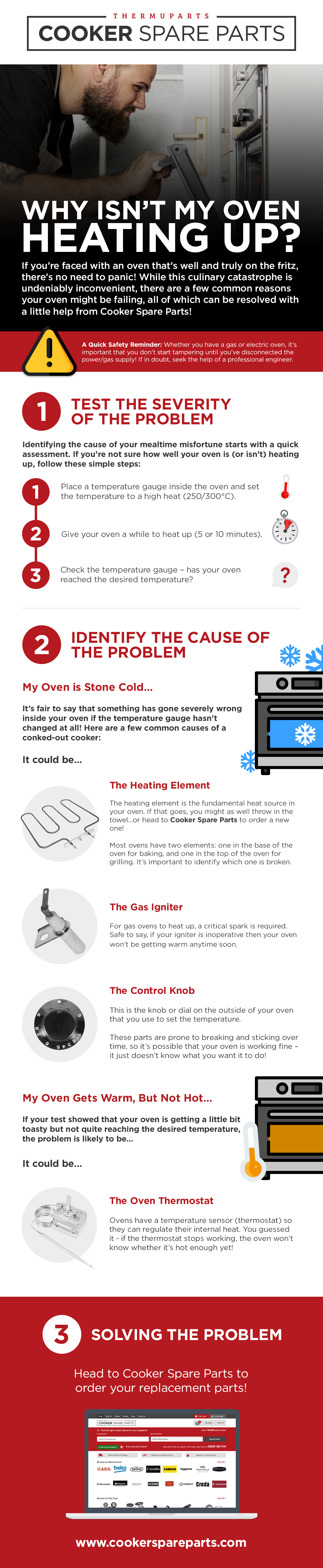
When you ask what to do when your oven stops working, the first step is to know common causes. Most failures come from power, heating parts, or controls. Simple problems are quick fixes. More complex failures need a pro.
Common causes include:
- Power issues: tripped breakers or blown fuses cut power instantly.
- Heating element failure (electric): burned or broken bake or broil elements stop heating.
- Igniter or gas valve problems (gas): a weak igniter won’t light the burner.
- Thermostat or temperature sensor faults: oven won’t reach or hold temps.
- Control board or clock failures: oven won’t start or shows errors.
- Door switch or latch problems: oven won’t operate if it thinks the door is open.
- Safety devices like thermal fuses: these cut power to prevent fires.
If you want to know what to do when your oven stops working, start here to narrow the cause.

Safety first: before you touch anything
Safety is key when deciding what to do when your oven stops working. Always put safety first.
Essential safety steps:
- Turn off power at the breaker for electric ovens.
- Shut off the gas supply for gas ovens if you smell gas or will inspect parts.
- Wait for the oven to cool completely before touching internal parts.
- Use gloves and safety glasses when handling sharp or hot components.
- If you smell gas, leave the house and call your gas company or a pro right away.
These steps protect you and prevent more damage.
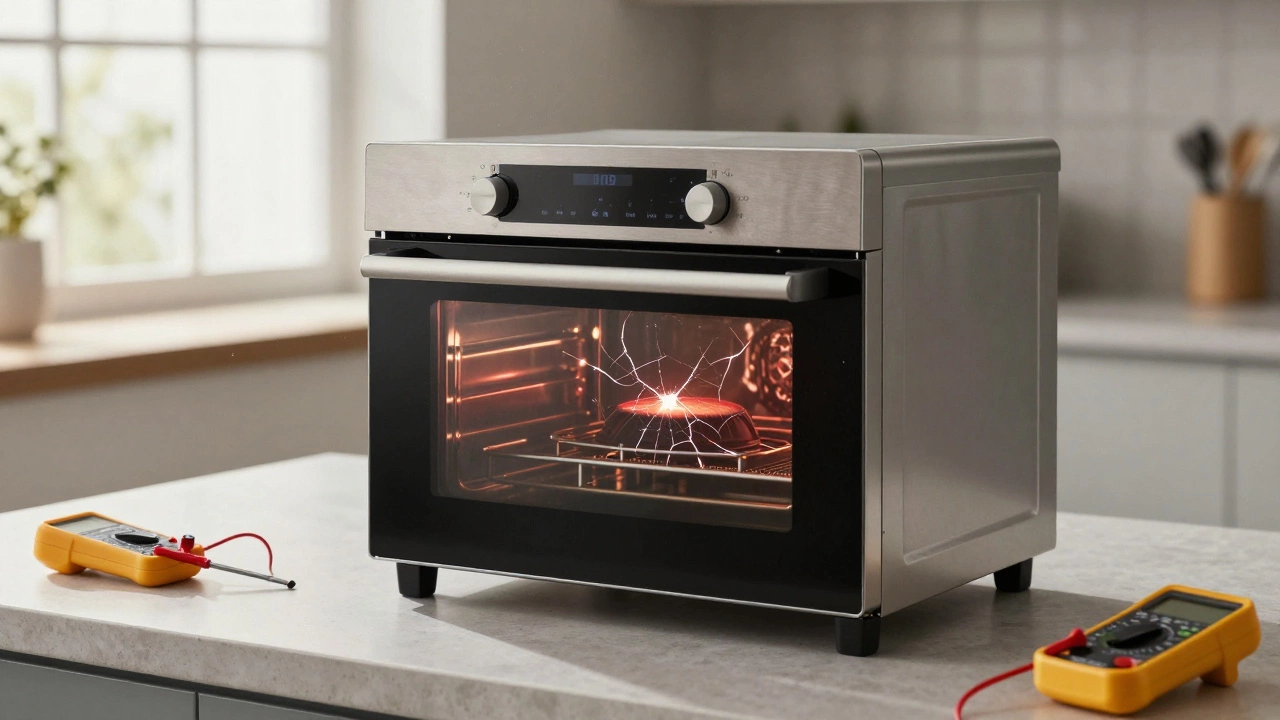
Basic troubleshooting for electric ovens
If you have an electric oven, follow these checks in order when figuring out what to do when your oven stops working.
Step-by-step checks:
- Confirm power: check the breaker and the outlet. Reset tripped breakers and try again.
- Test the elements: visually inspect the bake and broil elements for breaks or glowing hotspots. Replace if visibly damaged.
- Check the display and controls: if the clock or panel is dead, the control board may be at fault.
- Try a manual reset: unplug the oven or switch off the breaker for one minute, then restore power to reset the control board.
- Check the temperature sensor: use a multimeter to test resistance (should change with temp) or swap with a working sensor if you have one.
- Inspect the door switch: oven may not heat if the door switch fails.
If these steps don’t solve the problem, you’ve narrowed down the issue and can decide whether to DIY replace a part or call a pro.
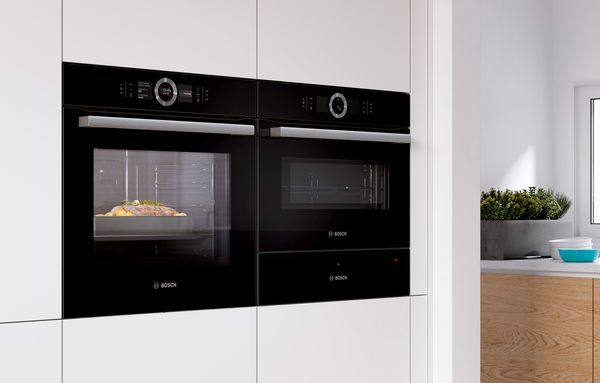
Basic troubleshooting for gas ovens
Gas ovens have different failure points. Here’s what to do when your gas oven stops working.
Quick checks to perform:
- Confirm gas supply: ensure the gas valve is open and other gas appliances work.
- Listen for the igniter: a clicking sound or glow indicates the igniter is trying to light. If not glowing, the igniter may be weak or dead.
- Smell test: if you smell gas strongly, stop and call professionals. Do not attempt further checks.
- Check the pilot or sealed burner: newer models use igniters; older models may have standing pilots that can be inspected.
- Check the safety valve and igniter amperage: a weak igniter won’t open the gas valve even if it glows.
These checks help decide if the fix is safe to attempt or if a certified tech is required.
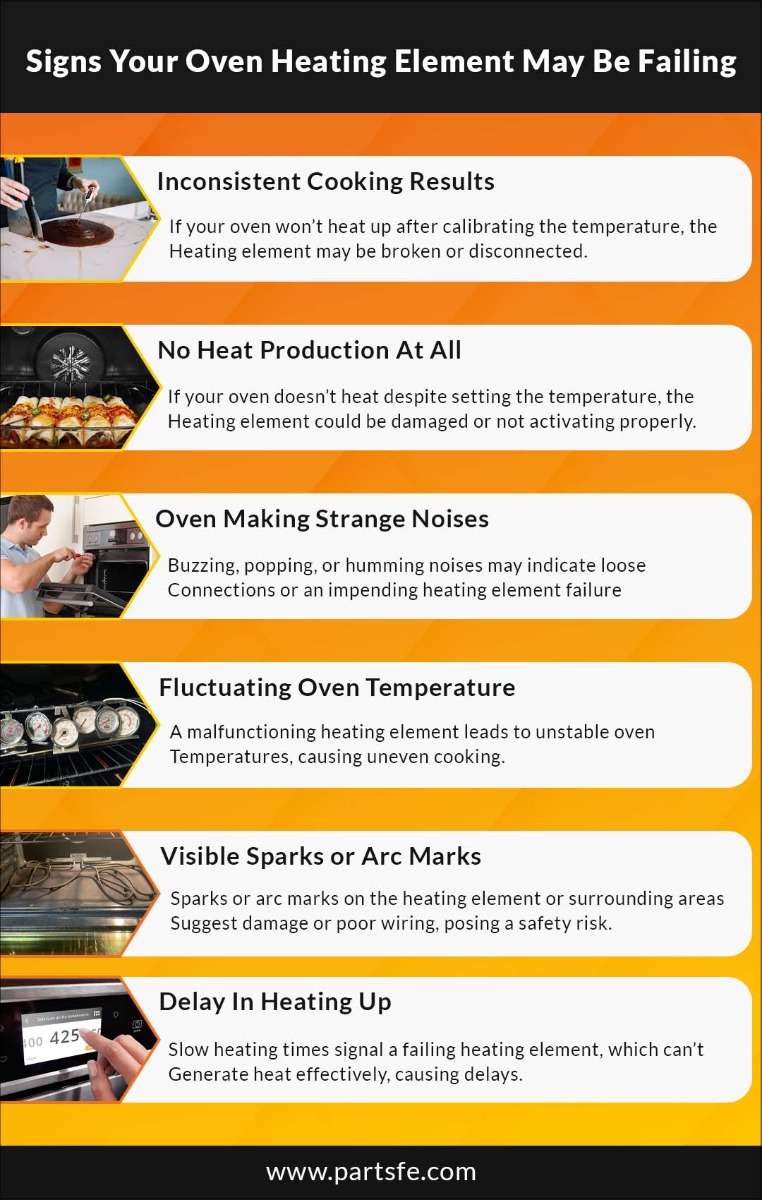
Tools and parts you might need
Knowing tools and common parts helps when learning what to do when your oven stops working. Most DIY fixes need basic tools.
Common tools:
- Screwdrivers (Phillips and flat)
- Nut drivers or socket set
- Multimeter for voltage and resistance checks
- Work gloves and safety glasses
- Flashlight and small mirror
Common parts:
- Bake or broil element (electric)
- Igniter (gas)
- Temperature sensor or thermostat
- Oven control board or keypad
- Door switch and hinges
- Thermal fuse or limit switch
Having these on hand speeds repairs. If a part looks complex or involves gas, consider a pro.

When to call a professional
Knowing when to call a pro is a key part of understanding what to do when your oven stops working. Call an expert when repairs risk safety or when the fix is complex.
Call a professional if:
- You smell gas or suspect a leak.
- The control board or wiring appears burnt or damaged.
- You can’t determine the cause after basic checks.
- The oven needs calibration or complex diagnostics.
- It’s still under warranty—unauthorized repairs may void it.
A certified technician can safely handle gas, wiring, and control board replacements.

Cost and time expectations
Practical expectations help with planning when your oven stops working. Costs vary by issue, brand, and labor rates.
Typical ranges:
- Simple part like a temperature sensor: low cost for part and about an hour of labor.
- Heating element or igniter replacement: mid-range cost and an hour or two of work.
- Control board or complex electrical repairs: higher cost and multiple hours.
- Service call fees: many companies charge a diagnosis fee that may apply to repair.
Get multiple estimates and ask if parts and labor are covered by guarantees.
Preventive maintenance to avoid future failures
Preventive care changes what to do when your oven stops working by reducing the chances it will. Small habits extend oven life.
Easy maintenance tips:
- Clean spills quickly to protect sensors and elements.
- Avoid harsh cleaners on sensors and the control panel.
- Run the self-clean cycle only per manual instructions.
- Check door seals and hinges for good contact.
- Schedule annual checks if you cook a lot or use the oven commercially.
Routine care prevents many common failures and saves money long term.
Personal experience: lessons from real repairs
I’ve fixed many ovens and learned simple truths about what to do when your oven stops working. Let me share a few real lessons.
Real-world insights:
- A tripped breaker was the cause in half the calls I made. Always check power first.
- Replacing a cheap igniter fixed many gas ovens. It was often cheaper than expected.
- I once replaced a control board that only needed a reset. Unplugging briefly saved the client money.
- For safety, I won’t touch gas lines unless I’m certified. If you smell gas, leave it to pros.
- Keep spare, easy-to-replace parts on hand if you rely on your oven daily.
My rule: try safe, simple checks first. If in doubt, call a certified technician.
PAA-style quick questions you might have
-
Why did my oven stop heating but the clock still works?
Often the heating element, igniter, or temperature sensor failed. The clock runs on a different circuit or low-power backup. -
Can I still use the oven if it heats unevenly?
You can try recalibrating the thermostat and rotating racks, but uneven heat often signals element or sensor problems that need repair. -
Is it worth repairing an older oven?
If repairs cost more than half the price of a new appliance and the oven is over 10–15 years old, replacement may be wiser.
Frequently Asked Questions of What to do when your oven stops working
Why won’t my electric oven heat up but the display is on?
If the display works but the oven won’t heat, the bake or broil element or the temperature sensor may be faulty. Check the elements for visible damage and test the sensor with a multimeter.
What should I do if I smell gas near my gas oven?
If you smell gas, leave the home immediately and contact your gas company or emergency services. Do not use electrical switches, appliances, or open flames until the area is declared safe.
How long does a typical oven repair take?
Simple repairs like element or igniter replacement usually take one to two hours. Complex issues like control board diagnosis can take several hours or require a return visit.
Can I reset my oven by turning off the breaker?
Yes, flipping the breaker off for one minute can reset the control board and clear some errors. If the issue returns after power is restored, further diagnostics are needed.
How much does it cost to replace an oven igniter or element?
Parts for elements or igniters are generally affordable, but labor rates vary. Expect a modest parts cost and one to two hours of labor for a professional replacement.
Is it safe to keep using an oven that sometimes won’t reach temperature?
Intermittent heating can be risky, as it may overwork parts or cause uneven cooking. Use caution and schedule a repair to avoid further damage.
Conclusion
You don’t have to panic when your oven stops working. Start with simple safety checks, confirm power and gas, try basic troubleshooting, and know when to call a pro. Regular cleaning and routine checks cut down on surprises. Take action: try the safe checks today, note symptoms, and contact a qualified technician if needed. If this guide helped, leave a comment, share your experience, or subscribe for more appliance tips and how-to guides.