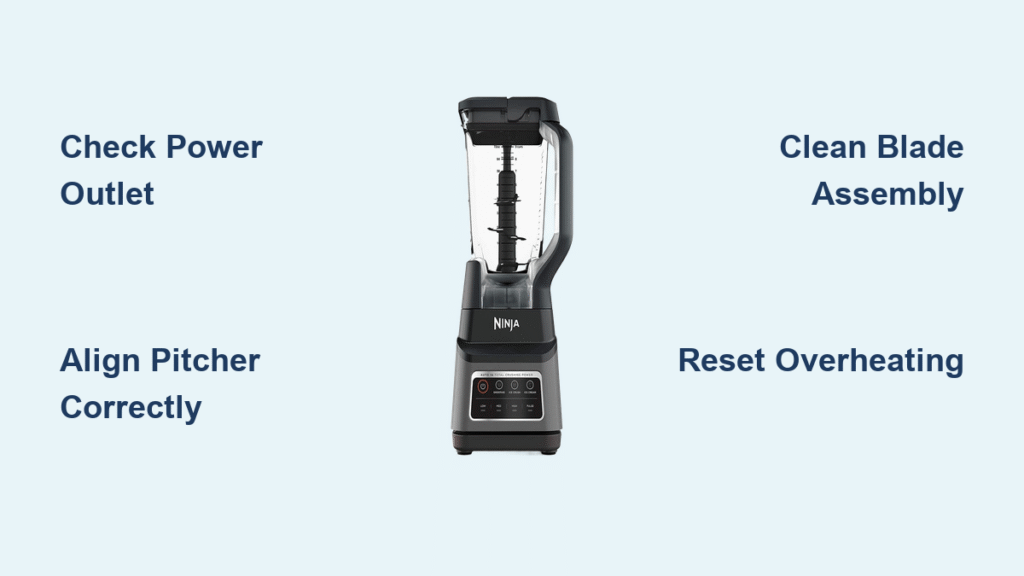
Check power, reset the base, inspect parts, clean contacts, and contact Ninja if needed.
I’ve fixed dozens of blenders and written guides for kitchen gear, so I know exactly what to do when your Ninja blender stops working. This article walks you through common causes, a clear troubleshooting checklist, safety tips, repair vs replace guidance, and real-life tips from my experience so you can get blending fast and safely.
Common reasons your Ninja blender stops working
Most stoppages come from simple causes you can fix at home. Electrical issues, a tripped thermal fuse, misaligned or damaged blades, a bad lid switch, or simple clogging from thick blends are the usual suspects. Understanding these causes helps you decide whether to troubleshoot, order parts, or call support.
Signs to watch for:
- Blender doesn’t power on at all.
- Motor hums but blades don’t spin.
- Blender starts then shuts off mid-cycle.
- Burning smell or excessive heat.
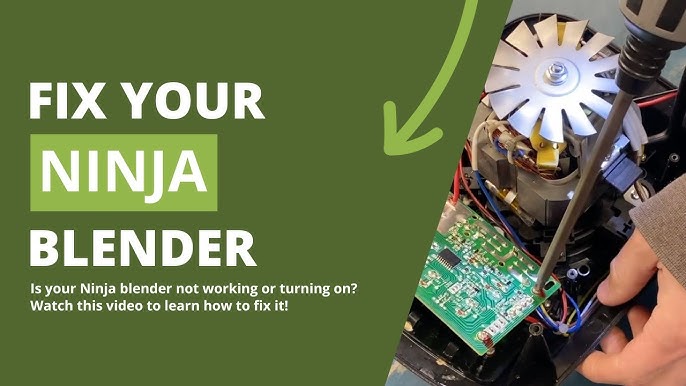
Source: youtube.com
Step-by-step troubleshooting guide for What to do when your Ninja blender stops working
Follow these steps in order to safely diagnose and often fix the problem yourself.
- Safety first
- Unplug the blender before you inspect it.
- Wait for the motor to cool if it felt hot or shut down mid-use.
- Check the power
- Confirm the outlet works by plugging in another device.
- Try a different outlet or a known-good extension cord.
- Inspect the plug and cord
- Look for cuts, frays, or bent prongs. Replace the cord if damaged.
- If the plug is loose, don’t force it; replace or have it fixed.
- Reset the unit
- Some Ninja models have a reset/thermal protector that trips. Unplug for 15–30 minutes, then plug back in and try again.
- For models with a reset button, follow the manual’s reset instructions.
- Confirm assembly alignment
- Ensure the pitcher or cup is seated and the lid locked. Many models won’t start unless sensors detect proper alignment.
- Remove and reseat components to clear debris from the contact points.
- Check blades and drive socket
- Remove the blade assembly carefully and inspect for cracks, warping, or stuck debris.
- Look at the drive socket on the base for wear or stripped plastic.
- Test motor function
- If the motor hums but blades don’t move, the drive coupling or blade spindle may be stripped.
- If there’s no hum and no lights, the control board, switch, or cord may be the issue.
- Clean contacts and vents
- Wipe electrical contacts with a dry cloth. Use compressed air to clear vents and remove dust.
- Avoid water inside the base; moisture can short electronics.
- Smell or smoke? Stop
- If you detect a burning smell or smoke, unplug immediately and don’t try to restart. This indicates a serious motor or electrical failure.
If these steps don’t fix the problem, the issue may be an internal motor fault or a failed control board. At that point, contacting Ninja support or a qualified appliance technician is the safe move. This step-by-step covers the main actions to take when you’re wondering what to do when your Ninja blender stops working.
When to repair or replace your Ninja blender
Decide based on age, cost, and severity. If the blender is under warranty, contact Ninja first. For out-of-warranty units consider these points:
Repair if:
- The problem is a replaceable part (blade, gasket, lid switch).
- Repair cost is less than half the price of a new unit.
- The base and motor show no signs of serious wear.
Replace if:
- The motor has seized or burned out.
- Electronics or control board failure is expensive to fix.
- The unit is more than 5–7 years old and out of warranty.
Parts are often affordable: seals, blades, and lids are low-cost fixes. Motor and electronics repairs can be pricey and are often not worth it for lower-priced models. Always weigh cost, safety, and expected lifespan when deciding what to do when your Ninja blender stops working.
Tools, parts, and estimated costs
Having the right tools speeds repairs and keeps things safe. Typical tools and parts include:
- Phillips and flathead screwdrivers — for opening bases and removing screws.
- Needle-nose pliers — for extracting small parts and connectors.
- Replacement blades, gaskets, and lids — common wear parts.
- Drive coupling/spindle — replaces stripped drive connections.
- Contact cleaner or compressed air — for cleaning contacts and vents.
Estimated costs:
- Gaskets and seals: $5–$15.
- Blade assemblies: $10–$30.
- Drive couplings: $10–$25.
- Professional motor or board repair: $50–$150 (often more than replacement).
Knowing these costs helps you decide whether to DIY or replace when asking what to do when your Ninja blender stops working.

Source: amazon.com
Safety tips and maintenance to prevent future issues
A little care extends the life of your blender and reduces surprises. Regular maintenance keeps you from asking what to do when your Ninja blender stops working.
Daily and weekly habits:
- Avoid overfilling or running very thick blends without liquid.
- Pulse instead of long continuous runs for tough jobs.
- Clean the pitcher, blades, and lid promptly after use.
- Wipe the base and vents to prevent dust buildup.
Monthly checks:
- Inspect seals and gaskets for wear or cracks.
- Check blade sharpness and balance; replace if bent.
- Test the lid lock and alignment sensors.
Do not submerge the base or use bleach on seals. These unsafe practices can damage electronics and void warranties. Proper use, cleaning, and inspection prevent most breakdowns.
Personal experience and lessons learned
From years of fixing small appliances, I’ve learned a few truths about what to do when your Ninja blender stops working. Most fixes are simple: a stuck seal, dirty contacts, or a misaligned pitcher. Once, I repaired a blender that wouldn’t start by simply removing a tiny crumb lodged in the lid sensor — a 10-second fix that saved the owner a replacement.
Lessons I share:
- Start with the simplest checks first — power and alignment.
- Keep receipts and register your product for warranty claims.
- Don’t ignore odd smells or noise; they often precede bigger failures.
Treat your blender like any tool: regular checks and gentle use keep it running longer.
Frequently Asked Questions of What to do when your Ninja blender stops working
How do I reset my Ninja blender?
Unplug the unit, wait 15–30 minutes to let the thermal protector cool, then plug it back in. Some models have a dedicated reset button—refer to your manual for location and steps.
Why does my Ninja blender hum but not spin?
A humming motor with no blade movement usually means the drive coupling or blade spindle is stripped or disconnected. Inspect the coupling and blade assembly for wear or damage.
Can I use my blender if it smells like burning?
No. A burning smell signals motor overheating or electrical failure; unplug immediately and do not use the blender until inspected by a professional.
How long should a Ninja blender last?
With normal use and maintenance, many Ninja blenders last 3–7 years, depending on model and workload. Heavy daily use shortens lifespan, while careful use extends it.
Where can I get replacement parts for my Ninja blender?
Gaskets, lids, blades, and couplings are available online and from major retailers; for motor or board issues, contact Ninja support or an authorized repair service.
What should I try first when wondering what to do when your Ninja blender stops working?
Start by checking power, outlet function, and assembly alignment; then inspect blades and drive socket for obvious damage. These quick checks resolve most simple problems.
Conclusion
You now have a clear, safe plan for what to do when your Ninja blender stops working: start with power and alignment checks, follow the step-by-step troubleshooting, clean and maintain parts, and decide repair versus replace based on cost and age. Take action today by running the quick checks listed above, keeping spare gaskets and a spare blade on hand, and registering your product for warranty protection. If this guide helped, leave a comment with your issue or subscribe for more practical appliance tips.