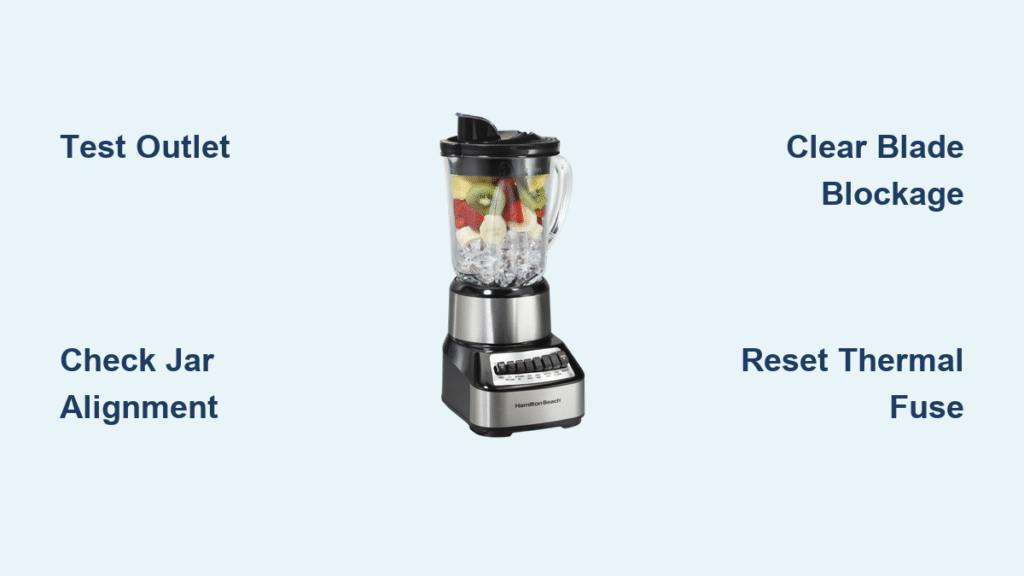
Many Hamilton Beach blenders stop working due to motor overload, faulty switches, or power issues.
If your Hamilton Beach blender stopped working, you’re not alone — and you don’t need to panic. I’ve repaired and tested small kitchen appliances for years and dug into common Hamilton Beach issues so you can diagnose the problem fast. This guide walks through likely causes, step-by-step troubleshooting, simple fixes, when to call a pro, and how to avoid repeat failures. Read on to get your blender running or decide the best next move with confidence.

Why a Hamilton Beach blender stopped working: common causes
Blenders fail for a handful of predictable reasons. Knowing the cause helps you pick the right fix and avoid wasted time.
- Motor overload or thermal cutout. If you ran the blender too long or blended very thick mixtures, the motor may overheat and the internal thermal protector will shut it down.
- Power or cord issues. A loose plug, damaged cord, or tripped outlet can make it seem like the blender is dead.
- Jar or base not locked. Most Hamilton Beach models have safety interlocks that stop the motor if the jar isn’t seated or the lid isn’t secure.
- Jammed blades or stuck coupling. Food, fruit pits, or hard ice can jam the blade assembly or strip the drive coupling.
- Worn or faulty switch. Repeated use can wear the control knob or switch contacts, causing intermittent or total failure.
- Internal wiring or motor failure. Age, moisture, or manufacturing defects can lead to open wires or a burned motor winding.
If your Hamilton Beach blender stopped working, start by checking the simple items listed above. These cover most home cases and let you decide if a repair is worth it.

How to troubleshoot step-by-step (safe and simple)
Safety first: always unplug the blender before you inspect or touch internal parts.
- Check power and outlet
- Plug another device into the same outlet to confirm power.
- Try a different outlet or reset a GFCI if needed.
- Inspect the cord and plug
- Look for cuts, exposed wires, or bent prongs.
- Replace the cord if damaged.
- Confirm jar and lid engagement
- Seat the jar properly and lock the lid. Test again.
- Reset thermal protector
- Let the unit cool for 15–45 minutes if it overheated. Some models have a reset button on the base.
- Clear blade jams
- Unplug, remove the jar, and use a tool to free trapped debris from the blades and coupling.
- Test the motor switch
- If the motor hums but blades don’t turn, the coupling may be stripped. If nothing happens, the switch or motor may be dead.
- Multimeter checks (if comfortable)
- Test continuity across the cord, switch, and motor windings. Seek help if you see open circuits or odd resistance.
If these steps don’t revive it, the issue may be internal. At that point, decide between a repair or replacement based on cost and age.

PAA-style quick questions
#### Can I fix a Hamilton Beach blender stopped working on my own?
Yes, for common issues like a tripped thermal cutout, jar misalignment, or blade jams you can fix it yourself safely by unplugging first and following basic steps. For motor or switch replacement, consider a professional if you lack tools or experience.
How long should I wait to reset an overheated blender?
Wait at least 15–45 minutes for the motor to cool before trying again; some units need more time if they ran hot for a long period. Use the cool-down time to clean and inspect the blender.
Will warranty cover a Hamilton Beach blender stopped working?
If the blender is still under the manufacturer’s warranty and failure is due to a defect, it may be covered; damage from misuse or normal wear often is not. Check your warranty terms and keep your receipt for claims.
Common parts that fail and how to fix them
Knowing the parts that often fail helps you shop for replacements and estimate repair costs.
- Drive coupling
- Symptom: motor runs but blades don’t spin. This plastic part can wear and strip.
- Fix: inexpensive replacement; usually a few dollars and simple to swap.
- Blade assembly and gasket
- Symptom: leaks or poor blending. Gaskets degrade and blades dull.
- Fix: replace gasket or blade unit; maintain seals to avoid leaks.
- Switch or control board
- Symptom: no power, intermittent power, or stuck speed settings.
- Fix: switches can be replaced but require opening the base; consider cost vs replacement.
- Motor or motor windings
- Symptom: burning smell, loud noise, no spin, or tripped breakers.
- Fix: motor replacement is possible but often costly; replacement appliance may be cheaper.
- Power cord
- Symptom: sparks, intermittent power, or exposed wires.
- Fix: replace cord or have a technician replace it to keep safety intact.
If your Hamilton Beach blender stopped working due to a part listed above, small parts are often cheap. Motor or board issues are pricier and may not be economical to fix.

When to repair versus when to replace
Use a simple rule of thumb to weigh the decision.
- Repair if:
- The problem is a low-cost part (coupler, gasket, cord).
- The blender is relatively new and still under warranty.
- You have sentimental value or a high-end model.
- Replace if:
- Repair cost approaches 50% or more of a new unit.
- The motor or electronics failed and the unit is older than three to five years.
- Frequent past repairs indicate recurring issues.
From my experience, a $20 repair makes sense, while a motor swap that costs $60–$80 on a $50 blender does not. Think about time, safety, and long-term reliability.

Maintenance tips to prevent the blender from stopping again
A little care extends life and prevents many common failures.
- Avoid running the blender continuously for long periods; give it short breaks every 30–60 seconds.
- Pre-cut hard ingredients and use ice crush or pulse settings to reduce motor strain.
- Clean the jar, gasket, and coupling after each use to prevent jams and leaks.
- Inspect the cord and plug periodically for wear and tear.
- Store the blender assembled or with parts dry to prevent corrosion.
Follow these tips and your Hamilton Beach blender stopped working issues will be much less likely.

Tools and parts to keep handy for quick fixes
Having basic tools saves time and money when your Hamilton Beach blender stopped working.
- Screwdrivers (Phillips and flathead) for opening the base.
- Multimeter for checking continuity and voltage.
- Replacement couplings, gaskets, and blade assemblies for your model.
- Electrical tape and heat-shrink tubing for minor cord repairs.
- Small brush to clean around blades and seals.
Keeping these on hand means many fixes are doable at home and reduce downtime.

Safety, warranty, and repair service tips
Protect yourself and your blender with these practical steps.
- Always unplug before opening or servicing the blender.
- Avoid water contact with the base or motor to prevent shorts and corrosion.
- Check warranty status and register your appliance if required; keep receipts and serial numbers.
- If the unit emits smoke, sparks, or a strong burning smell, stop using it and consult a professional.
- Use authorized service centers for warranty repairs to avoid voiding coverage.
When your Hamilton Beach blender stopped working in a dangerous way, prioritize safety over saving a few dollars.
Frequently Asked Questions of Hamilton Beach blender stopped working
Why won’t my Hamilton Beach blender turn on at all?
First check the outlet and cord for power and damage. If power is fine, the internal switch or motor may be faulty and require inspection.
My blender hums but blades don’t spin — what’s wrong?
That often means the drive coupling is stripped or the blade assembly is jammed. Unplug and inspect the coupling and blades for broken parts or debris.
How do I reset my Hamilton Beach blender after overheating?
Unplug the blender and wait 15–45 minutes for it to cool. Some models include a reset button on the base you can press once cooled.
Can I use a multimeter to test my blender’s motor?
Yes, you can check continuity and resistance on the motor windings and cord, but only if you’re comfortable with basic electrical testing and safety precautions. If you find an open circuit, professional repair is likely needed.
Is it worth repairing a cheap Hamilton Beach blender?
If the repair is for a small, inexpensive part like a gasket or coupling, yes. If the motor or control board needs replacement and costs nearly as much as a new unit, replacement is usually smarter.
How long do Hamilton Beach blenders typically last?
Lifespan depends on use and care; many last 3–7 years with normal home use and proper maintenance. Heavy use or misuse shortens life significantly.
Conclusion
A Hamilton Beach blender stopped working is usually fixable with a few checks: power, jar engagement, blade jams, and thermal reset are common culprits you can handle at home. For worn parts like couplings and gaskets, cheap replacements often restore full function. If the motor or electronics fail, weigh repair cost against a new purchase. Take safety seriously, keep basic tools handy, and use simple maintenance to prevent many future problems. Try the troubleshooting steps here, and if you need more help, leave a comment or subscribe for repair guides and part recommendations.