The best can opener for camping is compact, strong, easy to use, and reliable when meals depend on canned food.
A quiet campsite can turn stressful when you open your food box and find canned chili, beans, or fruit with no opener. I have seen this small tool become the most important item in a camp kitchen. A good camping can opener should fit in a pocket, resist rust, and cut cleanly without sharp metal splinters. It should also work after rain, cold nights, or long storage in an emergency kit. The models below cover simple trail tools, classic hand openers, safe-cut designs, and heavy-duty choices for family camping.
NACOLUS Portable Stainless Steel Can Opener

The NACOLUS manual can opener is a small tool made for simple camp meals and backup storage. Its stainless steel build should handle normal outdoor use better than a cheap painted tool. The two-piece set gives you a spare, which is useful when one opener stays in the kitchen and one lives in a camp box. It also includes a bottle-opening function for drinks and sealed bottles.
I like this set for campers who want a basic tool without a motor, battery, or bulky handle. Its small size makes it easy to place in a backpack pocket or emergency pouch. As with most compact openers, you should hold the can steady and turn the tool with care. Dry it after washing or wet use so the cutting parts stay clean and ready.
Pros:
- Two openers provide a useful spare
- Stainless steel construction suits outdoor storage
- Compact shape saves space in a pack
- Manual design needs no batteries
- Includes a bottle opener function
- Good fit for basic canned camp foods
Cons:
- Small handles may feel less comfortable on many cans
- Manual turning takes more effort than an electric model
- Users must control the sharp cutting edge carefully
Chef Craft Select 6.5-Inch Can Opener

The Chef Craft Select can opener measures 6.5 inches and uses a nickel-plated finish. That size gives you more handle room than a tiny pocket opener. The tool also has a tapper and bottle opener, so it can cover more than one camp task. Its classic hand design works without power, which matters far from a vehicle or wall outlet.
This model feels suited to car camping, cabins, and family camp kitchens where pack space matters less than easy handling. The longer body can offer better leverage when you open thick cans or several cans in one meal. I would still keep it dry and inspect the wheel before each trip. It is a practical choice for campers who prefer a familiar, old-school tool.
Pros:
- 6.5-inch length gives useful hand leverage
- Nickel-plated finish adds a protective outer layer
- Tapper and bottle opener add daily value
- Manual operation works without batteries
- Simple design is easy to understand
- Comfortable choice for car camping kitchens
Cons:
- Longer than pocket-style survival openers
- Finish may need careful drying after washing
- May require a firm grip on large cans
GoodCook Safe-Cut Can Opener

The GoodCook Safe-Cut can opener focuses on a smoother, safer style of opening. Its easy-turn knob helps reduce the hand force needed to move the cutting wheel around a can. The black body is easy to spot inside a crowded camp kitchen box. This design is especially appealing when several people need to prepare food quickly.
A safe-cut opener can help reduce contact with the freshly cut lid, but I still recommend treating every lid as sharp. The large knob should be useful for adults with limited hand strength or tired hands after a long hike. It is a better match for picnic tables and base camps than ultralight backpacking. Store it in a small bag so food bits do not collect inside your cookware box.
Pros:
- Easy-turn knob helps reduce hand strain
- Safe-cut design supports more controlled opening
- Black color is easy to locate in gear
- Useful for family camp kitchens
- Manual tool does not need power
- Good choice for users who dislike rough cutting
Cons:
- Not the smallest option for ultralight packs
- More moving parts need careful cleaning
- It may need extra space around the can while turning
Japanese Stainless Steel Can Opener With Case

This Japanese manual can opener uses high-carbon stainless steel and comes with a storage case. The case is a major benefit for camping because it keeps the sharp working end away from food, fingers, and fabric. Its slim build should fit well in an emergency kit or a drawer at a cabin. The tool also works as a bottle opener.
With this style, technique matters more than brute force. Set the opener firmly on the rim, keep the can stable, and use slow, even movement. The high-carbon stainless steel construction suggests a durable tool, but all metal tools still need drying after use. I see it as a strong choice for preparedness-minded campers who want one neat tool for routine trips and backup storage.
Pros:
- High-carbon stainless steel suits long-term use
- Storage case improves safe packing
- Slim profile saves room in emergency kits
- Bottle opener adds useful function
- Works without batteries or electricity
- Good option for organized camp storage
Cons:
- Some users may need practice with its slim design
- Less comfortable for opening many cans in a row
- Case adds one small item to keep track of
Japanese Ganji Kankiri Can Opener

The Japanese Ganji Kankiri is a compact manual opener with a very simple working style. It does not rely on gears, a large wheel, or a power source. That can make it attractive for hiking kits, fishing bags, and emergency supplies. Its small form also leaves more room for fuel, utensils, and food.
This type of opener rewards a calm hand and a stable can. I would practice at home before taking it on a remote trip, especially if you have only used wheel-style openers. It may not be the fastest choice for a large family meal, but it can serve as a dependable backup. For experienced campers, its simple design feels like a small metal key that unlocks a full meal.
Pros:
- Very compact for hiking and survival kits
- Lightweight design reduces pack load
- No batteries, motor, or moving gear system
- Useful as an emergency backup opener
- Simple construction can be easy to store
- Fits campers who value minimal gear
Cons:
- Requires more practice than a standard crank opener
- May feel slow during group meal preparation
- Small design offers limited hand comfort
Coghlan’s Portable Can Opener 2-Pack

Coghlan’s portable can opener 2-pack is built around a camper’s most useful idea: carry a spare. Each opener is small and light, so you can place one in a food bag and one in a first-aid or survival kit. The simple manual format works for camping, hiking, and outdoor travel. It avoids the weight and storage needs of a powered appliance.
I like this pack for groups because one lost tool does not end the meal plan. It also suits people who divide equipment between a truck, a tent kitchen, and an emergency box. The small size means you should use a firm grip and keep your fingers away from the cut lid. If you want the best can opener for camping on a tight gear budget, this two-pack is easy to understand.
Pros:
- Two-piece pack gives valuable backup
- Lightweight design suits hiking and travel
- Compact size fits small camp containers
- Manual use works in remote locations
- Useful for survival and emergency storage
- Affordable way to outfit more than one kit
Cons:
- Small size may be harder on large cans
- Not as comfortable as a long-handle opener
- Basic design may need more hand control
Vintage 3-in-1 Can Opener 2-Pack

This two-pack uses a vintage-style design with a dual-sided blade and three-in-one functions. The left- and right-hand-friendly layout gives more campers a natural way to use it. One tool can stay at home while the second travels with your outdoor gear. The stainless steel construction is a practical match for camp use.
The dual-sided blade may be helpful when different users have different hand preferences. I would use slow pressure at first and confirm that the cutting wheel sits correctly on the rim. These openers are better for campers who enjoy classic tools and want a spare in the same package. They also make sense for emergency preparedness because they do not depend on a charged battery.
Pros:
- Two openers support home and camp use
- Left- and right-hand-friendly design adds flexibility
- Three-in-one function saves drawer space
- Stainless steel construction suits regular use
- Dual-sided blade supports different users
- Good backup choice for emergency kits
Cons:
- Vintage design may require a short learning period
- Small handles may tire hands on many cans
- More functions mean more parts to clean
KitchenAid Classic Can and Bottle Opener

The KitchenAid Classic combines a manual can opener with a bottle opener. It uses a stainless steel cutting wheel and soft ergonomic handles. That combination makes it more comfortable for cooks who open cans often. The black finish also gives it a clean, familiar look in a home or camp kitchen.
This is not my first pick for a tiny backpack, but it is excellent for car camping and RV trips. The soft handles can help when cold weather makes bare metal feel harsh. The sharp wheel should move through common cans with less repeated effort when you keep the can level. For families, older campers, and cooks who want a familiar grip, this is a strong all-around option.
Pros:
- Soft ergonomic handles improve grip comfort
- Stainless steel cutting wheel supports clean use
- Bottle opener adds extra camp function
- Recognizable shape is easy for most users
- Good choice for family and RV camping
- Comfortable for repeated meal preparation
Cons:
- Bulkier than minimalist survival openers
- Soft handles may take more drying care
- Not ideal when every ounce matters
Rocky Mountain Goods Classic Manual Opener
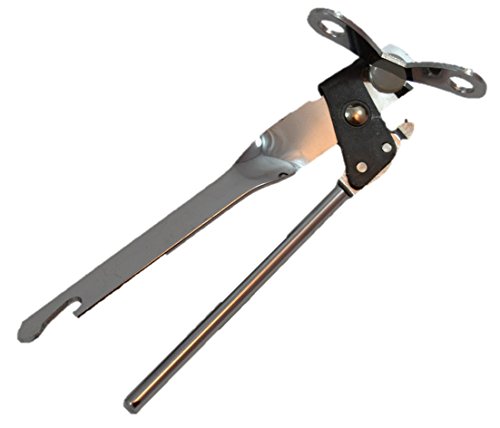
The Rocky Mountain Goods classic manual opener has a compact 6 3/4-inch body and nickel-plated steel construction. Its heavy-duty style fits campers who want more substance than a tiny emergency tool. The opener is also listed as dishwasher safe, which can make cleanup simpler after a messy meal. Its size balances grip space with easy storage.
I see this as a useful bridge between a pocket opener and a large kitchen model. It can travel to a campground, cabin, or picnic without taking over the utensil box. The metal body should be dried after cleaning, even when a product is dishwasher safe, because outdoor storage can trap moisture. Campers who want a sturdy everyday tool may find this one a sensible value.
Pros:
- 6 3/4-inch size offers useful leverage
- Heavy-duty steel build suits regular camp use
- Compact enough for travel and storage
- Dishwasher-safe design simplifies cleanup
- Nickel-plated finish adds a protective layer
- Works for camping and everyday kitchen tasks
Cons:
- Heavier than a basic pocket opener
- Metal parts still need drying after washing
- Classic handles may feel firm for some users
Multifunctional Heavy-Duty Manual Can Opener
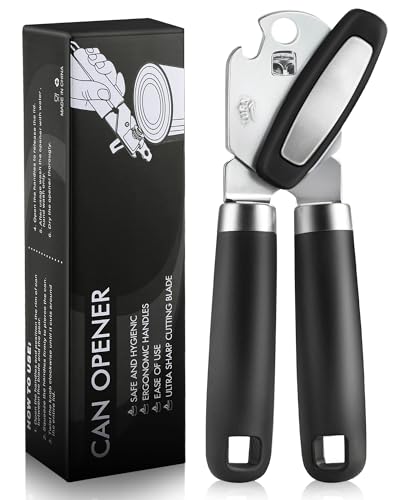
This multifunctional manual opener is designed for users who want a strong handheld tool with a smooth cutting edge. The black body gives it a simple outdoor look, while the heavy-duty format suggests regular use. It also includes bottle-opening support, which can reduce the number of tools in a camp box. The design is aimed at kitchen work, camping, and users who need a friendlier grip.
Its larger handheld shape may help people who find tiny openers hard to control. I would choose it for base camp, RV travel, or a family picnic rather than a long backpacking route. Clean the cutting area after each use and check the rim for any rough spots before serving food. When a camper wants the best can opener for camping with a sturdy feel, this model deserves attention.
Pros:
- Heavy-duty handheld design feels sturdy
- Smooth cutting edge supports cleaner opening
- Multifunction format saves tool space
- Useful for seniors and users needing a firm grip
- Works for camping and home kitchens
- Black finish is easy to match with camp gear
Cons:
- Too large for some ultralight hiking kits
- Manual use still needs steady hand pressure
- More complex than a basic emergency opener
How I Choose the Best Can Opener for Camping
A can opener looks simple, but outdoor use exposes weak points quickly. At home, you can switch tools if one slips or breaks. At camp, your food may depend on the one tool in your bag. I judge a camping opener by size, grip, cutting control, material, cleaning, and backup value.
First, check the weight and shape. Backpackers need a small tool that adds little bulk. Car campers can choose a longer handle because comfort matters more than every ounce. A long handle may give better leverage, while a compact opener may fit more easily beside a stove or fuel canister.
Next, consider the cutting method. A standard wheel opener punctures the lid and travels around the rim. A safe-cut model may leave a different edge and can reduce direct contact with the sharp lid. A slim Japanese-style opener may save space, but it can take more practice. Pick the style that you can use with calm, steady motion.
Material also matters. Stainless steel and plated steel can resist normal wear, but no metal tool is immune to rust. Campers often leave gear damp after rain or washing. I dry the opener fully, then store it in a small zip bag or case. This habit protects the tool and keeps food residue away from other gear.
What Features Matter Most Outdoors?
Portability: A hiking opener should be light and small. A two-pack is useful because you can split the tools between bags. For RVs and cars, a larger model may offer a better grip without causing a pack problem.
Grip: Smooth metal can feel hard to hold when your hands are cold. Soft handles or a broad turning knob can make a major difference. If you cook for a group, comfort becomes more important because you may open several cans at once.
Durability: Look for a firm body and a cutting wheel that turns without wobbling. Stainless steel is a popular choice for outdoor tools. Still, careful storage matters as much as the material. Do not leave the opener in wet soil, a damp cooler, or a closed bag after use.
Safety: A cut lid can act like a small blade. Keep fingers above the handle and move the lid with a utensil, not your bare fingertips. Rinse the opener well after use, especially when opening meat, fish, or sauce. Food safety guidance also supports keeping tools clean and dry before the next meal.
Extra functions: A bottle opener can be handy, but it should not make the main tool hard to use. I prefer useful extras that do not add much size. A two-piece set can be more valuable than several built-in functions because a spare can save a trip.
Manual Versus Electric Camping Can Openers
Manual openers are usually the better choice outdoors. They do not need batteries, charging, or a dry electrical setup. They also take less space and can sit in an emergency kit for months. That reliability explains why many of the best can opener for camping options use a simple manual design.
Electric openers may feel easy at home, but they can be awkward at a remote campsite. Batteries can lose power in cold weather. A motor can also fail after water exposure or a hard drop. If you still prefer an electric tool for an RV, pack a manual backup. A backup opener is small insurance for a meal you already planned.
How to Use a Can Opener at Camp
Set the can on a level, steady surface. Hold the can with one hand and position the opener on the rim with the other. Keep your fingers away from the lid and cutting wheel. Turn slowly until the lid separates, then lift it with a clean utensil if the edge is sharp.
Do not force a stuck wheel. Stop, reset the opener, and try again from a clean section of the rim. Wipe away food residue after use, then wash and dry the tool. Place the lid and empty can in a sealed waste bag because food smells can attract animals at camp.
For a slim or traditional opener, practice at home before your trip. A few test cans can teach you the right angle and pressure. This small step removes stress when the sun goes down and everyone is waiting for dinner.
Best for Table
| Best for | Why |
|---|---|
| Ultralight hiking | Coghlan’s two-pack and the Ganji Kankiri save space and work without batteries. |
| Family and car camping | KitchenAid, GoodCook, and Rocky Mountain Goods offer more grip and comfort. |
| Emergency preparedness | The NACOLUS set and Japanese opener with case provide backups and easy storage. |
My Recommendation
For most car campers and family campers, I would start with the KitchenAid Classic or the GoodCook Safe-Cut. Both focus on easy handling, which matters when several cans are part of dinner. The KitchenAid has soft ergonomic handles and a stainless steel wheel. The GoodCook is a smart pick for people who want an easy-turn knob and a more controlled cutting style.
For backpackers, the Coghlan’s Portable Can Opener 2-Pack is a practical winner because it is light and includes a spare. The Japanese Ganji Kankiri is better for experienced users who want the smallest possible tool. For emergency storage, I prefer the Japanese stainless steel opener with its case because the case adds order and protection.
There is no single tool for every trip. The best can opener for camping depends on whether you value low weight, comfort, safety, or heavy use. All of these options are easy to find online, but check current price, stock, and product details before ordering.
FAQs Of best can opener for camping
What is the best can opener for camping?
The best choice depends on your trip. Coghlan’s two-pack suits hikers, while KitchenAid and GoodCook suit car campers. For a general camp kitchen, choose a manual opener with a comfortable grip and durable metal parts.
Should I take a manual or electric can opener camping?
Take a manual opener for most camping trips. It needs no batteries or power and takes less space. If you bring an electric opener in an RV, pack a manual backup.
Are small camping can openers safe?
They can be safe when used with care. Keep the can steady, keep fingers away from the lid, and use a utensil to remove a sharp lid. Always clean and dry the opener after use.
How do I stop a camping can opener from rusting?
Wash it after use and dry every metal part. Store it in a dry pouch or case. Do not leave it inside a damp cooler or sealed bag after a rainy trip.
Is a two-pack can opener worth buying?
Yes, especially for hiking and emergency kits. You can keep one in your main camp box and one as a spare. A second opener can also help when two groups share cooking duties.
Final Verdict: Which Should You Buy?
For most campers, the KitchenAid Classic is the best can opener for camping because its soft handles and sharp stainless steel wheel make camp cooking simple. Choose Coghlan’s two-pack if low weight matters most.
Pack a manual opener before every outdoor trip. A small, reliable tool can turn canned food into a warm meal when plans change.