The best toaster oven for sublimation offers steady heat, enough space, and safe separation from food use.
If you press mugs, tumblers, tiles, or small craft blanks, you know how fast a kitchen oven can become crowded. Ink can also leave a smell or residue, which makes many crafters want a separate oven for sublimation. I look for simple controls, useful temperature range, even heating, and enough room for the blanks you use most. The models below are not sublimation-specific ovens, so always check the manual and use one only for crafts. With the right setup, a small toaster oven can become a handy workhorse on your craft table.
BLACK+DECKER 4-Slice Air Fry Toaster Oven
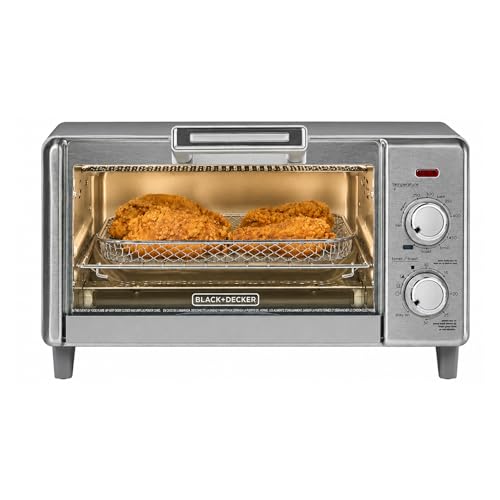
The BLACK+DECKER 4-Slice Air Fry Toaster Oven is a compact choice for small sublimation work. Its 5-in-1 design can help you switch between basic bake, broil, toast, warm, and air-fry-style tasks. For craft use, I like the simple countertop shape because it does not take over a small studio. The four-slice capacity may suit flat blanks, small panels, and other light projects.
This oven is a better fit for a crafter who wants one affordable unit for small jobs. The air fry feature is not important for sublimation, but the extra cooking modes show that the oven can handle more than toast. I would reserve it for crafts after using it for sublimation, since fumes and transfer paper can create residue. Use a separate thermometer to check the real chamber temperature before starting valuable blanks.
Pros:
- Compact size fits a small craft room
- Five cooking modes offer flexible general use
- Four-slice capacity works for many small blanks
- Simple controls are easy to learn
- Air-fry mode adds value for non-craft use
- Countertop design is easy to move and store
Cons:
- Limited interior space for tall tumblers or large panels
- Air-fry features do not improve sublimation results
- Temperature accuracy may need outside checking
Elite Gourmet ETO236 Compact 2-Slice Oven

The Elite Gourmet ETO236 is a very small toaster oven with a 15-minute timer. Its compact body can work well for a beginner who presses only small flat items. The short timer is useful for quick craft cycles, but it also requires close attention. I see this as a basic entry model rather than a heavy-duty sublimation machine.
For small ornaments, coasters, test pieces, and thin blanks, its size can be an advantage. A short timer may help prevent a forgotten oven from running for too long, yet sublimation often needs a longer cycle than 15 minutes. I would use an external timer when a project needs repeated cycles. I would also keep a heat-safe thermometer nearby, because a low-cost toaster oven may have hot spots.
Pros:
- Very compact for a desk or small workbench
- 15-minute timer supports short, simple cycles
- Easy option for beginners on a limited budget
- Small chamber heats up quickly in many tasks
- Light body is easy to move between storage and work areas
- Suitable for test blanks and small flat projects
Cons:
- Two-slice capacity limits project size
- 15-minute timer may not suit longer sublimation cycles
- Small chamber may not fit mugs or tall blanks
- Basic controls offer less fine adjustment
Cuisinart TOA-70NAS Air Fry Toaster Oven
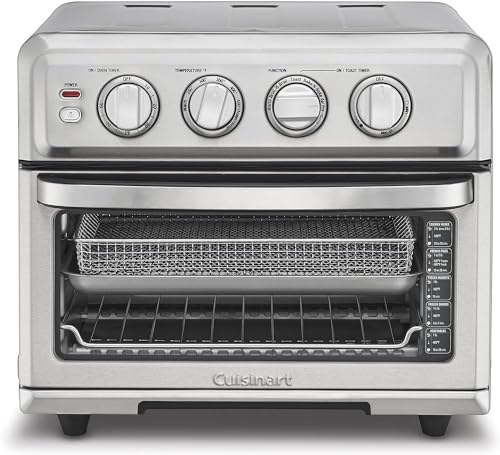
The Cuisinart TOA-70NAS brings a larger 0.6-cubic-foot interior and 1800 watts of power. Its 8-in-1 layout includes air fry, convection bake, broil, warm, and other common modes. The 60-minute timer gives a craft user more control than a small 15-minute unit. For sublimation, the larger chamber may be useful when you work with several flat blanks or larger pieces.
I would consider this a strong choice for a busy maker who wants space and a broad control range. Convection may move hot air around the chamber, but it does not guarantee perfectly even heat across every shelf position. I would still test the oven with a thermometer and run sample blanks before production work. The stainless finish also looks polished, though it may show fingerprints and needs careful cleaning.
Pros:
- 0.6-cubic-foot chamber gives useful project space
- 1800 watts support strong heating performance
- 60-minute timer handles longer craft sessions
- Eight modes offer flexible everyday use
- Convection can improve air movement around blanks
- Good fit for makers who work on several small items
Cons:
- Larger body needs more counter space
- Higher power may draw more electricity
- Convection does not remove the need for temperature testing
- Cooking features add cost without being required for sublimation
BLACK+DECKER 6-Slice Air Fry Oven

The BLACK+DECKER 6-Slice Air Fry Toaster Oven offers more room than the four-slice model. That extra capacity can matter when you move beyond test pieces and start making batches. Its 5-in-1 format keeps the controls familiar and gives it useful value outside the craft room. I like the larger opening for flat sublimation blanks that need room around their edges.
This model is best for a home crafter who wants a dedicated oven with moderate capacity. It may fit multiple coasters, tiles, ornaments, or small panels, depending on their shape and the rack position. It is not a direct replacement for a mug press or a purpose-built convection oven. Before buying, measure your largest blank and compare it with the listed interior dimensions.
Pros:
- Six-slice capacity provides more usable room
- Good option for small production batches
- Five modes keep operation simple
- Air-fry function adds household value
- Wider chamber may fit larger flat blanks
- Useful upgrade from a tiny two-slice oven
Cons:
- Still may not fit tall or wide drinkware
- Exterior takes more room than compact models
- Air circulation can vary by rack location
- Temperature should be verified before pressing products
BLACK+DECKER TO1313SBD Toaster Oven
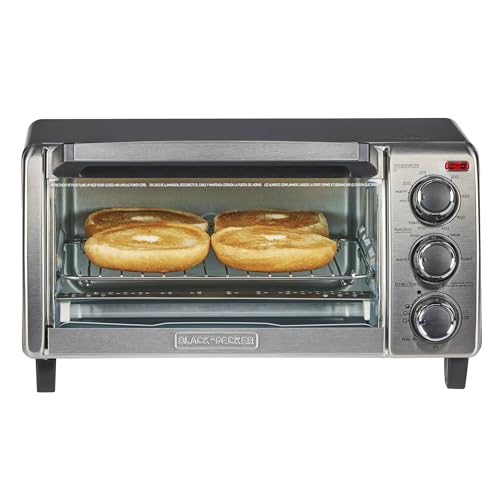
The BLACK+DECKER TO1313SBD is a straightforward toaster oven for shoppers who prefer fewer features. Its listed 15.47-inch size makes it a compact countertop option for light craft use. A simple design can be a benefit when you want to focus on wrapping and pressing rather than learning many settings. It may serve well as a dedicated oven for small sublimation blanks.
I would choose this model for occasional work and basic flat items. It is not the model I would pick for a growing shop that needs a roomy chamber or long automated cycles. Simple ovens can still produce useful results when you control the blank, paper wrap, airflow, and time with care. Keep the oven in a ventilated area, and never use it for food after craft transfers have been processed inside.
Pros:
- Simple design suits first-time users
- Compact footprint saves counter space
- Good match for occasional sublimation work
- Fewer controls reduce setup confusion
- Dedicated craft use can be affordable
- Suitable for small flat blanks and sample pieces
Cons:
- Limited capacity for larger projects
- Basic design may lack advanced heat control
- May need an outside timer for long cycles
- Not ideal for batch production
BLACK+DECKER TO1760SS 4-Slice Oven

The BLACK+DECKER TO1760SS uses natural convection in a 4-slice countertop format. Natural convection can help warm air move through the chamber without a separate fan system. That may help with general heating, but I would not assume it delivers the same result as a tested sublimation convection oven. Its stainless-steel look is a nice match for a tidy craft space.
This oven makes sense for a maker who needs a basic dedicated unit for small projects. It balances a modest footprint with more room than the smallest two-slice models. I would place a blank in the center, avoid touching the heating elements, and test temperature at the working level. For repeat orders, record the time and temperature that work for each blank instead of relying on the dial alone.
Pros:
- Natural convection supports basic air movement
- Four-slice size fits many small craft pieces
- Stainless-steel finish looks clean and durable
- Compact design works in a home studio
- Simple controls are friendly for beginners
- Useful choice for low-volume sublimation work
Cons:
- Natural convection is less controlled than powered convection
- Interior space may limit drinkware projects
- Dial settings may need thermometer verification
- Small capacity slows larger batches
Cuisinart 1800W Toaster Oven Broiler

This Cuisinart toaster oven broiler uses 1800 watts and has a 0.5-cubic-foot countertop design. That combination gives it more working room than a very small toaster oven. The broiler function is not needed for sublimation, but the strong power rating may help the oven recover heat after the door opens. For craft work, I value the room and the longer-use design more than the extra cooking label.
The Cuisinart is a sensible pick for someone who wants a sturdy, traditional countertop oven. It can be a useful dedicated craft appliance for flat blanks and some compact three-dimensional items. I would use a separate probe thermometer because the set point and actual blank temperature are not always the same. Leave space around the oven, follow electrical safety guidance, and keep heat-sensitive materials away from the case.
Pros:
- 1800 watts provide strong heating capacity
- 0.5-cubic-foot interior offers useful project space
- Traditional controls are easy to understand
- Good fit for a dedicated craft station
- Can handle more than tiny test blanks
- Broiler and toaster functions add household flexibility
Cons:
- Large power draw may not suit every workspace
- Broil elements require careful blank placement
- Exterior can become hot during use
- Actual heat may vary across the chamber
Breville BOV450XL Mini Smart Oven

The Breville BOV450XL Mini Smart Oven is a premium compact option with a brushed stainless-steel body. Its “smart” controls are designed to make everyday oven settings easier to manage. In a sublimation workspace, that may help users repeat the same basic process with less guesswork. The mini size is convenient, but it also sets a clear limit on the size of blanks you can place inside.
I would recommend this oven to a careful hobbyist who wants a refined countertop appliance for small work. It may be especially appealing when a clean design and compact footprint matter as much as price. Still, premium household features do not make it a certified sublimation oven. Use it only in a ventilated craft area, verify heat with an independent thermometer, and test each blank type before filling customer orders.
Pros:
- Premium stainless-steel design suits a neat studio
- Compact body works in limited spaces
- Smart controls may make repeat settings easier
- Good choice for small, careful hobby projects
- Build quality and finish feel more refined
- Simple size makes it easy to dedicate to craft use
Cons:
- Higher price than basic toaster ovens
- Mini interior limits mugs and large blanks
- Household smart features do not ensure sublimation accuracy
- Temperature testing remains necessary
Hamilton Beach 2-in-1 Countertop Toaster Oven

The Hamilton Beach 2-in-1 combines a countertop toaster oven with a long-slot two-slice toaster. Its dual design saves space for a user who still wants normal breakfast use. For sublimation, the oven side is the part that matters, and the long-slot toaster does not add craft capacity. I see this model as a practical choice for a small home where every inch of counter space counts.
This unit may suit a beginner who wants to try sublimation without buying a large appliance. It can handle small flat blanks if the interior dimensions allow them, but it is not a batch machine. Because it serves two kitchen roles, I strongly recommend keeping it separate from food once you process transfers. Follow fire safety guidance from the manufacturer and keep paper, tape, and fabric away from exposed heating elements.
Pros:
- Two-in-one design saves counter space
- Useful for homes with limited storage
- Long-slot toaster adds everyday value
- Oven controls are approachable for beginners
- Good entry point for small craft tests
- Compact footprint suits a shared work area
Cons:
- Two-slice oven area limits blank size
- Toaster feature does not help sublimation performance
- Not ideal for steady production work
- Food and craft use should remain strictly separate
Elite Gourmet ETO449X 4-Slice Toaster Oven

The Elite Gourmet ETO449X is a 9.5-quart, 4-slice toaster oven with an 800-watt quartz heating system. Its smaller capacity and lower power make it an economical fit for light craft work. Quartz elements can heat quickly, but quick heat does not always mean even heat across a blank. I would treat this as a small dedicated test oven rather than a production unit.
This model is best for a new crafter who makes ornaments, coasters, and other small projects. The black body has a simple look, and the modest size may fit a shelf or compact table. The trade-off is limited room and less power for heat recovery. A test run with a temperature probe and a spare blank can show whether its hot spots affect your chosen material.
Pros:
- 9.5-quart size fits a compact workspace
- 800-watt design may use less power
- Quartz elements can respond quickly to heat changes
- Four-slice capacity supports small flat pieces
- Affordable style suits beginner budgets
- Easy size for a dedicated craft appliance
Cons:
- Small chamber limits larger sublimation items
- Lower wattage may recover heat more slowly
- Quartz heat can create hot spots near the elements
- Not suited to high-volume production
How I Choose a Toaster Oven for Sublimation
A toaster oven for sublimation must do more than get hot. It should hold a stable heat level long enough for the transfer process. It should also fit the blank without forcing paper or tape close to the heating elements. I check the inner width, height, rack positions, timer range, control style, and ventilation needs before I consider any model.
Temperature control is the heart of the decision. A dial marked with a number does not prove that the air near your blank matches that number. I use a separate oven thermometer or probe to find warm and cool areas. This small step can save money because a test blank costs far less than a full order of damaged products.
Space matters just as much. A flat coaster needs less room than a tumbler, mug, slate, or tall glass. Measure the item after adding protective paper, shrink film, tape, or a silicone wrap. Leave a safe gap around the project. Never let the transfer touch an exposed heating element.
I also separate food safety from craft safety. Sublimation ink, transfer paper, tape, coatings, and plastic wraps can release odors or residues when heated. Consumer safety guidance favors ventilation, correct appliance use, and keeping flammable items away from heat. For that reason, I recommend buying a separate oven for sublimation and never returning it to food service after craft use.
What Temperature Accuracy Means for Sublimation
Sublimation needs the right mix of heat, time, pressure, and contact. A toaster oven can control heat, but it cannot replace the pressure of a proper mug press for every item. The blank maker’s instructions should guide your starting point. I then adjust in small steps after testing, rather than changing time and temperature at once.
Heat can move unevenly inside a small oven. The top may run hotter than the center, and the area near the door may behave differently from the rear. Convection may improve air movement, but it does not make every spot equal. A temperature map made with several readings can reveal where to place a blank.
Use protective paper above and below the transfer when the blank instructions allow it. Secure the image with heat-resistant tape, and use gloves or heat tools when removing hot items. Let the finished piece cool on a heat-safe surface. These habits make the process safer and help reduce ghosting caused by movement during cooling.
Size and Shape: The Hidden Buying Test
Many buyers search for the best toaster oven for sublimation and focus only on watts. I think interior shape deserves equal attention. A tall tumbler needs height, while a flat tile needs a wide, level rack. A small oven may be perfect for ornaments yet useless for the blanks you plan to sell.
Write down the size of your largest project. Add room for the holder, wrap, paper, and safe air movement. Then compare that number with the usable interior space, not the outside measurement. Product names such as “4-slice” or “6-slice” offer a rough guide, but they do not tell you the exact shape of the chamber.
A wider oven may also let you make more than one small item per cycle. That can lower the time spent waiting between batches. However, crowding the chamber can block heat and produce uneven color. I would rather run two well-spaced pieces than risk four poor transfers.
Timer and Controls
A timer helps keep a craft routine repeatable. A 15-minute timer may work for short cycles, but it can be limiting for some materials. A 60-minute timer provides more flexibility and may reduce the need to reset the oven. Still, a timer does not replace supervision.
Simple dials are easy to use, while digital controls may make repeat settings clearer. Neither type guarantees an accurate internal temperature. I write the setting, actual reading, blank type, and result in a small notebook. This turns trial and error into a process you can repeat.
If a toaster oven has a powerful broil mode, keep the blank away from the upper element. Direct radiant heat can damage paper, scorch tape, or create a dark patch. Select a normal bake or convection setting when the blank instructions support it. Always follow the oven manual and the instructions supplied with the sublimation blank.
Ventilation and Dedicated Craft Use
A toaster oven for sublimation should sit in a clean, well-ventilated area. Open a window or use suitable exhaust where possible. Do not place the oven under cabinets unless the manufacturer permits that setup. Leave clear space around vents and keep children and pets away during operation.
I do not advise using a family kitchen oven for sublimation. Even if a transfer looks clean, odors and residues can remain inside the cavity. A dedicated craft oven creates a clear boundary. Label it “craft use only,” store it away from food tools, and clean it according to the manufacturer’s directions.
Do not heat unknown plastic, coated items, or materials that lack craft instructions. Some shrink films and wraps need a specified temperature range. If you smell burning, see smoke, or notice a damaged cord, stop the process and unplug the oven when safe. A low price never makes safety optional.
My Recommendation
For most home crafters, I would start with the Cuisinart TOA-70NAS. Its 0.6-cubic-foot chamber, 1800-watt power, 60-minute timer, and broad mode selection give it the best balance in this group. It offers more room for small batches than the compact units, while its countertop form remains easier to manage than a full-size oven. I still recommend an external thermometer and a dedicated craft-only setup.
The BLACK+DECKER 6-Slice model is a smart value pick for users who want moderate space at a lower level of complexity. The Cuisinart 1800W toaster oven broiler is another good choice for traditional controls and strong power. Beginners with tiny projects can save money with the Elite Gourmet ETO236 or ETO449X, while the Breville suits buyers who prefer a polished premium appliance. In my view, the best toaster oven for sublimation is the one that fits your largest blank, holds repeatable heat, and stays separate from food.
| Best for | Why |
|---|---|
| Small craft rooms | Compact models like the Elite Gourmet ETO236 and Breville BOV450XL take up less space. |
| Small batch sublimation | The Cuisinart TOA-70NAS and BLACK+DECKER 6-Slice offer more room and longer timer control. |
| Budget beginners | The basic BLACK+DECKER and Elite Gourmet ovens provide a simple way to test small blanks. |
FAQs Of best toaster oven for sublimation
Can I use any toaster oven for sublimation?
Not every toaster oven is a good match. Choose one that fits your blank, offers useful temperature control, and can run for the needed cycle time. Always test its actual heat with an oven thermometer.
Can I cook food in the oven after sublimation?
No. I recommend using a toaster oven for sublimation only. Transfer paper, ink, tape, coatings, and plastic materials may leave odors or residue that make the appliance unsuitable for food.
Is convection better for sublimation?
Convection can improve air movement, but it does not guarantee even heat. Measure the temperature in several chamber locations and follow the blank maker’s instructions.
Can a toaster oven sublimate mugs and tumblers?
Some ovens can heat compatible three-dimensional blanks with the right wrap or holder. Check the interior height and width first. A mug press may provide better pressure and control for mugs made for that tool.
What is the best toaster oven for sublimation beginners?
The Cuisinart TOA-70NAS is the most balanced choice in this guide. For very small projects and a lower cost, an Elite Gourmet or compact BLACK+DECKER model may be enough.
Final Verdict: Which Should You Buy?
The Cuisinart TOA-70NAS is my top pick for the best toaster oven for sublimation. Its large chamber, 1800 watts, and 60-minute timer give makers useful room and control.
Choose a model that fits your blanks, test its heat, and use it only for crafts. With safe ventilation and steady practice, your new toaster oven can support clean, repeatable sublimation work.