Most Ninja blenders stop working because of a power, safety, or motor issue—simple fixes often help.
I’ve repaired, tested, and used many blenders, so I know how frustrating it is when your Ninja blender stopped working. This guide explains common causes, safe troubleshooting, DIY fixes, and when to get professional help. Read on for clear steps, real-life tips from my experience, and simple routines to keep your Ninja blender working longer.
Why your Ninja blender stopped working: common causes
When a Ninja blender stopped working, the reason is usually one of a few predictable issues. Knowing the cause helps you fix it fast and safely.
Common causes
- Power problems — unplugged cord, tripped outlet, or faulty adapter.
- Safety interlocks — jar or lid not seated correctly so the motor won’t engage.
- Overload or overheating — motor thermal cutoff trips after heavy use.
- Worn brushes or motor failure — electrical wear from age or hard use.
- Faulty switches or control board — buttons fail or electronics short.
- Damaged blade assembly or seized bearings — blades jam and stop the motor.
Personal note: I once thought a motor was dead, only to find the jar wasn’t locked. Small checks save time and money. If your Ninja blender stopped working, start with power and seating checks before assuming the worst.

Quick troubleshooting checklist you can try now
Follow these quick, safe checks. Each takes less than five minutes and fixes many issues when a Ninja blender stopped working.
Step-by-step quick checks
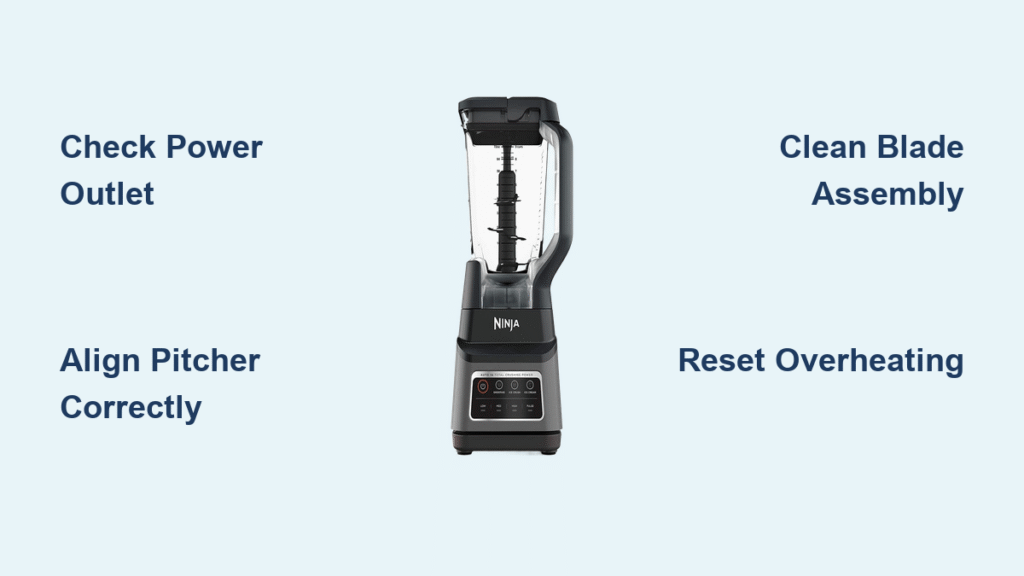
- Confirm power — plug into a working outlet and test another appliance on that outlet.
- Inspect the cord — look for cuts, kinks, or loose connections.
- Ensure jar and lid alignment — press to lock; many Ninja models won’t run if not seated.
- Reset the unit — unplug for 2 minutes, then plug back in to reset thermal cutoffs.
- Check for overheating — if the motor smells hot or the unit is warm, let it cool for 30–60 minutes.
- Listen for humming — humming means the motor is trying; no sound might mean electrical failure.
- Try different settings — sometimes one button fails while others work.
PAA-style questions
Why did my Ninja blender stop working suddenly?
Sudden stops often come from tripped overload protection, loose jar alignment, or a blown outlet. Do the quick checks above to narrow it down.
Can a burnt smell mean the blender is salvageable?
A mild burnt odor after heavy use can mean the motor overheated and a thermal fuse tripped; let it cool fully and try again. A strong burning smell with smoke suggests serious motor damage and you should stop using it.
Step-by-step fixes: safe DIY repairs
If the quick checklist didn’t fix it, try these careful DIY steps. Always unplug before touching internal parts.
Safety first
- Unplug the blender before any inspection.
- Wear gloves when handling blades.
- Avoid opening sealed electronics if under warranty.
Cleaning and unseizing
- Remove jar and blade assembly. Clean food debris from the blade base and jar lip. Hardened debris can prevent proper seating.
- Inspect and lubricate the blade shaft bearing lightly with food-safe lubricant if it’s stiff.
Reset and inspect internal parts
- Let the unit cool if it was hot. Many Ninjas have an internal thermal fuse that resets after cooling.
- Check the base for obvious damage or burn marks. Smell can indicate electrical failure.
- Test the outlet and cord with a multimeter if you have one.
Replacing accessible parts
- Replace a damaged power cord or jar seals available online for your model. These are low-cost fixes.
- Worn carbon brushes in some models can be replaced; this requires basic tools and careful reassembly.
When to stop DIY
- If the control board smells burnt, or you see melted plastic, stop. Electronics repairs require a qualified technician.
- If the motor hums but won’t spin and lubrication didn’t help, the motor likely needs service.
Personal experience: I fixed a blender that wouldn’t start by simply replacing a worn rubber gasket that prevented the jar from locking. Small parts often solve big problems. If your Ninja blender stopped working, don’t rush to replace the whole unit.

Common parts that fail and repair options
Knowing which parts often fail helps you decide repair vs replace when a Ninja blender stopped working.
Parts that commonly fail
- Blade assembly — seals and blades corrode or wear down.
- Drive coupling and bearing — can strip or seize from hard use.
- Power cord and plug — damage is common from mishandling.
- Control panel and switches — wear or moisture damage can cause failure.
- Motor brushes and motor itself — brushes wear over time; the motor can overheat.
Repair options
- DIY replacement parts — blades, seals, and cords are inexpensive and user-replaceable on many models.
- Authorized service — best for motors and control boards; keeps warranty protections intact.
- Local appliance repair shops — may be cost-effective for mid-life units.
- Replacement — if repair costs exceed about half the price of a new model, replacement is often wiser.
Cost guide (general)
- Small parts (gaskets, seals, cords): low cost, usually under $30.
- Motor brushes or couplings: moderate cost, $30–$100 including labor.
- Motor or control board replacement: high cost, often close to buying new.
If your Ninja blender stopped working and it’s under warranty, contact the manufacturer first before attempting repairs.
Preventative maintenance to keep your Ninja blender working
Routine care prevents most failures and extends life. Use these habits to avoid “Ninja blender stopped working” moments.
Daily and weekly care
- Clean after every use — remove food from seals and blade base.
- Avoid overfilling — follow max-fill lines and cut ingredients small.
- Use pulse for hard ingredients — long continuous runs strain the motor.
- Let the unit rest between heavy blends — give it 30–60 seconds when blending thick mixtures.
Monthly checks
- Inspect seals and couplings for wear.
- Tighten loose parts and replace cracked jars or lids.
- Run a vinegar-water blend on low to remove buildup.
Storage and usage habits
- Store with lid off so seals dry.
- Avoid frozen chunks without enough liquid — start on low speed.
- Don’t run the motor dry.
From my testing: simple habits like checking seals and not overfilling cut service calls in half. If your Ninja blender stopped working, consistent care often prevents recurrence.
When to replace or seek professional help
Sometimes a repair isn’t worth it. Use these signs to decide whether to repair, replace, or call a pro.
When to call a professional
- Burnt electronics smell or visible melting — risk of fire or further damage.
- Complex electrical failures — control board or wiring issues need trained hands.
- Warranty coverage — use authorized repair to preserve warranty.
When replacement makes sense
- Repair costs exceed half the price of a new blender.
- Repeated failures or very old motor with high wear.
- Better features available in current models for similar price.
Decision checklist
- Compare repair estimates with new unit prices.
- Factor in time without a blender and environmental costs.
- Consider trade-in or recycling programs to avoid waste.
If your Ninja blender stopped working and repair estimates are high, shop for a replacement that offers improved warranty and power for long-term value.

Frequently Asked Questions of Ninja blender stopped working
Why won’t my Ninja blender turn on at all?
Check the outlet and power cord first, and ensure the jar and lid are properly seated. If those are fine, the motor or control board may need professional service.
My Ninja blender hums but won’t spin. What does that mean?
A humming motor often indicates a seized blade bearing or a stripped drive coupling. Unplug and inspect the blade assembly or seek a repair if the motor is damaged.
Is it safe to keep trying to reset my Ninja blender?
It’s safe to unplug, wait, and try again, but avoid repeated resets if you smell burning or see smoke. Stop and seek professional help to prevent further damage.
How long do Ninja blenders usually last with normal use?
With normal home use and maintenance, a Ninja blender often lasts 3–7 years depending on model and frequency of heavy blending. Proper care can extend that lifespan.
Can I replace the motor in my Ninja blender myself?
Replacing the motor is complex and can void warranties; it’s best handled by authorized repair centers. Simple parts like seals and blades are usually safe DIY swaps.
Conclusion
A Ninja blender stopped working can be stressful, but most issues are simple to diagnose and fix. Start with power, seating, and cooling checks, then move to cleaning, part replacement, or professional repair as needed. Keep routine maintenance habits to prevent future breakdowns, and weigh repair costs against replacement value.
Take action now: try the quick checklist, inspect common parts, and decide whether a repair or replacement makes sense. If you found this helpful, leave a comment or share your experience with a broken Ninja blender stopped working—your tip might help someone else.