Blend leafy greens, fruit, and water, then strain for a smooth, nutrient-packed green juice.
I’ve made green juice with a blender for years, and I’ll show you a clear, friendly method that works every time. This guide on how to make green juice with a blender covers tools, ingredient choices, step-by-step instructions, common mistakes, nutrition notes, and helpful variations. You’ll learn simple tips from real experience so your blender turns greens into bright, tasty juice that feels fresh and clean.
Why make green juice with a blender?
Making green juice with a blender is simple, budget-friendly, and fast. A blender lets you use whole fruits and vegetables and keeps more fiber than a juicer. You can control flavors, avoid waste, and tailor nutrients to your needs.
Blender-made green juice is also versatile. You can make single servings in minutes or batch juice to store for later. My experience shows that blending then straining gives great texture and color without expensive gear.
Ingredients and shopping list for blender green juice
Choose fresh, firm produce for the best flavor. Aim for a balance of mild greens, sweet fruit, and a liquid base.
- Greens: spinach, kale, Swiss chard, or romaine. Use tender leaves for a milder taste.
- Fruit: apple, pear, cucumber, green grape, or kiwi for sweetness and hydration.
- Vegetables and extras: celery, parsley, ginger, lemon, or lime for brightness.
- Liquid: cold water, coconut water, or unsweetened almond milk.
- Optional boosters: protein powder, spirulina, wheatgrass powder, or chia seeds.
A typical ratio I use is 3 cups greens, 1–2 cups fruit/veg, and 1 to 2 cups liquid. This keeps the blend thin enough to strain cleanly.

Equipment and prep tips
You don’t need a juice extractor. A high-speed blender is ideal, but an everyday blender works too.
- Blender: high-speed or standard. Make sure the jar is large enough.
- Fine mesh sieve or nut milk bag: for straining to achieve juice texture.
- Cutting board and knife: to chop produce into blender-sized pieces.
- Tall jar or pitcher: to store finished juice.
Prep tips from experience:
- Remove thick stems from kale or chard to avoid bitterness.
- Leave apple skin on for fiber and flavor.
- Chill ingredients for a cold, refreshing juice.
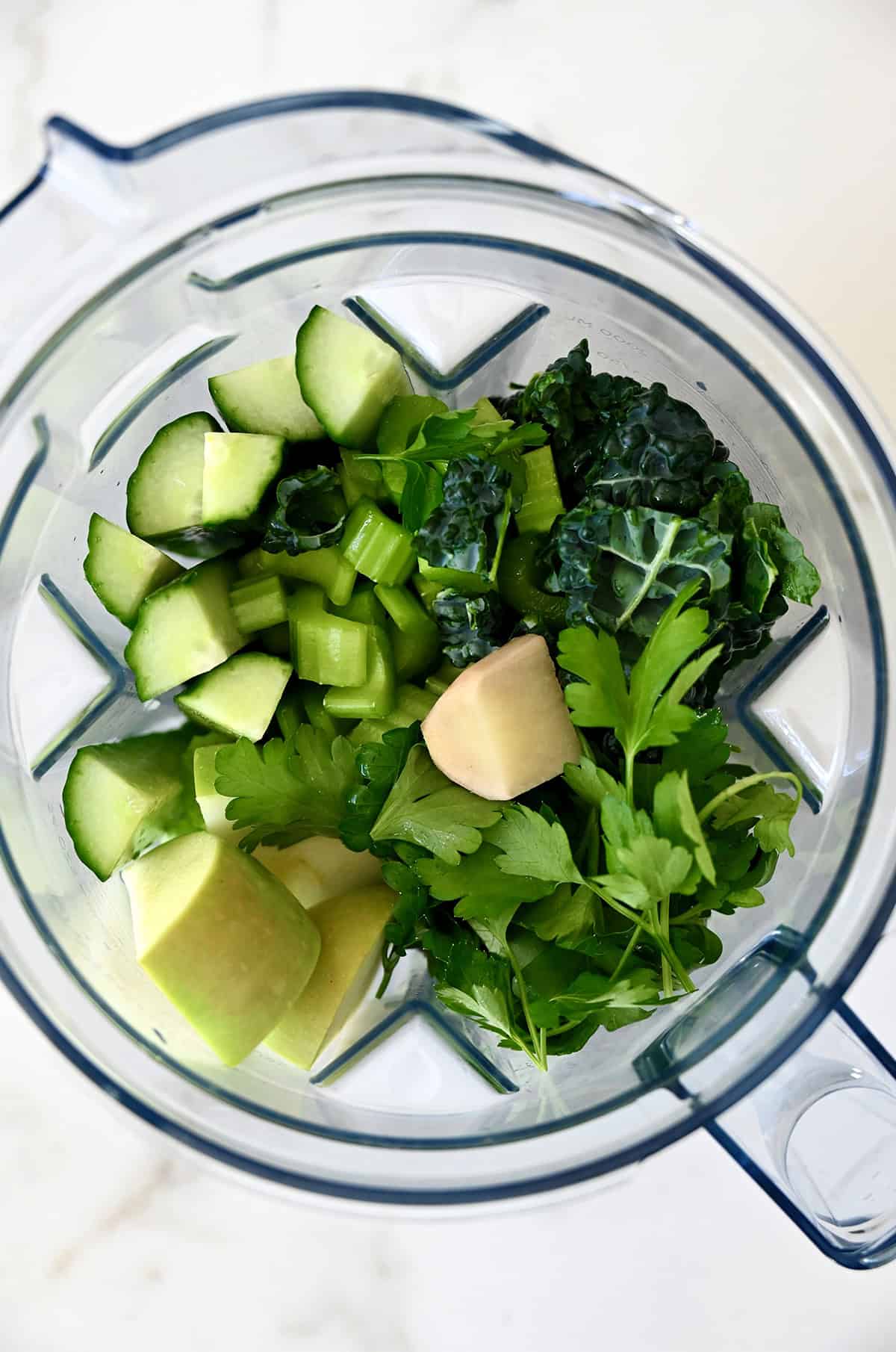
Step-by-step: how to make green juice with a blender
Follow these simple steps for a smooth, fresh drink.
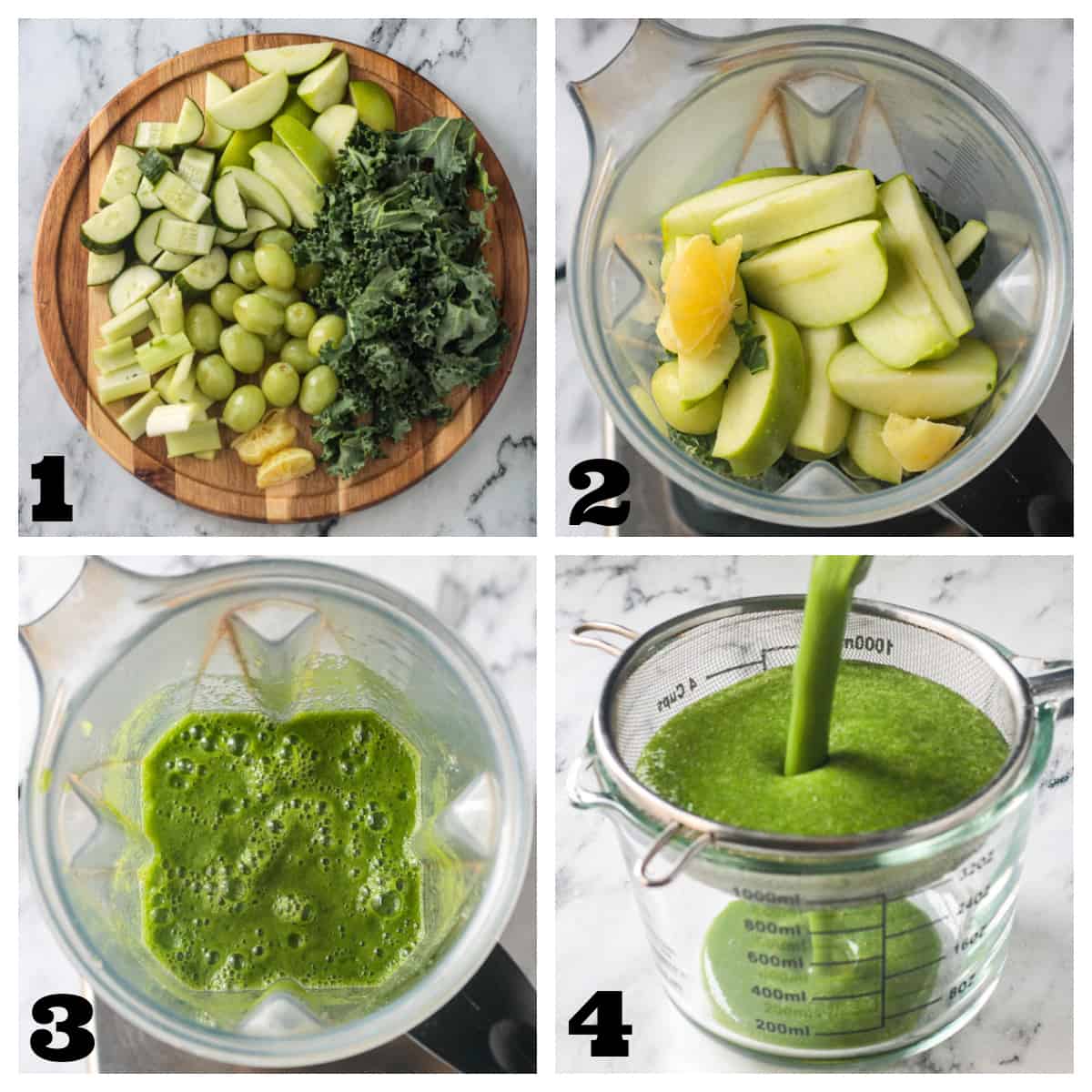
- Wash produce thoroughly. Dirt and pesticide residue can hide in leaves.
- Chop ingredients into small pieces. This helps the blender work evenly.
- Add liquid to the blender first. Then add greens and fruit. This helps blades move freely.
- Blend on high for 45–90 seconds until very smooth. Pause and scrape down the sides once.
- Place a fine mesh sieve or nut milk bag over a bowl or pitcher. Pour the blend through and press or squeeze to extract juice.
- Taste and adjust with lemon, ginger, or a small pinch of salt if needed.
- Serve immediately over ice or chill in an airtight container for up to 48 hours.
This basic routine will help you replicate great results every time you make green juice with a blender.

Texture, fiber, and straining explained
Blender juice has more fiber than juicer juice unless you strain. Straining removes most pulp and gives a cleaner mouthfeel.
- No strain: thicker, more filling, higher fiber, more mouthfeel.
- Strain: lighter, closer to store-bought juice, more easily absorbed flavor and nutrients.
I like to strain the blend the first few times until I learn how much pulp I enjoy. Over time, I adjust the fruit-to-green ratio to find a balance I like.

Flavor balancing and variations
Small changes create big flavor shifts. Here are reliable combos and swaps.
- Mild green juice: spinach, cucumber, green apple, water, squeeze of lemon.
- Zesty green juice: kale, celery, ginger, pear, water.
- Tropical green juice: spinach, pineapple, cucumber, coconut water.
- Morning detox: Swiss chard, green apple, lemon, small knob of turmeric.
Tips:
- Use one strong flavor (ginger, lemon, or pineapple) and one mild green for balance.
- Taste as you blend and add small amounts rather than large ones.

Common mistakes and troubleshooting
Avoid these traps when you make green juice with a blender.
- Too much fibrous greens: juice becomes stringy and hard to strain. Use more liquid or add softer greens.
- Not enough liquid: blender stalls or blends unevenly. Add water in 1/4 cup increments.
- Over-blending hot ingredients: warm blends can turn bitter. Keep produce cold.
- Storing improperly: exposure to air reduces freshness. Store in airtight glass jars and fill to the top to limit oxidation.
Will blending remove the fiber?
Short answer: no. Blending keeps fiber intact. Straining removes most pulp but some fiber remains unless you use a full filtration method.
Is green juice still nutritious after straining?
Yes. Strained juice still contains vitamins, minerals, and bioactive compounds. Some fiber is lost, but many nutrients remain highly bioavailable.

Nutrition and safety notes
Green juice can boost vitamin and mineral intake, especially vitamin C, K, and folate. It can also deliver antioxidants and plant compounds.
Safety tips:
- Rotate greens to avoid excess vitamin K or oxalates if you have medical conditions.
- Limit high-sugar fruit if you are watching blood sugar.
- Drink fresh when possible; nutrients degrade over time.
My practice: I vary ingredients weekly and avoid drinking large quantities daily. This keeps the diet balanced and reduces risk of nutrient overload.
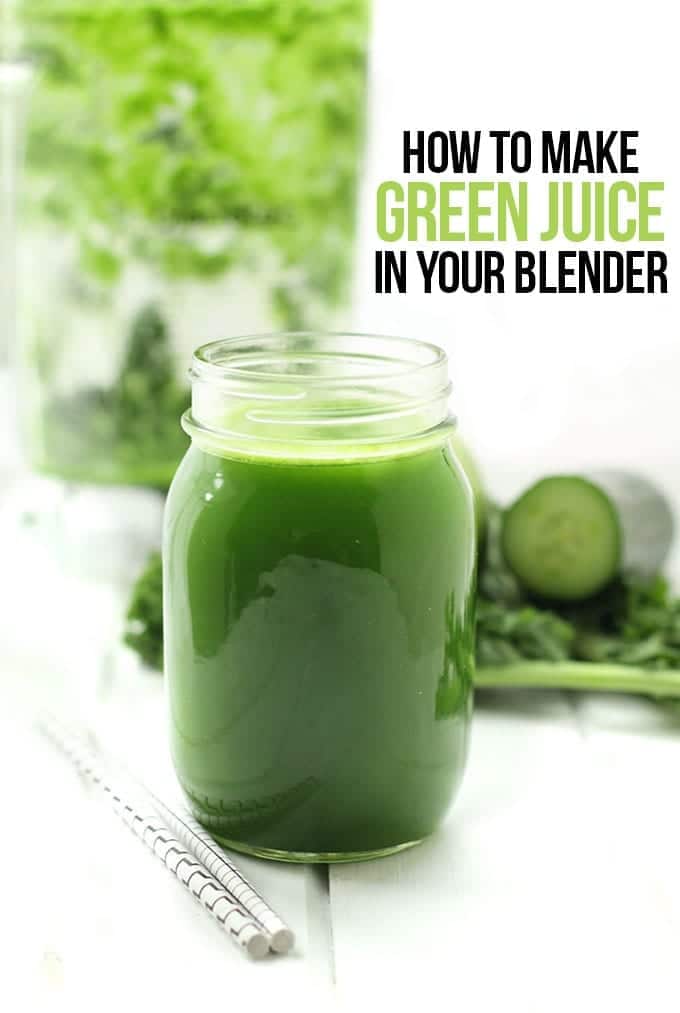
Personal experience, lessons learned, and tips
I started making green juice with a blender to save money and reduce waste. Early mistakes taught me the value of balance and texture.
- Lesson 1: Pre-chill ingredients for a bright taste.
- Lesson 2: Use a nut milk bag for the cleanest strain.
- Lesson 3: Start with mild greens like spinach when introducing others to green juice.
Real tip: Make a small 12-ounce batch first. That lets you test flavors without wasting produce.
PAA-style quick questions
What is the best liquid for blender green juice?
Water is best for a clean, low-calorie base. Coconut water adds electrolytes and mild sweetness.
How long does blender green juice keep?
Store in a sealed glass jar in the fridge and drink within 24–48 hours for best flavor and nutrition.
Can I use frozen greens or fruit?
Yes. Frozen items work well and help chill the juice, but they can thin texture and may need slightly more blending time.
Frequently Asked Questions of how to make green juice with a blender
What blender settings work best for green juice?
Use high speed for 45–90 seconds until smooth. Pulse first if ingredients are large, then blend continuously to fully break down fibers.
Do I need to peel fruits and vegetables?
Peeling is optional. Keep edible peels like apples and cucumbers for fiber and nutrients. Remove thick peels or waxed skins when possible.
How much fruit should I add to avoid too much sugar?
Aim for one serving of fruit per batch, about 1 cup. Balance fruit with 2–3 cups of greens to keep sugar moderate.
Is it better to drink green juice in the morning or evening?
Morning is best for energy and nutrient uptake. Avoid large amounts at night if you are sensitive to sugars or digestion.
How can I make green juice taste less bitter?
Add sweet fruit, a squeeze of lemon, or a small piece of ginger. Use tender greens like spinach to reduce bitterness.
Can I use a regular blender instead of a high-speed blender?
Yes. A regular blender works fine; just blend a bit longer and chop ingredients smaller to help blades.
Should I add protein or supplements to my green juice?
You can add protein powder or seeds for satiety. Mix powders well and drink soon after blending to avoid separation.
Conclusion
You can make green juice with a blender that tastes great and fits your diet. Follow simple steps: pick fresh produce, balance greens and fruit, blend well, then strain if you prefer a smooth texture. Start small, taste as you go, and adjust flavors to match your preferences.
Try one recipe today and note what you like and don’t like. Share your favorite mix, subscribe for more tips, or leave a comment about your experience with blender green juice.