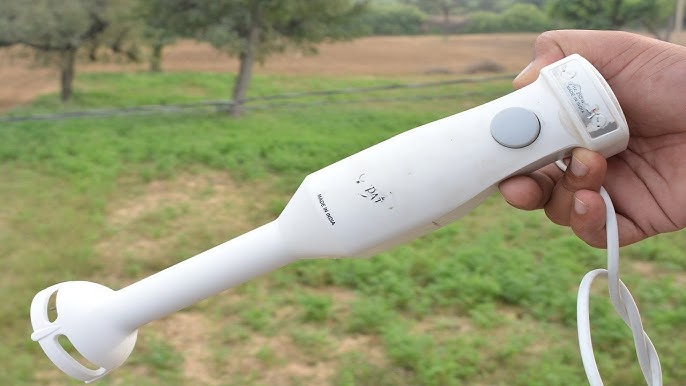
Most hand blenders stop working due to power, motor, or safety switch failures.
I’ve repaired and tested dozens of small kitchen appliances, so I know how frustrating it is when your hand blender not working interrupts a recipe. This guide explains common causes, step-by-step fixes, and when to repair or replace your hand blender not working, with clear tips you can try at home safely.

Why your hand blender not working: common causes
A hand blender not working usually traces to a few simple problems. Power issues, worn motor brushes, a stuck safety switch, a damaged cord, or clogged blades are the most frequent reasons. Small faults often look worse than they are and can be fixed with low-cost steps.
Common causes include:
- Power supply problems, such as tripped breakers or loose plugs.
- Faulty on/off switches or safety interlocks.
- Motor issues, including burned windings or worn brushes.
- Damaged or frayed power cords and plugs.
- Blocked or jammed blade assemblies from food buildup.
Understanding these causes helps you diagnose a hand blender not working faster. I’ll walk you through practical checks next so you can try safe fixes.

How to troubleshoot a hand blender not working — step-by-step
Follow these simple steps to find the problem. Always unplug the unit before opening or inspecting parts.
- Check power and outlet
- Plug another appliance into the same outlet to confirm power.
- Try a different outlet and avoid extension cords.
- Inspect the plug for burn marks or looseness.
- Inspect the cord and plug
- Look for cuts, frays, or exposed wires along the cord.
- If the cord is damaged, stop using it and replace or get professional repair.
- Test the safety switch and controls
- Many models have a safety lock. Ensure it’s engaged correctly.
- Press and hold the speed button while trying to start the blender.
- Look for jams around the blades
- Remove the blending shaft (if removable) and check for trapped food or string.
- Clean the area with a soft brush and warm soapy water. Dry fully before reassembling.
- Listen and smell for signs of motor damage
- If the motor hums but does not spin, the motor may be seized or brushes may be worn.
- A burning smell or smoke indicates severe motor damage; stop use immediately.
- Try a simple reset
- Unplug the blender, wait 10 minutes, then plug back in to reset thermal cut-outs.
- For rechargeable models, ensure the battery is charged and seated correctly.
These steps will help with most cases of a hand blender not working. If the device still fails, the motor or internal electronics are likely at fault.

Component-specific fixes and checks
Breaking down issues by component helps target repairs quickly.
Power cord and plug
- Replaceable cords: Some brands offer replacement cords. Swap if available.
- Permanent cords: Get a qualified technician to repair or replace.
Switches and safety locks
- Clean around switches with a dry brush to remove debris.
- If the switch feels loose or fails, replacement parts may be available from the manufacturer.
Motor and brushes
- Many brushed motors wear down brushes over time. Worn brushes can block contact and make the hand blender not working.
- Replacing motor brushes is a common fix but may require a service center.
Blades and shaft
- Dull or bent blades reduce performance but rarely stop the motor.
- Remove hardened food buildup to avoid jamming the shaft.
Battery and electronics (cordless models)
- Batteries lose capacity with age. A battery that reads low may prevent startup.
- Replace the battery pack when charge cycles decline significantly.
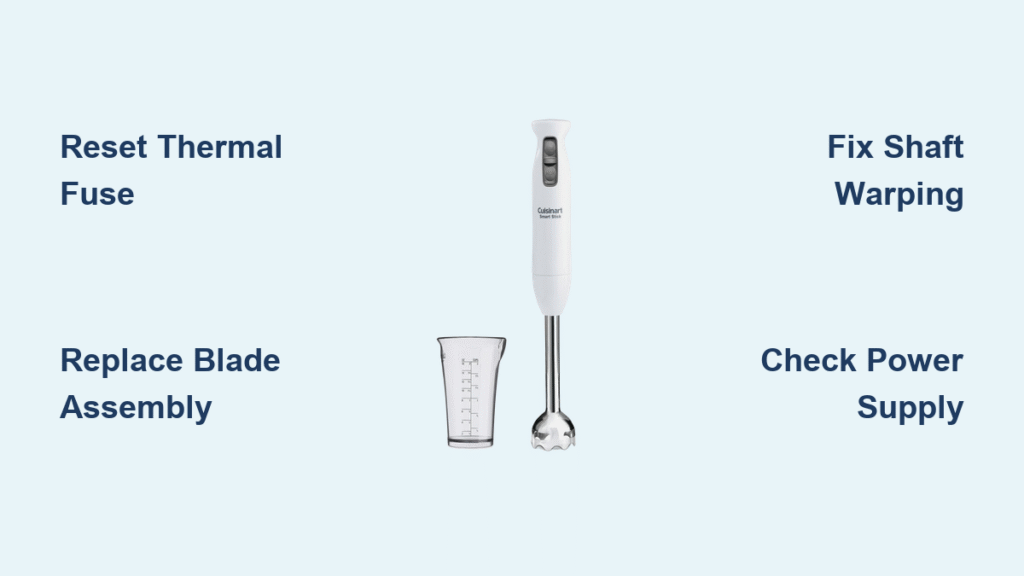
Use these component checks to decide whether to DIY or seek repair. Small parts are inexpensive, but motor work often costs more than a new unit.
 working”
style=”max-width: 100%; height: auto; border: 2px solid black; border-radius: 10px; display: block; margin: 0 auto;”
loading=”lazy”
/>
When to repair vs when to replace your hand blender not working
Deciding whether to repair a hand blender not working depends on cost, age, and safety.
Repair if:
- The issue is a broken cord, switch, or jammed blade.
- Replacement parts are inexpensive and available.
- The unit is a high-quality model worth fixing.
Replace if:
- The motor has burned out or repair quotes approach the cost of a new blender.
- The appliance is old and multiple parts are failing.
- Safety has been compromised through severe damage.
A simple rule: if repair costs exceed 50% of a new unit’s price, replace. For premium models, repairs may still be worthwhile for sustainability and performance.
:max_bytes(150000):strip_icc()/sea-primary-immersion-blenders-sep-24-rkilgore-0658-89167e1e4bd44afb93d9c847674b09e4.jpeg)
Maintenance tips to prevent a hand blender not working
Small habits extend life and reduce downtime.
- Clean after each use, focusing on the blade hub and shaft.
- Avoid blending very hard items or bones unless the model is rated for it.
- Let the motor rest during heavy tasks to avoid overheating.
- Store the unit dry and avoid winding the cord tightly.
- Service brushes and seals at recommended intervals for long-term use.
These actions lower the chance of a hand blender not working and keep performance steady.

Personal experience: what I’ve learned from fixing hand blenders
I’ve fixed many hand blenders for friends and family. Most problems were simple. A frayed cord, a stuck safety clip, or a charcoal brush replacement brought dead units back to life.
Lessons I learned:
- Always try the outlet test first. Half of the “dead” blenders were just unplugged or on a tripped circuit.
- Cleaning avoided many service calls. Food trapped around the coupling causes jams that mimic motor failure.
- For cordless models, battery health is king. Replacing battery packs revived many otherwise fine blenders.
A tip: keep manufacturer screws and small parts in labeled bags. That makes later repairs faster and less stressful.
PAA-style questions (brief answers)
How do I fix my hand blender not working when it just hums?
- A humming motor usually means a seized rotor or worn brushes. Unplug the blender, check for jams, and if clear, a brush or motor repair may be needed.
Why is my hand blender not working after overheating?
- Built-in thermal cut-outs can stop the motor to cool it down. Let the blender rest for 10–30 minutes and try again.
Can a damaged power cord make a hand blender not working?
- Yes. A frayed or broken cord can interrupt power. Replace the cord or get professional repair to avoid shocks.
What if my hand blender not working and there is a burning smell?
- Stop using it immediately. A burning smell often signals motor damage. Service or replace the unit to avoid fire risk.
How do I test the switch on a hand blender not working?
- With the appliance unplugged, visually inspect the switch and clean debris. For advanced testing, a multimeter can check continuity, but leave this to experienced users.

Frequently Asked Questions of hand blender not working
Why does my hand blender not working even though it’s plugged in?
Check the outlet with another device first. Faulty cords, tripped breakers, or internal fuses may prevent power from reaching the motor.
My hand blender makes noise but won’t blend; what should I do?
Unplug and inspect for jams or hard debris around the blade. If nothing is stuck, worn motor brushes or a damaged coupling might be the cause.
Can I safely replace parts on a hand blender not working?
You can replace external parts like blades or detachable shafts safely. Internal electrical repairs should be handled by a qualified technician to avoid hazard.
How do I know if the battery is the reason my cordless hand blender not working?
If the blender runs briefly and then dies, or it won’t start but charges show full, battery degradation is likely. Try a replacement battery if available.
Is it worth repairing a cheap hand blender not working?
Often not. Cheap models have low repair costs relative to replacement price. For inexpensive units, replacing is usually more cost-effective.
How long should a hand blender last before it starts not working?
With proper care, a mid-range hand blender lasts 3–7 years. Heavy use, poor maintenance, or harsh ingredients shorten that span.
Conclusion
You now have a clear roadmap for diagnosing and fixing a hand blender not working. Start with simple checks like the outlet, cord, and jammed blades. Use safe troubleshooting steps and decide to repair or replace based on cost and condition. Keep your blender clean, don’t overload it, and perform light maintenance to avoid common failures. Try the steps in this guide, and share your experience or questions below — I’d love to help you troubleshoot further.